Banana peels are one of the most common kitchen scraps – and one of the most debated garden “fertilizers.” You’ve probably seen bold claims like “banana peels force roses to bloom,” “banana peel powder replaces fertilizer,” or “just bury peels and watch flowers explode.”
The truth is more useful than the hype: banana peels can contribute nutrients, especially potassium, but they work best when you process and apply them correctly and treat them as a supplement – not a complete fertilizer. That’s where banana peel flour comes in.
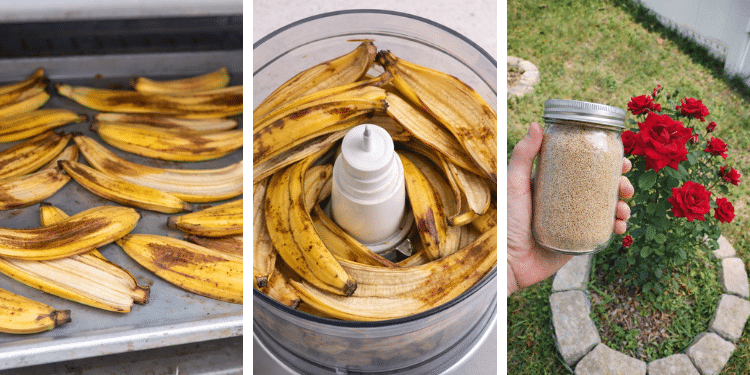
Banana peel flour is simply fully dried banana peel ground into a fine powder. This powder breaks down more evenly than whole peels, is easier to store, and can be incorporated into soil in measured amounts.
When used properly, it may support flowering, fruit quality, and overall plant resilience – especially in plants that appreciate a bit of extra potassium.
What Is Banana Peel Flour, Exactly?
Banana peel flour is dehydrated banana peel that has been ground into a fine powder. Unlike fresh peels, which are wet and fibrous, flour has:
- Very low moisture (so it stores well)
- High surface area (so soil microbes break it down faster)
- Even distribution (so nutrients release more consistently)
Gardeners like it because it turns a messy kitchen scrap into a measurable, slow-release amendment.
It is not the same as compost. Compost is already partially decomposed and biologically stable. Banana peel flour is still raw organic material that needs to be broken down in the soil.
Why Banana Peels Are Associated With “Bloom Power”
Banana peels contain a mix of plant nutrients and organic matter. The nutrient that gets the most attention is potassium (K)-one of the three major macronutrients (N-P-K) plants use in the largest amounts.
What potassium does in plants (and why it matters for roses)
Potassium is not primarily a “leaf” nutrient like nitrogen. It acts more like a regulator inside the plant. It supports:
- Water balance in cells (important for heat tolerance and drought resilience)
- Enzyme activation for growth processes
- Carbohydrate movement (moving sugars from leaves to buds and fruits)
- Stem strength and general vigor
- Flowering and fruit quality (especially when paired with good light and balanced feeding)
Roses are heavy bloomers. Anything that improves overall vigor and supports repeated growth cycles can contribute to better blooming-but potassium alone doesn’t create flowers if other needs are missing.
The Realistic Expectation: What Banana Peel Flour Can and Can’t Do
It can help (when conditions are right)
- Support stronger overall growth over time
- Provide a gentle potassium boost
- Improve soil organic matter (in small amounts)
- Complement a balanced rose feeding program
It cannot do on its own
- Replace full fertilization for hungry plants
- Fix poor sunlight or improper pruning
- Cure disease or pest pressure
- “Force” blooms instantly
Think of banana peel flour as a supportive ingredient in a larger care routine, not a miracle product.
Why You Shouldn’t Just Bury Fresh Banana Peels Near Roses
Many gardeners bury peels and run into problems because fresh peels:
- Decompose slowly in cool soil
- Can attract pests (rodents, raccoons, fruit flies)
- Can create localized soggy pockets that encourage fungal issues
- May cause uneven nutrient release, because decomposition depends on microbes and temperature
Drying and grinding peels avoids most of these issues and lets you apply smaller, more controlled amounts.
How to Make Banana Peel Flour (Step-by-Step)
Step 1: Collect peels the right way
Use peels from bananas you already eat. If you can, rinse them quickly to remove any sticky residue. (This also helps reduce potential surface contaminants.)
Step 2: Cut into strips for faster drying
Slice each peel into thin strips. Smaller pieces dry faster and more evenly.
Step 3: Dry completely (this is the most important step)
If peels are not fully dry, the flour can mold in storage and smell unpleasant in soil.
You have a few good options:
Air-drying: Lay strips on a rack or tray in a warm, airy spot. Turn occasionally. This can take several days.
Oven drying (most reliable): Spread strips on a baking sheet. Use a very low temperature and leave the door slightly cracked if possible. Dry until brittle.
Dehydrator (ideal): Dry until pieces snap easily.
Your goal is brittle, crisp peels-not leathery.
Step 4: Grind into a fine powder
Use a coffee grinder, blender, or food processor. Grind in small batches to get a finer texture.
If you want extra-fine flour, sift it through a strainer and regrind the larger bits.
Step 5: Store properly
Store in an airtight jar in a cool, dry place. Add a small food-safe moisture absorber if you live in a humid climate.
Properly dried flour can store for months.
How Banana Peel Flour Works in Soil
Banana peel flour does not act like a synthetic fertilizer that dissolves immediately. It must be processed by soil life.
Here’s what happens after application:
- Soil microbes begin breaking it down
- Nutrients become gradually available as decomposition progresses
- The release rate depends on temperature, moisture, and microbial activity
This means banana peel flour works best as a slow support, not a quick fix.
How to Apply Banana Peel Flour to Roses (Detailed)
Roses benefit from potassium, but they also need balance. Too much of any single amendment can throw off soil chemistry.
The best time to apply
- Early spring as buds begin swelling and growth starts
- After the first big bloom flush, when the plant is rebuilding energy
- Avoid heavy application late in the season, especially in colder climates (you don’t want tender new growth before frost)
How much to use
For an established rose bush:
- Start with 1 tablespoon mixed into the topsoil
- If your soil is sandy and drains quickly, you can go up to 2 tablespoons, but don’t overdo it
For young roses: ½ tablespoon is plenty
The best application method
Gently loosen the top 2–5 cm (1–2 inches) of soil around the drip line (not against the stem). Sprinkle the powder, mix lightly, and water.
Keeping it near the drip line matters because feeder roots are concentrated there.
Avoid these mistakes
- Don’t pile it right against the crown of the plant
- Don’t apply thick layers like mulch
- Don’t apply right before heavy rain (it can wash away or clump)
- Don’t combine with heavy compost or manure at the same time if drainage is already borderline
What results to look for
Within a few weeks to a couple months (depending on soil biology), you may notice:
- sturdier new stems
- improved bloom consistency
- slightly better color and bloom substance
Again, this depends on sunlight, pruning, and general fertility.
A “Smart Rose Feeding” Routine That Works With Banana Peel Flour
If your goal is repeat blooms all summer, think of banana peel flour as the potassium piece of a bigger plan:
- Compost for soil biology and baseline nutrition
- Balanced organic rose fertilizer for consistent N-P-K
- Banana peel flour as a gentle potassium supplement
- Deadheading to trigger repeat flowering
- Watering deeply (not frequently) to support strong roots
This combination is far more effective than any single ingredient.
Other Plants That May Benefit From Banana Peel Flour
Potassium is especially valuable for plants that flower heavily or produce fruit. Banana peel flour can be a helpful supplement for:
1. Tomatoes
Tomatoes use potassium for fruit development and overall vigor. A small amount mixed into soil can support fruiting-especially if your base fertility is already decent.
Use lightly at transplant time and again when flowering begins.
2. Peppers
Peppers respond well to balanced feeding with sufficient potassium during flowering and fruit set. Banana peel flour can complement compost and a balanced fertilizer.
3. Eggplant
Similar to peppers: heavy fruiting benefits from potassium support and strong root health.
4. Cucumbers and squash (sparingly)
These are heavy feeders. Banana peel flour can help as a supplement, but they usually need more complete nutrition.
5. Strawberries
Potassium can support flowering and fruit quality. Use small amounts worked into soil around plants in early spring.
6. Flowering annuals and perennials
Plants that bloom repeatedly may benefit modestly, including:
- zinnias
- marigolds
- dahlias
- geraniums
- petunias
Use minimal amounts because many container flowers are already regularly fed with liquid fertilizer.
7. Houseplants (with caution)
For indoor pots, banana peel flour can attract fungus gnats if overused. If you try it:
- use a tiny pinch mixed into the topsoil
- keep the pot on the dry side
- consider compost instead for safer indoor use
When NOT to Use Banana Peel Flour
There are situations where banana peel flour is more trouble than benefit:
- Poorly draining soil (it can add organic matter that holds moisture if overapplied)
- Already high-potassium soil (can imbalance nutrient uptake)
- Potted plants prone to gnats (indoor soils)
- Gardens with rodent pressure if you apply too heavily or leave it on the surface
If your roses already get a complete fertilizer and bloom well, banana peel flour should stay a small “bonus,” not a major input.
Compost vs Banana Peel Flour: Which Is Better?
They’re different tools.
- Compost improves soil structure, microbial life, and offers a broad spectrum of nutrients in gentle amounts.
- Banana peel flour is a targeted scrap-based amendment that leans toward potassium support.
For long-term plant health, compost is often the foundation. Banana peel flour can be the add-on.
Troubleshooting: If Roses Still Won’t Bloom
If you’re adding banana peel flour but bloom performance is poor, the issue is often one of these:
- Not enough sun (roses need strong light)
- Too much nitrogen (lush leaves, few blooms)
- Poor pruning timing (wrong cuts remove bloom wood)
- Water stress (either drought or constantly wet soil)
- Disease (black spot, mildew) weakening the plant
- Soil pH issues affecting nutrient uptake
Banana peel flour can’t override these fundamentals. Fix the basics, then use amendments for extra support.
Banana peel flour is a smart way to recycle kitchen waste into a usable garden supplement. It’s cleaner than burying whole peels, easier to measure, and breaks down more evenly in soil.