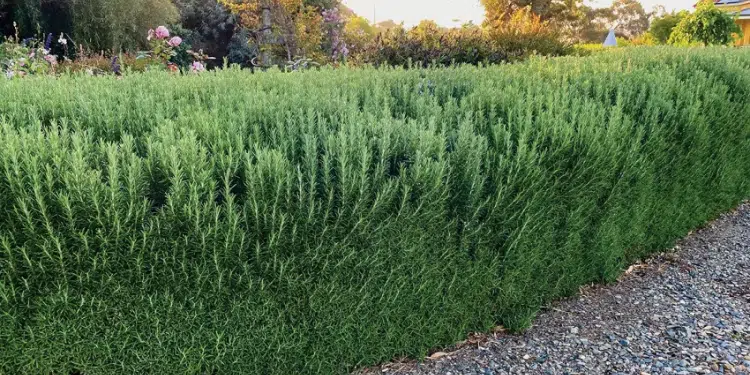
If you’re looking for a low-maintenance, fragrant, and practical addition to your garden, a rosemary hedge is the perfect choice.
Rosemary (Rosmarinus officinalis) is not only a hardy, evergreen shrub, but it also offers culinary, medicinal, and environmental benefits.
In this detailed guide, you’ll learn:
- Why a rosemary hedge is beneficial for your home and garden
- 11 brilliant reasons to plant one
- Step-by-step instructions on how to grow and maintain a rosemary hedge
By the end, you’ll be ready to transform your outdoor space with this versatile herb!
11 Brilliant Reasons to Grow a Rosemary Hedge
1. A Beautiful, Evergreen Border for Year-Round Interest
- Unlike deciduous shrubs that lose their leaves, rosemary remains green and lush all year.
- Forms a dense, low-maintenance hedge that can define garden borders, pathways, and patios.
- Produces beautiful purple, blue, or white flowers that add seasonal charm.
- Works in both formal garden designs and natural, wild landscapes.
Best for: Creating low garden borders, lining walkways, or surrounding patios.
2. Drought-Tolerant & Thrives in Hot, Dry Conditions
- Rosemary is extremely drought-tolerant, making it perfect for arid climates or regions with water restrictions.
- Requires little to no irrigation once established, making it an eco-friendly landscaping choice.
- Unlike grass or thirsty ornamental plants, rosemary can flourish with minimal watering.
Best for: Gardens in hot, dry climates or places with frequent droughts.
3. Natural Pest Repellent to Protect Your Garden
- Rosemary’s strong, pine-like scent naturally repels mosquitoes, flies, and garden pests.
- Helps keep away aphids, cabbage moths, carrot flies, and whiteflies.
- Reduces the need for chemical pesticides, making your garden more organic and eco-friendly.
Best for: Surrounding vegetable gardens, patios, and seating areas to keep insects away.
4. Attracts Beneficial Pollinators
- Rosemary’s fragrant flowers provide nectar for bees, butterflies, and other pollinators.
- Improves pollination rates in your garden, boosting fruit and vegetable yields.
- Acts as a companion plant for tomatoes, peppers, squash, and beans.
Best for: Sustainable gardens, permaculture landscapes, and pollinator-friendly spaces.
5. Provides Fresh Herbs for Cooking Year-Round
- A rosemary hedge provides a continuous supply of fresh herbs for culinary use.
- Enhances the flavor of meats, soups, stews, potatoes, and homemade bread.
- Saves money—no need to buy store-bought rosemary!
How to Harvest:
- Snip stems in the morning for the strongest flavor.
- Dry rosemary for long-term storage or use fresh in cooking.
Best for: Home cooks, chefs, and anyone who loves fresh herbs.
6. Improves Air Quality & Acts as a Natural Air Purifier
- Rosemary releases oxygen-rich compounds that improve indoor and outdoor air quality.
- Filters dust, pollutants, and allergens from the air.
- Reduces airborne bacteria, making your garden and home healthier.
Best for: Urban gardens, city spaces, and areas with poor air circulation.
7. Creates a Natural Privacy Screen & Windbreak
- A dense rosemary hedge blocks strong winds and protects fragile plants.
- Forms a natural privacy screen, offering a living fence alternative to wood or metal fencing.
- Absorbs noise pollution—ideal for reducing traffic or neighborhood noise.
Best for: Creating natural barriers, garden enclosures, and outdoor seating privacy.
8. Prevents Soil Erosion & Improves Soil Quality
- Rosemary’s deep root system stabilizes soil, preventing erosion on slopes and hillsides.
- Enhances soil aeration and improves drainage.
- Reduces runoff, keeping nutrients locked in the soil.
Best for: Sloped gardens, raised beds, and coastal landscapes.
9. Deer & Rabbit Resistant
- Most deer and rabbits avoid rosemary due to its strong scent and rough texture.
- Acts as a protective barrier around more vulnerable plants like lettuce, roses, and flowers.
Best for: Rural gardens, farms, and areas with high deer activity.
10. Aromatherapy Benefits & Natural Stress Relief
- Simply rubbing fresh rosemary leaves between your fingers releases calming aromatherapy benefits.
- Used in essential oils, homemade candles, and herbal sachets.
- Helps reduce stress, boost memory, and improve mental clarity.
DIY Idea: Hang dried rosemary in the shower for a spa-like experience!
11. Adds Property Value & Enhances Curb Appeal
- A well-maintained rosemary hedge adds charm and elegance to any property.
- Enhances landscaping aesthetics, making homes more desirable to buyers.
- Low-maintenance and long-lasting, increasing the long-term value of your garden.
Best for: Front yard landscaping, driveways, and garden paths.
How to Grow a Rosemary Hedge (Step-by-Step Guide)
1. Choose the Right Location
Rosemary thrives in warm, sunny locations with well-draining soil.
- Sunlight: At least 6-8 hours of direct sun daily.
- Soil Type: Sandy, loamy, or well-draining soil (avoid clay or wet areas).
- pH Level: Slightly alkaline (6.5 – 7.5).
- Protection: Rosemary can tolerate some wind but prefers a sheltered spot.
Avoid planting rosemary in low-lying areas where water collects—this can lead to root rot.
2. Prepare the Soil
Healthy soil is essential for a thriving rosemary hedge.
- Loosen the soil to at least 12 inches deep to promote root growth.
- Mix in coarse sand or perlite to improve drainage.
- Add compost or aged manure (but go easy—rosemary prefers nutrient-poor soil).
- Test the soil pH—add lime if your soil is too acidic.
If your soil is heavy clay, plant rosemary in raised beds or on a mound to improve drainage.
3. Planting the Rosemary Hedge
Now it’s time to plant your rosemary hedge!
Spacing:
- 12-18 inches apart for a dense hedge.
- 2-3 feet apart for a looser, natural look.
Planting Steps:
- Dig holes twice as wide as the root ball.
- Place the rosemary at the same depth as in the pot.
- Fill in with soil and firm it down gently.
- Water deeply right after planting.
- Add a thin layer of mulch to retain moisture (but keep it away from the stems!).
Pro Tip: Stagger plants in a zigzag pattern for a thicker hedge.
4. Watering the Rosemary Hedge
Rosemary hates soggy soil, so water wisely!
- First 2 Months: Water once or twice a week until the roots establish.
- After Establishment: Water only when the soil is completely dry.
- Winter: Reduce watering even more—rosemary is semi-dormant in cold months.
Avoid overwatering! If rosemary’s leaves turn yellow, you’re watering too much.
5. Pruning & Maintaining the Hedge
Pruning keeps your rosemary hedge tidy, encourages bushy growth, and extends its lifespan.
How to Prune:
- Trim back 1-2 inches every few months to maintain shape.
- Remove dead, damaged, or woody stems.
- Avoid cutting into old, woody growth—rosemary struggles to regrow from hardwood.
When to Prune:
- Spring & Summer: Light trimming for shaping.
- Late Summer/Early Fall: Hard prune before winter.
- After Flowering: Deadhead spent flowers to promote new growth.
Harvesting rosemary regularly encourages new, soft growth—so don’t be afraid to use it!
6. Fertilizing & Feeding Rosemary
Rosemary doesn’t need heavy feeding—too much fertilizer can weaken its fragrance and hardiness.
Best Fertilizers:
- Diluted fish emulsion (once a month in spring/summer).
- Compost tea for a gentle nutrient boost.
- Bone meal for strong root development.
Avoid high-nitrogen fertilizers—they promote leafy growth at the expense of essential oils.
7. Protecting Rosemary from Winter Cold
Rosemary is sensitive to frost, especially in zones 6 and colder.
In Cold Climates:
- Use row covers or frost blankets during freezing nights.
- Mulch lightly to insulate the roots (but keep mulch away from the stems).
- Grow rosemary in containers to bring indoors in winter.
Hardy varieties like ‘Arp’ and ‘Hill Hardy’ can survive light frost.
Common Rosemary Hedge Problems & Solutions
Problem 1: Yellowing Leaves
Cause: Overwatering or poor drainage.
Solution: Reduce watering and improve soil aeration.
Problem 2: Weak, Leggy Growth
Cause: Lack of sunlight.
Solution: Move to a sunnier spot or supplement with a grow light.
Problem 3: No Flowers
Cause: Too much fertilizer.
Solution: Reduce feeding and increase sunlight exposure.
Problem 4: Root Rot
Cause: Waterlogged soil.
Solution: Ensure proper drainage and let the soil dry between watering.
A rosemary hedge is one of the best investments you can make in your garden—both for practicality and beauty!