Coffee grounds are one of the most talked-about natural gardening amendments – and for good reason.
Every morning, millions of households throw away used coffee grounds without realizing they can be repurposed to support soil structure, plant health, compost balance, and even pest control.
When used correctly and in moderation, coffee grounds can become a valuable addition to your garden routine.
However, they must be applied properly to avoid common mistakes like compaction or nitrogen imbalance.
Are Coffee Grounds Good for the Garden?
Used coffee grounds contain:
- Nitrogen (small but useful amounts)
- Organic matter
- Trace minerals like potassium and magnesium
- Natural compounds that affect soil biology
Despite popular myths, used coffee grounds are not highly acidic. Most used grounds are close to neutral in pH because much of the acidity is extracted during brewing.
The key is moderation.
Now let’s look at common garden challenges where coffee grounds may help.
1. Poor Soil Structure
One of the biggest garden problems is compacted soil that drains poorly.
How Coffee Grounds May Help
When mixed into compost or blended into soil in small amounts, coffee grounds add organic matter. Organic matter improves:
- Soil aeration
- Water retention in sandy soil
- Drainage in heavy clay
How to Use
Mix used grounds into compost first rather than applying thick layers directly onto soil. Aim for no more than 20% of total compost material.
2. Nitrogen Deficiency in Plants
Nitrogen supports leafy growth and chlorophyll production.
Why Coffee Grounds Help
Used coffee grounds contain small amounts of nitrogen. While not a complete fertilizer, they contribute to soil fertility over time as they break down.
Best Application
Work lightly into soil or compost. Avoid piling thick layers around stems. Plants that appreciate nitrogen support include leafy greens and herbs.
3. Slow Compost Breakdown
Compost piles need a balance of “greens” (nitrogen-rich materials) and “browns” (carbon-rich materials).
Role of Coffee Grounds
Coffee grounds count as a “green” material and help activate microbial activity in compost piles.
How to Apply
Sprinkle thin layers between brown materials like dried leaves or cardboard. Mix well to avoid clumping.
4. Slug and Snail Damage
Slugs and snails can devastate seedlings overnight.
How Coffee Grounds May Help
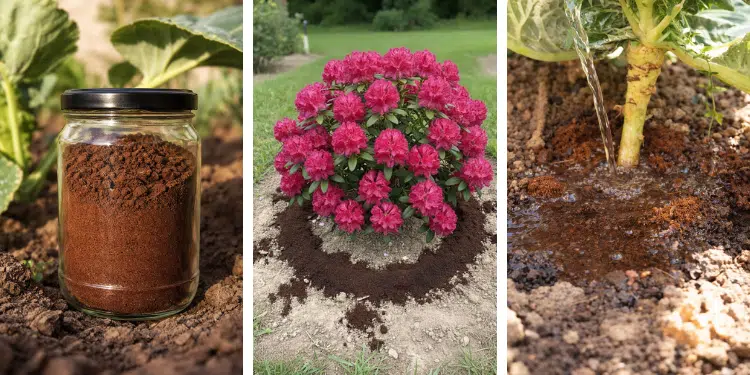
Some gardeners use coffee grounds as a rough-textured barrier around vulnerable plants. The gritty texture may discourage slugs from crossing.
Important Note
Reapply after rain. Do not rely solely on grounds for severe infestations.
5. Ant Activity
Ants often build nests in dry garden beds.
Why Coffee Grounds May Help
Used grounds can disrupt scent trails and make soil less appealing for nesting in some cases.
Sprinkle lightly over ant pathways and monitor results.
6. Weak Flowering in Certain Plants
Some flowering plants respond well to improved organic matter in soil.
Where Coffee Grounds Are Commonly Used
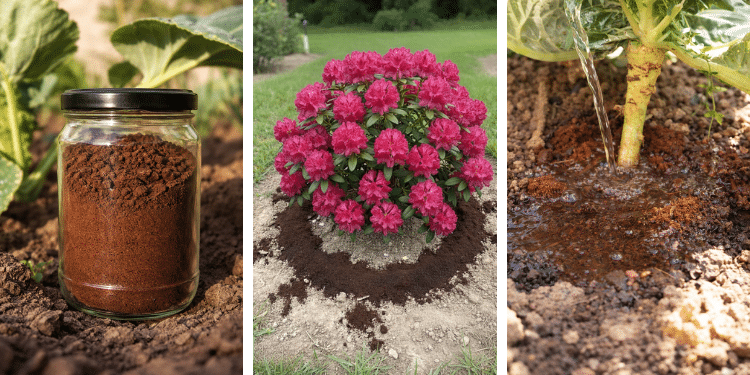
Gardeners sometimes apply them around acid-loving plants such as:
- Hydrangea
- Azalea
- Rhododendron
While coffee grounds alone will not dramatically change soil pH, they can contribute to long-term soil enrichment when composted.
7. Fungal Growth in Soil
Healthy soil contains beneficial microbes.
How Coffee Grounds Contribute
When composted properly, coffee grounds feed beneficial bacteria and fungi, supporting soil biology.
Healthy microbial life can help plants resist stress.
Never apply thick wet layers directly onto soil surface, as this can promote mold growth.
8. Poor Water Retention in Sandy Soil
Sandy soils drain too quickly.
Why Organic Matter Matters
Coffee grounds increase organic content, helping soil hold moisture longer.
Mix into soil lightly rather than layering on top.
9. Earthworm Decline
Earthworms improve soil aeration and nutrient cycling.
Do Earthworms Like Coffee Grounds?
In moderation, earthworms are attracted to decomposing organic material. When added to compost, coffee grounds may support worm activity.
Avoid excessive use – very thick layers can repel worms instead.
10. Seedling Protection
Some gardeners use thin rings of coffee grounds around seedlings to create a light barrier against crawling insects.
While not a guaranteed solution, the texture may deter certain pests temporarily.
Always monitor plant response.
How to Apply Coffee Grounds Safely
To avoid problems:
- Use only used (brewed) grounds
- Apply thin layers
- Mix into compost whenever possible
- Avoid forming dense mats on soil
- Monitor plant health
Too much coffee ground application can:
- Create compacted crust
- Slow water penetration
- Tie up nitrogen temporarily
Balance is essential.
Plants That Generally Respond Well
While not all plants benefit equally, gardeners often apply composted coffee grounds near:
- Tomato
- Blueberry
- Rose
- Carrot
Always observe plant reaction and adjust accordingly.
When NOT to Use Coffee Grounds
Avoid heavy application:
- Around young seedlings in large amounts
- On dry compacted soil without mixing
- Around plants that prefer very alkaline soil
- As a full fertilizer replacement
Coffee grounds are a supplement – not a complete nutrient source.
Composting Is the Best Method
The safest and most effective way to use coffee grounds is in compost. Once broken down, they become part of a balanced soil amendment that improves:
- Structure
- Microbial activity
- Moisture balance
- Nutrient cycling
Composted grounds are far less likely to cause problems than fresh layers.
Coffee grounds can help address several common garden challenges when used properly.
From improving soil texture and supporting compost activity to discouraging certain pests, they offer gardeners a simple way to recycle household waste into something beneficial.