If you grow flowering plants, you already know one thing: blooms require energy. Behind every vibrant rose, full geranium basket, or heavy hydrangea bloom is a plant drawing nutrients from the soil – especially potassium.
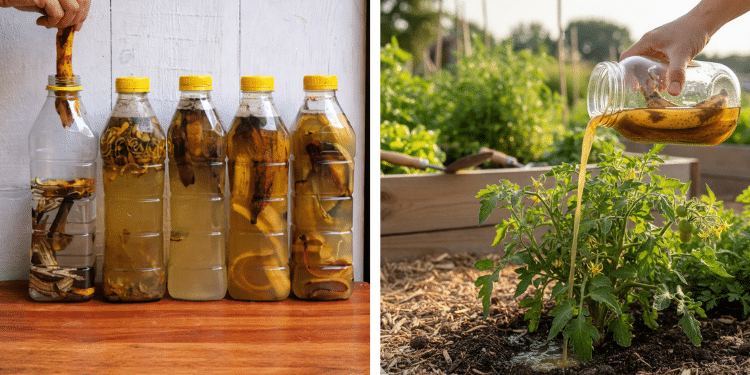
One of the simplest, most accessible ways to gently supplement flowering plants is by using banana peels soaked in water.
This homemade liquid fertilizer has become popular among gardeners because it recycles kitchen waste into something useful, costs nothing, and is easy to prepare.
Why Banana Peels Are Used in Gardening
Banana peels contain several plant nutrients in small but useful amounts, including:
- Potassium
- Phosphorus
- Calcium
- Magnesium
- Trace minerals
Of these, potassium is the most important for flowering plants.
Potassium helps:
- Strengthen plant cell walls
- Regulate water movement inside the plant
- Support bud formation
- Improve flower size and color intensity
- Enhance stress resistance
Banana peels are not high in nitrogen, which means they are not ideal for leafy growth alone. Instead, they are better suited for flowering and fruiting stages.
What Happens When You Soak Banana Peels in Water?
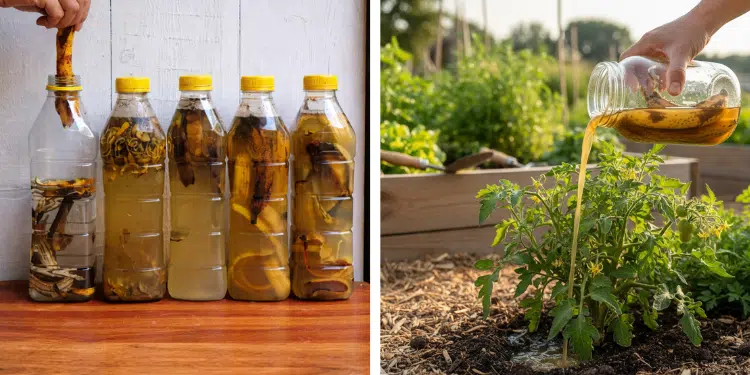
When banana peels sit in water, some water-soluble nutrients slowly leach out into the liquid. This creates a mild nutrient solution – often called banana peel tea.
Unlike burying fresh peels directly in soil, which takes weeks to decompose, soaking allows you to apply nutrients more quickly in liquid form.
However, it’s important to understand: Banana peel water is a mild supplement, not a complete fertilizer. It works best when used alongside compost or balanced feeding.
How to Make Banana Peel Water Fertilizer (Step-by-Step)
There are two safe and practical methods.
Method 1: Simple 24–48 Hour Soak
This method is ideal for beginners.
What You Need:
- 1–2 banana peels
- 1 liter (4 cups) of water
- A glass jar or container
Instructions:
- Cut banana peels into small pieces to increase surface area.
- Place them in the container.
- Pour water over the peels until submerged.
- Cover loosely (do not seal airtight).
- Let sit for 24–48 hours.
- Strain the liquid.
- Dilute with equal parts fresh water before use.
The liquid should have a mild earthy smell – not sour or rotten.
Method 2: 3–5 Day Fermented Soak (Stronger Version)
This method produces a slightly more concentrated solution.
- Chop peels and place in jar.
- Cover with water.
- Leave at room temperature for 3–5 days.
- Stir once daily.
- Strain and dilute 1:2 with water before use.
If the liquid smells strongly rotten or mold forms, discard it.
How to Apply Banana Peel Fertilizer Properly
Pour the diluted solution directly onto the soil around the plant’s root zone.
Avoid:
- Pouring on leaves
- Soaking already wet soil
- Applying too frequently
Use once every 2–3 weeks during active growing season (spring and summer).
Always ensure proper drainage in pots before applying.
Which Flowering Plants Benefit Most?
Banana peel water is most helpful during blooming periods.
1. Rose
Roses are heavy bloomers and benefit from potassium support during bud formation.
2. Geranium
Helps encourage repeat flowering.
3. Petunia
Supports fuller baskets during peak bloom.
4. Hibiscus
May support larger bloom development.
5. Hydrangea
Apply lightly around root zone.
6. Begonia
Responds well during active flowering.
7. Orchid
Use highly diluted solution and sparingly.
Indoor Potted Plant Use
Banana peel water is especially useful for container plants.
Why?
Potted plants:
- Lose nutrients faster
- Have limited soil reserves
- Require gentle feeding
Because banana peel tea is mild, it’s less likely to burn roots compared to strong synthetic fertilizers.
Still, moderation is key.
Can Banana Peel Water Change Soil pH?
Many people believe banana peels acidify soil. In reality:
Used banana peels have minimal impact on soil pH when applied in moderate amounts.
They are not a reliable way to significantly alter soil acidity.
What Banana Peel Fertilizer Does NOT Do
It does not:
- Replace balanced fertilizer
- Provide high nitrogen
- Instantly fix major deficiencies
- Guarantee larger flowers
It is best used as a gentle supplemental booster.
Common Mistakes Gardeners Make
1. Applying Too Often
Too much organic matter can attract fungus gnats and cause soil imbalance.
2. Pouring on Leaves
This can cause spotting and attract insects.
3. Using Undiluted Solution
Always dilute before applying.
4. Leaving Peels to Rot in Water Too Long
Spoiled liquid can harm roots.
5. Using on Waterlogged Soil
Plants need oxygen at roots – avoid adding more moisture to already saturated soil.
Alternative Ways to Use Banana Peels in the Garden
If you prefer not to make liquid fertilizer, you can:
- Chop and bury peels 4–6 inches deep near plants
- Add to compost pile
- Dry and grind into powder
- Blend with water and compost for slurry
Each method releases nutrients slowly.
Are There Risks?
When used correctly, risks are minimal.
However:
- Excess can attract pests
- Overuse can create mold
- Thick layers on soil surface can compact
Balance and moderation are essential.
Banana peels and water create a simple, accessible homemade fertilizer that can gently support flowering plants when used properly.
While not a miracle solution, it provides potassium and trace nutrients that help plants during bloom cycles.