In the world of home remedies and DIY hacks, there’s a surprising player that’s gaining traction: aluminum foil. While traditionally reserved for kitchen use, aluminum foil is now being recognized for its potential benefits in health and wellness, particularly for foot care. This might sound unconventional, but enthusiasts claim that wrapping feet in aluminum foil can lead to some rather intriguing outcomes.
From reducing pain and swelling to enhancing relaxation, the uses of aluminum foil might just extend beyond preserving your leftovers. With increasing popularity on social media and wellness blogs, many are curious about the real effects of this peculiar practice. Let’s delve deeper into why people are wrapping their feet in aluminum foil and the potential benefits and risks involved.
1. Why People Are Wrapping Their Feet In Aluminum Foil
The practice of wrapping feet in aluminum foil is believed to have originated from traditional Russian and Chinese medicine, where it was used to conserve body heat and energy. Advocates of this method claim that it can help alleviate a variety of foot-related issues, including pain, swelling, and even cold feet. Some proponents suggest that the reflective properties of aluminum foil can help bounce body heat back into the feet, potentially offering a warm and soothing sensation.
There are anecdotal reports of people experiencing relief from minor aches and improved comfort, particularly during colder months. The idea is that aluminum foil acts as an insulating layer, trapping heat and enhancing blood circulation. However, these claims mostly rely on individual experiences rather than scientific validation.
2. The Science: How Foil Affects Heat, Cold, And Circulation
Aluminum foil is known for its high thermal conductivity, which allows it to effectively reflect and retain heat. When wrapped around the feet, it can create a barrier that helps maintain warmth by reflecting the body’s heat back onto the skin. This can be particularly beneficial in cold environments, potentially helping to prevent heat loss.
However, it is crucial to note that while aluminum foil can retain heat, it does not inherently improve circulation. Improved circulation typically requires physical activity or medical intervention, rather than passive methods like wrapping in foil. Therefore, while foil might help in keeping feet warm, its impact on circulation is likely minimal.
3. Surprising Relief For Sore, Tired, Or Swollen Feet
Many users report that wrapping their feet in aluminum foil provides a comforting sensation that helps relieve tired and sore feet. The warmth generated by the foil wrap can relax muscles and reduce tension, which may be perceived as relief. For individuals who stand for long periods or engage in strenuous activities, this method could offer temporary comfort by soothing overworked muscles.
Additionally, some people find that the gentle compression of the foil wrap can help reduce swelling, although this effect is not well-documented in scientific literature. The compression might mimic the effects of more traditional methods like compression socks, albeit in a less controlled manner.
4. Can Aluminum Foil Ease Foot Pain From Arthritis And Plantar Fasciitis?
For those suffering from conditions like arthritis and plantar fasciitis, the promise of pain relief through simple means like aluminum foil is appealing. The warmth from the foil could potentially ease joint stiffness and muscle tension, offering a mild form of pain management. However, it is important to approach such claims with caution.
While the reflective heat might provide temporary relief, it cannot address the underlying inflammation or degeneration associated with these conditions. Medical treatments and physical therapies are generally more effective and recommended for managing long-term symptoms of arthritis and plantar fasciitis.
5. Using Foil For Cold Feet, Poor Circulation, And Nighttime Discomfort
Cold feet can be uncomfortable, especially during winter months or for those with circulation issues. Wrapping feet in aluminum foil might help retain heat, providing a simple solution for keeping them warm at night. This can lead to a more comfortable sleep, especially for those who struggle with cold extremities.
However, for individuals with poor circulation, such as those with peripheral artery disease, relying solely on aluminum foil is not advisable. These individuals should seek professional medical advice to address circulation problems effectively.
6. Beauty Hack: Softer Heels, Callus Care, And At-Home Spa Treatments
Beyond potential health benefits, aluminum foil is also being used as a beauty hack for feet. By combining foil wraps with moisturizing treatments, some people claim that they achieve softer heels and reduced calluses. The idea is to apply a thick moisturizer or foot cream, then wrap the feet in foil to lock in moisture and enhance the cream’s effectiveness.
This method can create a mini spa experience at home, providing a relaxing and hydrating treatment for dry or rough feet. While not a substitute for professional pedicures, it can be a convenient and cost-effective way to maintain foot health and appearance.
7. DIY Foot Wrap: Step-By-Step Guide To The Foil Method
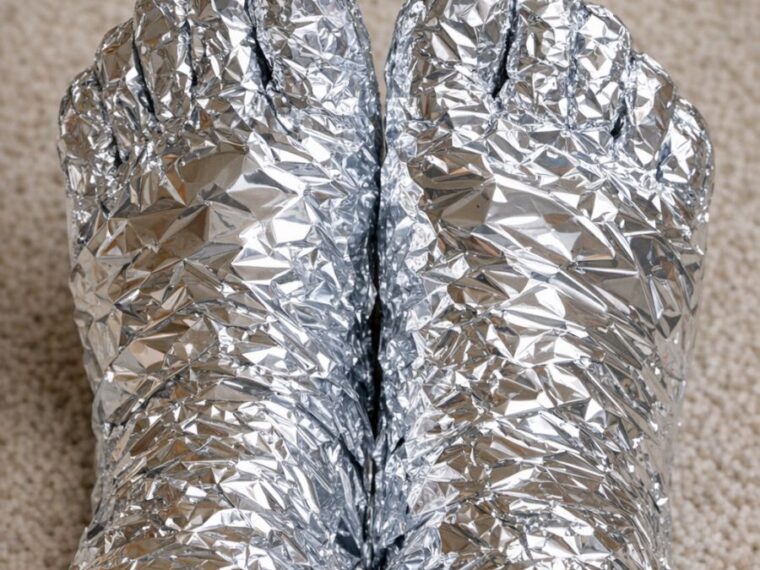
To try the aluminum foil foot wrap at home, follow these simple steps: First, wash and dry your feet thoroughly. Next, apply a generous layer of moisturizer or foot cream to your feet, focusing on areas prone to dryness or calluses. Then, take a sheet of aluminum foil and wrap it around each foot, ensuring it covers the entire surface. For added insulation, you can layer a pair of socks over the foil.
Leave the foil wrap on for about 30 minutes to an hour, depending on your comfort level. Once time is up, remove the foil and socks, and gently massage any remaining cream into your skin. This method can be repeated as needed, particularly during colder months or when your feet feel particularly tired or dry.
8. What Doctors And Experts Actually Say About Foil Foot Wraps
Medical professionals often emphasize the importance of evidence-based treatments, and the use of aluminum foil for foot care lacks substantial scientific backing. While the method may be safe for most people and offer temporary comfort, experts caution against relying on it for serious medical conditions.
Doctors typically recommend more conventional treatments for foot-related issues, such as physical therapy, appropriate footwear, and prescribed medications. Consulting a healthcare provider is advised, especially for individuals with chronic foot problems or underlying health conditions.
9. Risks, Myths, And When You Should Avoid This Viral Trick
While generally safe, there are a few risks associated with wrapping feet in aluminum foil. Prolonged use might lead to skin irritation or rashes, particularly for those with sensitive skin. It is also important to ensure that the foil does not restrict blood flow by wrapping too tightly.
Moreover, myths surrounding aluminum foil, such as its ability to cure diseases or significantly improve circulation, should be approached with skepticism. Individuals with allergies to metals or severe foot conditions should avoid using this method and seek professional medical advice instead.
10. Smarter Alternatives If Foil Isn’t Right For Your Feet
If aluminum foil wraps are not suitable for your needs, consider alternatives like heated foot pads, thermal socks, or electric foot warmers to maintain warmth. For addressing pain or circulation issues, compression socks and regular foot exercises can be more effective.
Additionally, regular moisturizing and exfoliation can help maintain foot health and appearance, without the need for foil. These alternatives may provide more reliable and long-term benefits for those seeking foot care solutions.
11. How This Odd Trick Reflects Our Obsession With Quick Fixes
The popularity of wrapping feet in aluminum foil highlights a broader trend towards quick and easy solutions for health and wellness issues. In an age where convenience is highly valued, people are often drawn to simple hacks that promise immediate results.
However, while some DIY remedies can offer temporary relief or comfort, it is important to balance these with informed decisions and evidence-based practices. Understanding the limitations and potential risks of such methods can lead to more responsible and effective approaches to personal health care.