Banana peels are one of the most powerful – and most wasted – natural garden resources.
Most people throw them away without realizing they contain valuable plant nutrients, especially potassium, along with calcium, magnesium, trace phosphorus, and organic compounds that feed soil microbes.
When used correctly, banana peels can support flowering, fruiting, root strength, and overall plant resilience.
The key is not just knowing which plants benefit from banana peels, but also how to prepare and apply them properly. Tossing whole peels on soil is not the best method.
Chopping, composting, drying, or making banana peel tea gives far better results and avoids common problems like slow breakdown or pest attraction.
Why Banana Peels Help Plants
Banana peels are especially rich in:
- Potassium — supports flowering and fruiting
- Calcium — helps cell strength
- Magnesium — supports chlorophyll production
- Trace phosphorus — supports roots
- Natural sugars — feed beneficial microbes
They are not a complete fertilizer, but they are an excellent supplemental amendment – especially for flowering and fruiting plants.
Best uses come from:
- Banana peel compost
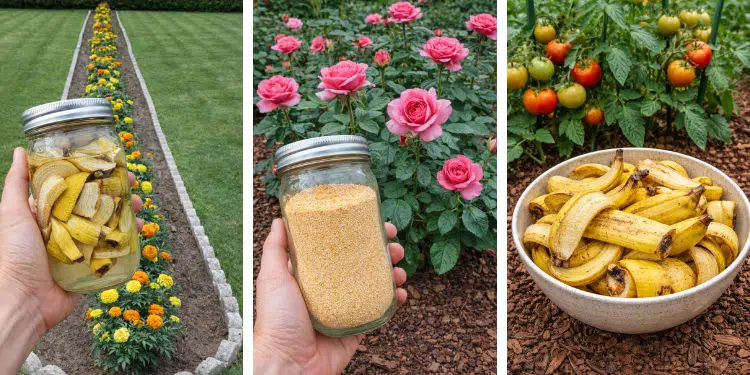
- Banana peel tea
- Dried peel powder
- Finely chopped buried peels
- Fermented peel extract
Best Preparation Methods (Use These First)
Before applying to plants, choose one of these methods:
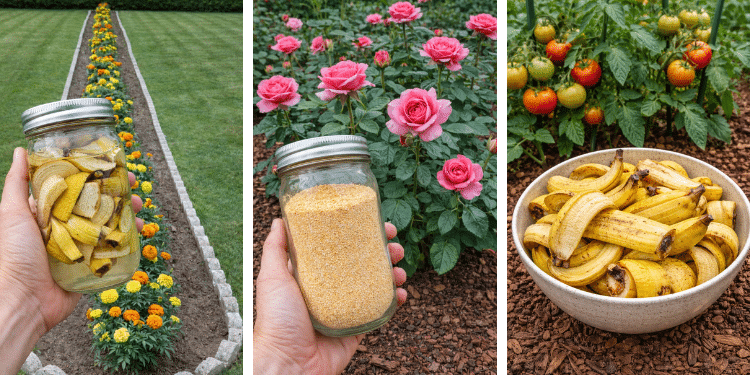
Chop & bury: Cut into small pieces and bury 3–6 inches deep.
Dry & grind: Dry peels and crush into powder.
Compost: Add to compost pile for balanced breakdown.
Banana tea: Soak chopped peels in water 24–48 hours, dilute, and water soil.
Avoid placing whole peels on the soil surface – they break down slowly and may attract pests.
Best Garden Plants That Benefit From Banana Peels
Tomatoes – Why Banana Peels Help & How to Apply Properly
Tomatoes are one of the most nutrient-demanding garden crops, especially once they shift from leaf growth into flowering and fruit production.
During this stage, potassium becomes critical because it regulates water movement, sugar transport, and fruit cell expansion.
When potassium is insufficient, tomatoes may produce flowers that drop early or develop uneven fruit.
Banana peels are especially useful here because they release potassium slowly as microbes break them down.
The benefit is not instant – it’s steady – which matches tomato feeding patterns better than quick synthetic spikes.
The most effective method is deep pre-plant feeding. Chop peels finely and mix with compost, then bury 6–8 inches deep in the planting trench before transplanting tomatoes.
This keeps decomposition away from young roots while creating a nutrient reserve zone roots will reach later. During flowering, you can add diluted banana peel tea once per month around the drip zone.
Never place fresh peels directly against tomato stems – active breakdown can temporarily reduce available nitrogen near the root zone.
Peppers – Flower Retention and Stress Reduction Support
Pepper plants are sensitive to stress during bud formation. One of the most common pepper problems is flower drop – the plant produces buds but sheds them before fruit sets.
This is often linked to temperature swings and nutrient imbalance, especially potassium and magnesium.
Banana peels help because potassium supports bud stability and magnesium supports chlorophyll production, which keeps leaves photosynthetically active during flowering. Strong leaf energy supports successful fruit set.
Because pepper roots are shallow and easily disturbed, the best method is banana peel tea, not soil burial.
Soak chopped peels for 24–48 hours, dilute half with water, and apply to soil every 3–4 weeks after buds appear. Avoid frequent feeding — peppers prefer moderate, steady nutrition rather than heavy inputs.
Roses – Bloom Density and Stem Structure
Roses repeatedly cycle through bud formation, flowering, and regrowth. Each cycle consumes potassium and calcium. Potassium supports petal formation and bloom size, while calcium strengthens cell walls and stems – helping blooms stand upright instead of drooping.
Banana peels match this need well because they release both minerals gradually and also feed soil microbes that help unlock other nutrients already in the soil.
The most reliable approach is dried peel powder feeding. Fully dry peels, grind them, and apply 1–2 tablespoons around the drip line, not near the cane base. Lightly scratch into soil and water deeply.
This avoids surface rot and pest attraction. Repeat every 5–6 weeks during active bloom cycles. Do not bury large peel chunks near rose roots – decomposition heat can damage fine feeder roots.
Cucumbers – Water Balance and Fruit Uniformity
Cucumbers are fast, water-rich fruit producers. Potassium plays a major role in regulating water pressure inside plant cells, which directly affects fruit shape, firmness, and uniformity. Low potassium often leads to misshapen cucumbers.
Banana peels help most when used before planting, because cucumbers dislike root disturbance later. Mix banana peel compost into the bed before sowing or transplanting.
Once vines are established, use only diluted banana tea once at early flowering stage. Avoid digging peels into soil midseason – cucumber roots spread wide and shallow.
Squash & Zucchini – Heavy Biomass Feeders
Squash plants produce large leaves, thick stems, and continuous fruit – which requires steady potassium and strong microbial soil activity.
Banana peels are especially useful here because they feed microbes that help break down organic matter into usable nutrients.
Best method is pre-plant deep burial mixed with compost under planting mounds. This fuels microbial zones beneath the root system.
Avoid surface placement – squash vines are prone to stem rot when organic debris sits against stems.
Strawberries – Sugar Transport and Fruit Quality
Potassium is directly tied to sugar movement in plants, which affects strawberry sweetness and fruit size. However, strawberry crowns are extremely rot-sensitive, so placement is critical.
Use only diluted banana peel tea applied between rows – never peel pieces. Apply once per month during bloom and fruiting. This delivers minerals without increasing crown moisture risk.
Blueberries – Microbial Support Rather Than Direct Feeding
Blueberries rely heavily on fungal and microbial soil partners to access nutrients. Banana peels help primarily by feeding those microbes rather than directly feeding the plant.
Use banana peel compost blended into acidic mulch once per year. Never bury fresh peels near blueberry roots – they are shallow and sensitive.
Hydrangeas – Large Bloom Nutrient Demand
Hydrangeas produce large, dense flower heads that require steady potassium. Banana peel compost supports that demand gradually without forcing growth.
Apply compost containing banana peels as a top dress in spring and again early summer. Water in thoroughly.
Sunflowers – Structural Load Support
Sunflowers build heavy seed heads on tall stems. Potassium supports structural strength and seed filling.
Use deep pre-plant burial with compost so nutrients release as roots deepen.
Marigolds – Continuous Bloom Cycle
Marigolds bloom continuously and benefit from light potassium supplementation.
Use banana tea every 4–5 weeks to extend bloom cycles without overstimulation.
Eggplant – Flower Stability
Eggplants drop flowers when nutrient balance is off. Potassium support improves fruit set reliability.
Apply monthly banana tea once flowering starts.
Beans – Soil Life Enhancement
Beans fix nitrogen but still depend on microbial soil networks. Banana peels help those microbes.
Use only composted banana peels pre-plant.
Flowering Houseplants – Trace Mineral Boost
Flowering indoor plants benefit from trace minerals but are salt-sensitive.
Use very diluted banana tea every 6 weeks only during active growth.
Common Mistakes With Banana Peels
Do not:
- Throw whole peels on soil surface
- Bury large chunks near roots
- Use weekly (too frequent)
- Rely on peels as sole fertilizer
- Apply to seedlings
Think supplement – not main feed.
Banana peels are a powerful garden resource when used correctly. They provide potassium, trace minerals, and microbial food that support flowering, fruiting, and plant resilience.
Tomatoes, peppers, roses, berries, cucumbers, and flowering plants benefit most – especially when peels are composted, dried, or brewed into tea.