Gardening enthusiasts often battle with weeds, which can quickly overrun garden beds, stealing nutrients and space from desired plants. To combat this, a strategic approach involving layering certain materials can provide an effective and sustainable solution. This method not only suppresses weed growth but also enriches the soil, promoting healthier plant development.
Layering involves using specific materials that work in tandem to cut off sunlight to weeds, prevent their germination, and enhance soil fertility. By understanding and properly applying this technique, gardeners can maintain cleaner, more productive garden beds with less effort and reduced reliance on chemical herbicides.
1. Why Layering Your Garden Beds Stops Weeds Before They Start
The concept of layering to stop weeds is based on creating a multi-barrier system that targets weeds at their core—germination and growth. Each layer serves a distinct purpose, collectively forming an obstacle that inhibits weed proliferation. For instance, the base layer acts as a physical barrier that cuts off light and air, essential elements weeds need to thrive.
This method also improves soil health. As the layers break down over time, they add organic matter to the soil, enhancing its structure and fertility. This results in healthier, more robust plants that can outcompete any weeds that manage to break through. Ideally, a well-layered garden bed can reduce weed emergence by up to 90%, according to studies on organic gardening techniques.
2. Ingredient One: Cardboard Or Newspaper As A Weed-Smothering Base
The first layer in the weed-blocking strategy is cardboard or newspaper, both of which are accessible and affordable options. These materials are effective because they are opaque and biodegradable, naturally breaking down over time and adding organic matter to the soil.
Cardboard is particularly favored for its thickness and durability. It can suppress even the most vigorous weeds. When using cardboard, ensure all tape and staples are removed to avoid contamination. Newspapers, on the other hand, should be layered thickly, at least 10 sheets, to ensure sufficient blockage of sunlight.
3. How To Prepare And Lay The Cardboard Layer Correctly
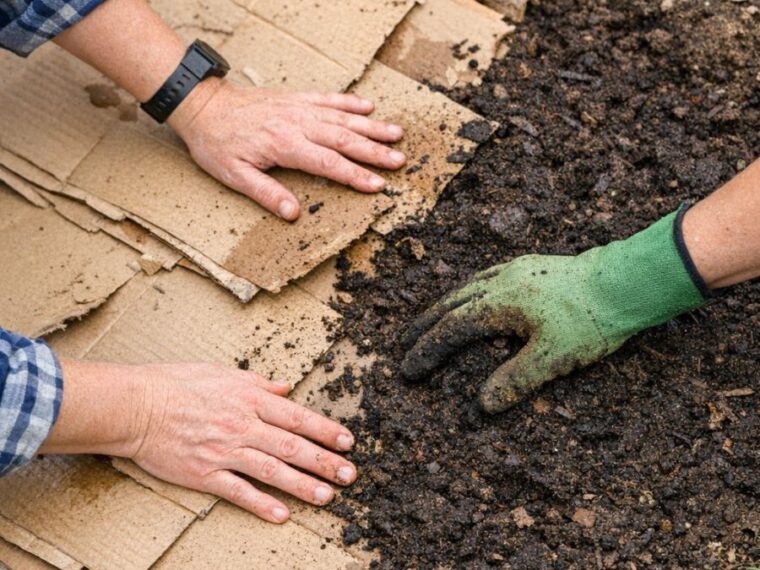
To prepare the cardboard layer, begin by collecting large, flat pieces of cardboard. Remove any non-biodegradable materials such as tape and staples. Lay the cardboard across the garden bed, overlapping the edges by at least 6 inches to prevent weeds from sneaking through the gaps.
If using newspaper, lay down at least 10 sheets thick. Ensure that the newspaper is thoroughly wet before applying it to the soil; this helps it conform to the ground and stay in place. Cover the entire area where you want to suppress weeds, making sure there are no gaps.
4. Ingredient Two: Compost For A Fertile, Weed-Resistant Barrier
The second ingredient is compost, which serves as both a nutrient-rich amendment and a deterrent to weed growth. By applying a layer of compost over the base layer, gardeners provide essential nutrients that promote healthy plant growth, giving desired plants a competitive edge over weeds.
Compost also improves soil structure and moisture retention, reducing the need for frequent watering. Ideally, a 2 to 4-inch layer of compost should be applied. This depth is sufficient to feed the plants while creating an additional barrier to weed emergence.
5. Choosing The Right Compost And How Much To Use
Not all compost is created equal. For the best results, use well-rotted, dark compost that is free of weed seeds. Homemade compost, when managed correctly, can provide excellent results. If purchasing compost, select a reputable source to ensure quality.
Apply a generous layer of compost, around 2 to 4 inches thick, ensuring even distribution across the cardboard or newspaper layer. This amount provides enough depth to nourish plants and hinder weed growth effectively.
6. Ingredient Three: Mulch As The Top Weed-Blocking Shield
The final ingredient in this layering technique is mulch, which acts as a protective shield, further preventing weeds from taking root. Mulch helps retain soil moisture, regulate temperature, and, importantly, block light from reaching any potential weed seeds.
Organic mulches, such as wood chips, straw, or shredded leaves, are excellent choices. They gradually decompose, adding organic matter to the soil, and should be applied at a depth of 2 to 3 inches.
7. The Best Types Of Mulch For Long-Lasting Weed Control
Selecting the right type of mulch is crucial for long-lasting weed control. Hardwood and softwood bark mulches are popular for their durability and aesthetic appeal. Straw and hay are other options, though care should be taken to ensure they are weed-free.
Wood chips are particularly effective and can last several seasons before needing replenishment. For a more decorative look, consider dyed mulches, which provide the same weed-blocking benefits while enhancing the visual appeal of your garden.
8. Step-By-Step: How To Layer All Three Ingredients In Any Bed
Begin by preparing your garden bed, removing any large weeds or debris. Lay down cardboard or newspaper as the first layer, overlapping edges to completely cover the soil. Follow this with a 2 to 4-inch layer of compost, spreading it evenly across the base layer.
Finish with a 2 to 3-inch layer of mulch, ensuring complete coverage. This top layer serves as the first line of defense against weed seeds. Once all layers are applied, water the bed thoroughly to help settle the materials.
9. Common Mistakes That Let Weeds Sneak Back In
One common mistake is failing to overlap the edges of the cardboard or newspaper, allowing weeds to exploit gaps. Another issue is using too thin a layer of compost or mulch, which can lead to insufficient weed suppression.
Furthermore, neglecting to replenish mulch regularly can reduce its effectiveness over time. Mulch should be topped up at least once a year to maintain a consistent barrier against weeds.
10. Seasonal Maintenance To Keep The Weed-Blocking Effect Going
To sustain the weed-blocking effect, regular maintenance is essential. Each season, inspect the mulch layer, adding more as necessary to maintain the recommended depth. This not only helps continue weed suppression but also improves soil health as the mulch decomposes
Periodically check for any weeds that may have emerged and remove them promptly to prevent them from seeding. By consistently maintaining the layered system, gardeners can enjoy a low-maintenance, weed-free garden throughout the growing season.