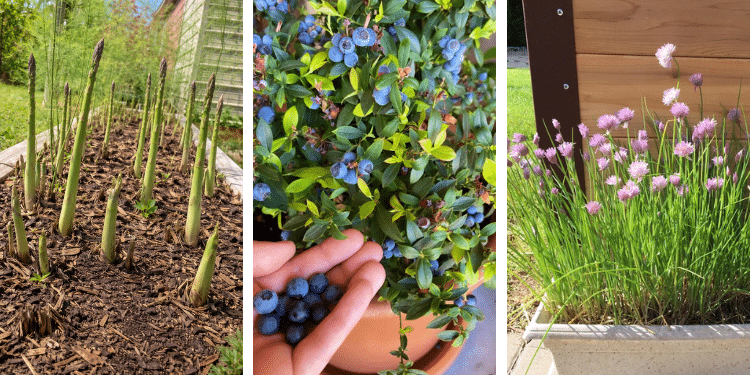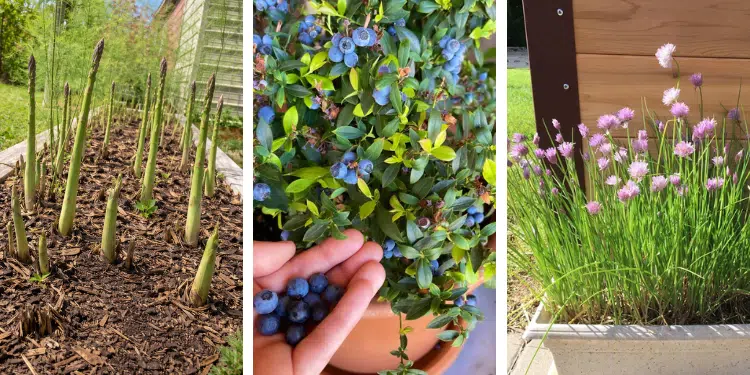
Perennial food plants are one of the smartest investments you can make in a garden. Unlike annual vegetables that must be replanted every year, perennial foods come back season after season – often stronger and more productive over time.
With one planting, you can harvest for years, sometimes decades, with less work, lower cost, and greater resilience.
For gardeners focused on sustainability, food security, and lower-maintenance growing, perennial crops form the backbone of a productive landscape.
They build deeper root systems, improve soil structure, support beneficial organisms, and better tolerate weather extremes once established.
Why Grow Perennial Food Crops?
Perennial edibles offer several major advantages over annual crops.
They typically provide:
- Harvests for many years from one planting
- Lower yearly labor
- Deeper drought resistance
- Better soil improvement
- Earlier seasonal growth
- Stronger pest resilience over time
- Higher long-term yield per square foot
Most perennial foods require patience in year one – and reward it for many years after.
1. Asparagus – The Classic Long-Term Vegetable
Asparagus is one of the most famous perennial vegetables. Once established, a well-managed asparagus bed can produce for 15–25 years.
After planting crowns, harvest begins lightly in year 2–3 and increases afterward. Spears emerge each spring and can be cut daily during peak season.
Key needs:
- Full sun
- Deep, loose soil
- Good drainage
- Annual compost topdressing
Let late-season spears grow into ferny foliage – this feeds next year’s crop.
2. Rhubarb – Reliable Spring Producer
Rhubarb produces thick edible stalks every spring for decades. A single crown can remain productive for 10–20 years.
It thrives in cool climates and is one of the earliest harvests of the year.
Best conditions:
- Cold winters (for dormancy)
- Rich soil
- Consistent moisture
- Partial to full sun
Only stalks are eaten – leaves are not edible.
3. Strawberries (Perennial Types)
Strawberries are technically short-lived perennials that produce for multiple years, especially everbearing and day-neutral types.
With runner renewal, beds can stay productive indefinitely.
Productive cycle:
- Year 1 – establishment
- Years 2–3 – peak yield
- Year 4 – renovate or replace runners
They spread naturally and are ideal for edible groundcovers.
4. Fruit Trees – Long-Term Food Engines
Fruit trees are the ultimate perennial food investment. A single tree can produce hundreds of pounds of food per year once mature.
Examples include:
- Apple
- Pear
- Plum
- Peach
- Cherry
- Apricot
Lifespan: 15–50+ years depending on type and rootstock.
They require pruning and seasonal care – but produce massive returns.
5. Blueberries – Decades of Harvest
Blueberry bushes can produce for 20–30 years when planted in acidic soil.
They provide annual harvests plus ornamental value with spring flowers and fall color.
Requirements:
- Acidic soil (pH ~4.5–5.5)
- Mulch with pine bark or needles
- Consistent moisture
- Cross-pollination (plant 2+ varieties)
6. Grapes – High Yield From One Vine
Grapevines are long-lived perennials capable of producing for decades.
One mature vine can yield large harvests each year when pruned correctly.
They grow best with:
- Strong sun
- Airflow
- Trellis support
- Annual pruning
Without pruning, yields drop – with pruning, production stays high.
7. Jerusalem Artichokes (Sunchokes)
Jerusalem artichokes produce edible underground tubers and return every year from remaining roots.
They are extremely hardy and productive – sometimes aggressively so.
Advantages:
- Very high yield
- Poor soil tolerant
- Drought resistant
- Pollinator-friendly flowers
Best planted in contained areas.
8. Perennial Kale (Tree Kale Types)
Certain kale varieties are perennial in mild climates, producing leaves year after year instead of forming seed heads and dying.
Often called tree kale or perennial collards, they can produce continuously with leaf harvesting.
Best in:
- Mild winters
- Well-drained soil
- Regular pruning harvest
9. Walking Onions (Egyptian Onions)
Walking onions are perennial onions that reproduce through top bulbils instead of seeds.
They produce edible greens and bulbs every year and “walk” across beds as tops fall and re-root.
Benefits:
- Cold hardy
- Early harvest
- Continuous supply
- Very low maintenance
Ideal for permaculture gardens.
10. Sorrel – Early Leafy Green Perennial
Sorrel is a tart leafy green that returns every year and is one of the earliest spring harvests.
It produces for many years from one crown.
Best uses:
- Salads
- Soups
- Sauces
Thrives in cool weather and partial sun.
11. Garlic Chives – Cut-and-Come-Again Perennial
Garlic chives return yearly and provide continuous leaf harvests plus edible flowers.
They spread gradually and require almost no care.
Great for:
- Herb borders
- Companion planting
- Pollinator support
Harvest repeatedly through the season.
12. Nut Trees – Multi-Decade Food Production
Nut trees are among the longest-producing food plants available.
Examples include:
- Walnut
- Chestnut
- Hazelnut
- Almond (climate dependent)
Though slower to begin production, they can produce for generations once mature.
They are ideal for long-term food landscapes.
How to Design a Perennial Food Garden
The most productive perennial gardens use layered planting:
- Trees (fruit & nut)
- Shrubs (berries)
- Perennial vegetables
- Groundcovers (strawberries, herbs)
This creates stacked production in the same space – often called a food forest model.
Soil Preparation Matters Most at Planting
Because perennial crops stay in place for years, soil preparation at planting time is critical.
Improve soil with:
- Compost
- Mineral amendments
- Deep loosening
- Mulch layers
Fix soil once – benefit for years.
Maintenance Is Lower – But Not Zero
Perennials reduce yearly planting work – but still need:
- Mulching
- Pruning (trees, vines)
- Occasional dividing
- Compost topdressing
- Pest monitoring
Think less work, not no work.
Yield Timeline – What to Expect
Perennial foods follow a pattern:
Year 1 — establishment
Year 2 — light harvest
Year 3+ — full production
Patience is rewarded with increasing yields.
Best Climates for Perennial Foods
Most perennial foods thrive best in:
- Temperate climates
- Regions with winter dormancy
- Stable rainfall or irrigation
But many options exist for warm and cold zones alike.
Perennial food plants are one of the most powerful upgrades a gardener can make. With one planting, they produce for years, reduce annual labor, improve soil health, and increase long-term food security.