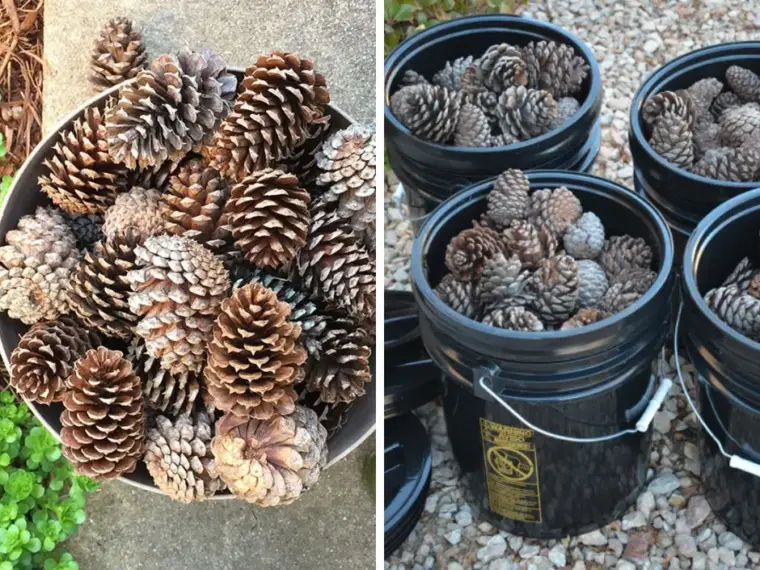
When it comes to filling pots, most gardeners instinctively reach for gravel, stones, or broken pottery shards to improve drainage. But there’s another, far more natural and sustainable option – pinecones.
Pinecones might seem like simple forest debris, but they can do wonders for your container plants.
They’re lightweight, biodegradable, and packed with air pockets that make them perfect for improving soil structure and root health.
The Hidden Problem With Heavy Planters
Anyone who gardens with containers knows how quickly potting soil and moisture can weigh a planter down.
Over time, even lightweight containers can become cumbersome – making them difficult to move, drain, or repot.
Adding filler material to the bottom is a common fix. But traditional fillers like gravel, stones, or broken terracotta can create more problems than they solve.
Here’s why:
- Gravel doesn’t improve drainage. Contrary to old gardening myths, gravel at the bottom of a pot can actually make drainage worse. Water tends to accumulate above the gravel layer, keeping soil soggy.
- It adds unnecessary weight. Heavy materials make pots harder to move or reposition throughout the growing season.
- It’s wasteful space. The portion filled with rocks provides no nutrients or root support.
This is where pinecones come in – they solve all three problems at once.
Why Pinecones Are the Perfect Planter Filler
Pinecones act like a natural sponge and aerator for your soil. Their open, woody structure allows air and water to flow freely, keeping roots healthier for longer. Let’s break down the main benefits.
1. Excellent Natural Drainage
Each pinecone is made up of layered scales that create air pockets between them. When placed at the bottom of a planter, these pockets allow excess water to drain quickly without pooling.
Instead of water sitting in a compact layer like it does over gravel, it filters gradually through the cones and into the soil above, ensuring roots stay moist – but not waterlogged.
Healthy drainage is one of the most crucial factors for potted plants, especially for species like succulents, herbs, and flowering annuals that are prone to root rot.
2. Lightweight and Easy to Handle
Unlike gravel or ceramic shards, pinecones are extremely light. You can fill even large containers without dramatically increasing their weight, making them much easier to move throughout the year.
This is especially helpful for balcony gardens, raised container setups, or any gardener who likes rearranging their potted plants with the seasons.
The lightweight structure also allows air circulation beneath the root zone – an often-overlooked feature that prevents compaction in the lower layers of soil.
3. Natural Airflow for Stronger Roots
Roots need oxygen just as much as they need water. When soil becomes compacted, airflow decreases, and plants begin to suffocate from lack of oxygen.
Pinecones, with their rough texture and shape, naturally loosen the lower layer of soil, keeping it aerated. This oxygen flow encourages stronger, deeper root systems and better overall plant growth.
Your plants will show the difference with healthier leaves, sturdier stems, and more resilience to drought or transplant shock.
4. Acts as a Slow-Release Organic Material
Over time, pinecones gradually break down, adding small amounts of carbon-rich organic matter to the soil. This enriches your potting mix, improving structure and microbial activity.
Unlike synthetic fillers that do nothing for your plants, pinecones contribute to the ecosystem within the pot – feeding beneficial bacteria and earth-friendly fungi that help process nutrients.
While they decompose slowly (often over several years), they do so in a way that supports long-term soil health, not in a way that clogs roots or creates decay problems.
5. Cost-Free and Sustainable
Perhaps the best part of using pinecones? They’re completely free if you have access to conifer trees – and totally biodegradable.
Using natural materials as filler is an eco-conscious choice that reduces waste and reliance on mined or manufactured materials like perlite or plastic pot fillers.
Each season, you can refresh or replace them easily, returning the old ones to your compost pile, where they’ll continue breaking down naturally.
6. Keeps Pests Away (Bonus Benefit)
Dry pinecones contain natural compounds like terpenes and resin acids, which give them their distinct scent.
These compounds are mildly repellent to certain soil-dwelling pests such as fungus gnats, ants, and slugs.
While not a substitute for pest control, adding pinecones to the bottom of your planter can subtly discourage unwanted insects from nesting inside pots – especially when combined with proper watering and organic soil.
How to Prepare Pinecones for Planter Use
Before you toss pinecones straight into your pots, it’s best to prepare them properly to ensure they’re clean, dry, and pest-free.
Here’s a simple method to get them ready for use:
Step 1: Collect and Inspect
Gather pinecones that are fully opened and dry – these are lighter and contain more air pockets. Avoid closed, sticky, or green cones, as they may still hold moisture and sap. Shake or tap them lightly to remove debris and insects.
Step 2: Bake or Sun-Dry Them
To sterilize pinecones and kill any pests or fungal spores, bake them in the oven at 200°F (about 93°C) for 20–30 minutes. Alternatively, you can sun-dry them outdoors for several days in warm weather, turning occasionally.
Step 3: Cool and Store
Once cooled, store pinecones in a dry, ventilated space until you’re ready to use them. Avoid sealing them in plastic bags – they need airflow to stay crisp and dry.
Prepared properly, pinecones can last for years inside planters without molding or collapsing.
How to Use Pinecones in Your Planter
Adding pinecones to your containers couldn’t be simpler. Here’s how to layer them correctly for maximum benefit:
- Fill the bottom one-third of your container with pinecones. Arrange them loosely so there’s still plenty of space for air and water to move through.
- Add a layer of landscape fabric or mesh over the pinecones if you want to keep soil from washing down between them. (Optional, but useful for fine potting mixes.)
- Top with your potting soil and plant as usual.
That’s it – no fancy tools or additives required.
If your container is especially large, you can mix pinecones with other organic fillers like bark chips, twigs, or coconut husks to maintain drainage while extending your potting mix.
Which Plants Benefit Most From Pinecone Drainage?
Almost any plant that dislikes soggy roots will thrive with a layer of pinecones below the soil. These include:
- Succulents and cacti – prevent root rot by maintaining drier lower layers.
- Herbs like rosemary, lavender, and thyme – all prefer well-drained soil and benefit from the air gaps pinecones create.
- Flowering annuals such as petunias, geraniums, and zinnias – stay healthier when excess water drains freely.
- Indoor houseplants – especially those in decorative pots without drainage holes. Pinecones can act as a safe, lightweight substitute for gravel or clay pellets.
For moisture-loving plants like ferns or peace lilies, pinecones can still be used – just use fewer and top with richer soil to retain more moisture.
Can Pinecones Replace Potting Soil?
No – pinecones are a supplement, not a substitute for soil. They’re meant to fill the bottom portion of deep containers, not to grow plants directly in.
Think of them as the “foundation layer” that improves drainage, reduces soil use, and prevents water stagnation.
The top two-thirds of the container should always be filled with high-quality potting mix suited to your plant type.
How Long Do Pinecones Last in Containers?
Pinecones decompose slowly, usually over two to three years, depending on moisture levels and microbial activity in your soil.
You can check them during repotting – if they’re starting to crumble or compress, simply replace them with fresh cones. Their gradual breakdown makes them an excellent long-term filler that also enriches soil as they age.
Comparing Pinecones to Other Planter Fillers
| Filler Type | Weight | Drainage | Biodegradable | Adds Nutrients | Longevity |
|---|---|---|---|---|---|
| Gravel or rocks | Heavy | Poor (can trap water) | No | No | Indefinite |
| Styrofoam or plastic | Light | Fair | No | No | 1–2 years |
| Bark chips | Moderate | Good | Yes | Minimal | 1–2 years |
| Pinecones | Very light | Excellent | Yes | Yes (slow release) | 2–3 years |
It’s clear that pinecones strike the best balance between performance and sustainability – especially if you prefer gardening with natural, biodegradable materials.
What About Pine Needles?
If you’re collecting pinecones, you’ll often end up with a handful of pine needles too – don’t throw those away!
They make an excellent mulch layer on top of pots and garden beds, helping to:
- Retain soil moisture
- Regulate temperature
- Deter slugs and snails
- Gently acidify soil for plants like azaleas, hydrangeas, and blueberries
Together, pinecones and pine needles form a perfect zero-waste combination for natural, organic gardening.
Adding pinecones to your planters is a simple, eco-friendly step that makes a real difference in plant health and sustainability.
They improve drainage, lighten containers, prevent rot, and even feed the soil as they break down – all while saving money and reducing waste.