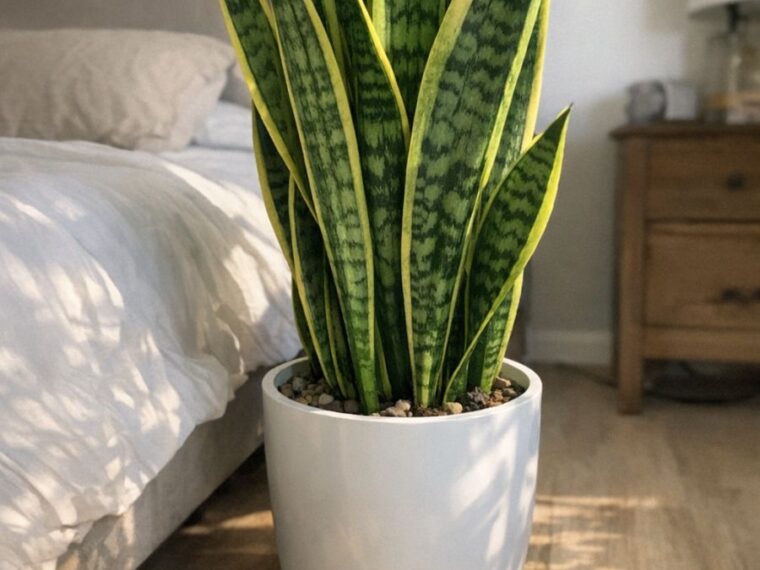
In the quest for a peaceful and healthy night’s sleep, many people turn to high-tech gadgets or expensive bedding to enhance their sleep environment. However, one of the most effective and low-maintenance solutions might just be a plant. Specifically, the snake plant, also known as Sansevieria or mother-in-law’s tongue, is an ideal choice for bedrooms due to its ability to purify the air and thrive even when neglected.
Snake plants are not only aesthetically pleasing, adding a touch of greenery to any space, but they also have remarkable air-purifying properties. Unlike other plants, they continue to convert CO2 to oxygen at night, making them perfect companions in the bedroom. If you’re looking for a plant that requires minimal care yet offers maximum benefits, the snake plant could be your new best friend.
1. Meet the Snake Plant: The Bedroom’s Low-Maintenance Superstar
The snake plant is native to West Africa and is known for its upright, sword-like leaves that can grow up to 3-4 feet tall. Its robust nature makes it a popular choice for indoor environments, especially for those who may not have a green thumb. The leaves are typically dark green with variegated patterns of lighter green, giving it a striking appearance that can complement any decor.
Due to its adaptability, the snake plant can thrive in a variety of light conditions, from bright indirect sunlight to low light areas. This makes it particularly suitable for bedrooms, where natural light may be limited. Additionally, its ability to tolerate drought means you don’t have to worry about frequent watering, making it a perfect low-maintenance plant.
2. Why This Plant Actually Thrives on Neglect
The snake plant is part of the succulent family, which means it stores water in its leaves. This characteristic allows it to survive prolonged periods without water, making it an ideal plant for people who may forget to water their plants regularly. In fact, overwatering is one of the few ways you can harm this resilient plant, as it prefers to be on the drier side.
TO CONTINUE READING THE ARTICLE PLEASE SEE PAGE 2