Gardening is a rewarding hobby that brings joy, beauty, and even food to our lives. However, maintaining a healthy garden requires vigilance, not only in caring for plants but also in maintaining the tools we use to cultivate them. Dirty or poorly maintained gardening tools can become vectors for plant diseases, which can devastate your garden’s health and productivity.
As the gardening season comes to a close, it’s time to focus on cleaning and preparing your tools for the next season. By taking the time to properly clean, disinfect, and store your tools now, you can prevent the spread of disease and extend the life of your tools, ensuring that your garden remains vibrant and productive year after year.
1. Why Dirty Garden Tools Spread Disease
Dirty garden tools can harbor harmful pathogens including bacteria, fungi, and viruses. When these pathogens are transferred from one plant to another via unclean tools, they can cause diseases that may lead to poor plant health or even death. For example, tools that have residual soil from one plant can carry fungal spores, which can easily infect other plants.
Studies have shown that pathogens such as Fusarium and Phytophthora can survive on tools for extended periods. Without proper cleaning, these organisms can spread to healthy plants, leading to wilting, rot, and other symptoms that can severely impact the overall yield and appearance of your garden.
2. The Best Time Of Year To Clean And Prep Tools
The best time to clean and prep your garden tools is at the end of the growing season, usually in late fall. This timing allows you to remove any accumulated soil, sap, and plant debris before storing your tools for the winter. By cleaning your tools at this time, you also prepare them for the next planting season, ensuring they are ready for use as soon as weather permits.
However, it’s also beneficial to clean your tools throughout the growing season, especially after working with diseased plants or when moving from one area of the garden to another. Regular maintenance will minimize disease spread and keep your tools in top condition.
3. Gather The Right Cleaning And Safety Supplies First
Before you begin cleaning your garden tools, gather the necessary supplies to ensure the process is efficient and effective. Essential cleaning supplies include a stiff brush for scrubbing, mild detergent, a disinfectant such as isopropyl alcohol or a bleach solution, and a clean cloth. For safety, wear gloves to protect your hands from sharp edges and cleaning chemicals.
Additionally, you’ll need a sharpening tool, such as a file or sharpening stone, and oil for lubricating metal parts. Having all these supplies on hand before you start will make the cleaning process smoother and more thorough.
4. Remove Caked-On Soil, Sap, And Plant Debris
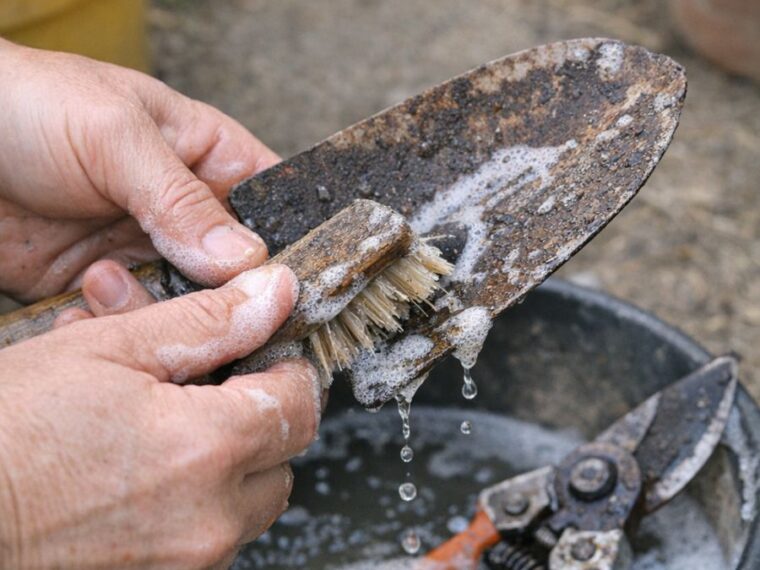
To begin cleaning, use a stiff brush to remove caked-on soil and plant debris from your tools. Pay special attention to the joints and crevices where dirt tends to accumulate. For stubborn spots, a mixture of water and mild detergent can help loosen soil and sap.
If your tools have sap or sticky residue, you may need to use a solvent like mineral spirits. Soak a cloth with the solvent and gently rub the affected areas until clean. Removing all debris ensures that pathogens have nowhere to hide and will not be transferred to healthy plants.
5. Disinfect Blades To Stop Fungal And Bacterial Spread
After cleaning, it’s crucial to disinfect your tools to eliminate any pathogens that might still be present. Immerse the blades in a disinfectant solution, such as a 10% bleach solution (one part bleach to nine parts water), for at least 30 seconds. Alternatively, you can use isopropyl alcohol, which requires no rinsing afterward.
Disinfecting is particularly important after pruning diseased plants, as it prevents the spread of pathogens to healthy plants. Remember to dry the tools thoroughly after disinfecting to prevent rust.
6. Sharpen Cutting Edges For Cleaner, Healthier Cuts
Sharp tools make clean cuts, which heal faster and reduce the likelihood of disease entry. To sharpen your tools, use a sharpening stone or file, and follow the existing bevel of the blade. Hold the tool at the correct angle and make smooth, even strokes until the edge is sharp.
Regular sharpening not only improves the efficiency of your tools but also reduces the effort needed for cutting, which can prevent fatigue and injury during prolonged use.
7. Oil Metal Surfaces To Prevent Rust And Contamination
Once your tools are clean and dry, apply a light coat of oil to metal surfaces to prevent rust. Use a cloth or spray bottle to apply the oil evenly across the metal parts, taking care to cover all surfaces. Linseed oil or a specialized tool oil works well for this purpose.
Oiling not only prevents rust but also creates a barrier against moisture and contaminants, ensuring that your tools remain in good working condition and do not inadvertently spread disease.
8. Refresh Wooden Handles To Avoid Splinters And Rot
Wooden handles can become dry and splintered over time, leading to discomfort and potential injury. To refresh them, sand the handles with fine-grit sandpaper to remove any splinters and smooth the surface. After sanding, apply a coat of linseed oil to nourish the wood and protect it from moisture.
This simple maintenance step will extend the life of your tools and ensure they remain safe and comfortable to use.
9. Inspect, Repair, Or Replace Damaged Tools
While cleaning your tools, take the opportunity to inspect them for any signs of damage, such as cracks, loose parts, or bent components. Tighten any loose screws and replace broken or worn parts as needed. For tools that are beyond repair, consider replacing them to ensure your collection remains functional.
Regular inspection and maintenance prevent small issues from becoming bigger problems and ensure that your tools perform optimally when you need them most.
10. Smart Storage Habits That Keep Tools Disease-Free
Proper storage is crucial to maintaining clean and disease-free tools. Store your tools in a dry, sheltered area away from moisture and direct sunlight, such as a shed or garage. Hang tools when possible to keep them off the ground and organized.
Consider using a tool rack or pegboard to keep your tools accessible and tidy. Proper storage not only extends the life of your tools but also makes them easy to find when you need them.
11. Build A Simple Routine To Keep Tools Clean All Season
To keep your garden tools in top condition, establish a simple routine for cleaning and maintenance. After each use, remove soil and debris, and wipe down metal parts with a disinfectant. Regularly check for sharpness and apply oil as needed.
By incorporating these steps into your gardening routine, you can ensure that your tools remain clean, sharp, and ready for use, preventing the spread of disease and maximizing the health and productivity of your garden.