When the crisp air of October arrives and leaves begin to fall, most people think gardening season is coming to an end.
But for gardeners in the know, October is one of the most important planting months of the year – especially for bulbs.
Planting bulbs in fall allows them to establish roots before winter’s chill sets in, so they can burst into vibrant blooms come spring.
Why Plant Bulbs in October?
Planting bulbs in October offers several natural advantages:
- Warm soil, cool air: Roots grow best in soil that’s still warm while foliage stays cool.
- Moisture advantage: Autumn rains help bulbs settle without the need for daily watering.
- Perfect dormancy timing: Many bulbs require a cold period to trigger blooming – planting in fall gives them months of natural “chill time.”
- Fewer pests: Cooler weather means less insect activity nibbling at bulbs.
- Effortless spring payoff: A few hours of autumn planting reward you with months of spring color.
Ideal planting time: When daytime temperatures stay below 60°F (15°C) and before the ground freezes – typically mid-October through early November, depending on your zone.
1. Tulips (Tulipa spp.)
Zones: 3–8
Sun: Full
Bloom time: Mid to late spring
No bulb says “spring” quite like tulips. From soft pastels to fiery reds and oranges, tulips bring bold color to any garden.
Planting Tips
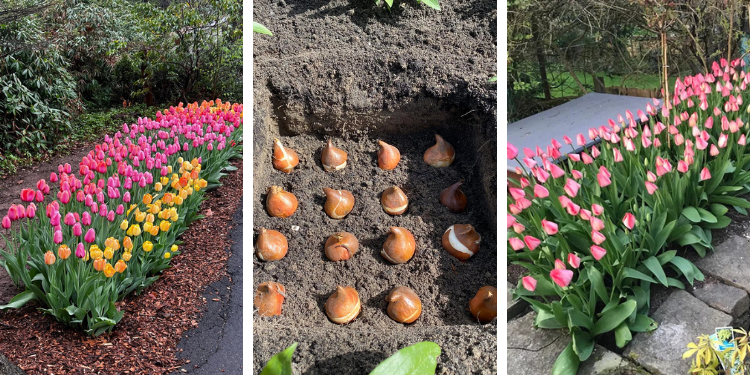
- Plant bulbs 6–8 inches deep in well-draining soil.
- Space 4–6 inches apart.
- For a natural look, plant in clusters rather than straight rows.
- Add bone meal or bulb fertilizer at planting time for strong root growth.
Pro Tip: In warmer zones, refrigerate tulip bulbs for 6–8 weeks before planting to ensure proper chilling.
2. Daffodils (Narcissus spp.)
Zones: 3–9
Sun: Full to partial
Bloom time: Early to mid-spring
Cheerful and resilient, daffodils are among the easiest bulbs to grow – and deer leave them alone thanks to their natural toxicity.
Planting Tips
- Plant bulbs 6 inches deep, with the pointed end up.
- Space 3–6 inches apart in clusters.
- Daffodils naturalize beautifully, returning bigger and better each year.
Varieties to try: ‘Carlton’ for classic yellow, or ‘Thalia’ for elegant white blooms.
3. Hyacinths (Hyacinthus orientalis)
Zones: 4–8
Sun: Full to partial
Bloom time: Mid-spring
Few flowers can rival the intoxicating fragrance of hyacinths. Their dense spikes of flowers look stunning in borders, containers, or near entryways.
Planting Tips
- Plant 4–6 inches deep and 4 inches apart.
- Handle bulbs with gloves – the outer coating can irritate skin.
- Mix with daffodils and tulips for a layered bloom effect.
Bonus: Hyacinths can also be forced indoors in winter for fragrant indoor displays.
4. Crocus (Crocus vernus)
Zones: 3–9
Sun: Full to partial
Bloom time: Late winter to early spring
Crocuses are among the first blooms of spring, often pushing through snow. Their bright purple, yellow, or white flowers are a welcome sight after a long winter.
Planting Tips
- Plant bulbs 3 inches deep and 3 inches apart.
- Ideal for rock gardens, lawns, or under deciduous trees.
- They naturalize easily, creating colorful carpets over time.
Try: Saffron crocus (Crocus sativus) for edible saffron threads if your climate is mild.
5. Alliums (Allium spp.)
Zones: 4–9
Sun: Full
Bloom time: Late spring to early summer
These striking ornamental onions produce globe-shaped clusters of purple, pink, or white flowers that tower over the garden and attract pollinators.
Planting Tips
- Plant 4–8 inches deep, depending on bulb size.
- Space 8–10 inches apart.
- Combine with early perennials to fill the space once alliums fade.
Best picks: ‘Globemaster’ and ‘Purple Sensation’ for dramatic garden displays.
6. Snowdrops (Galanthus nivalis)
Zones: 3–8
Sun: Partial shade
Bloom time: Late winter to early spring
Snowdrops are among the first signs of life after winter – delicate white bells that thrive even in cold climates.
Planting Tips
- Plant 3 inches deep, 3 inches apart.
- They prefer humus-rich, well-draining soil.
- Ideal under trees, near paths, or in woodland gardens.
Note: Snowdrops dislike drying out; plant fresh bulbs quickly after purchase.
7. Anemones (Anemone blanda)
Zones: 4–9
Sun: Full to partial
Bloom time: Early spring
Known as windflowers, anemones add vibrant pops of pink, blue, and white. They’re compact and perfect for borders or between rocks.
Planting Tips
- Soak tubers in warm water for a few hours before planting.
- Plant 2 inches deep, 3 inches apart.
- Excellent companion for daffodils and hyacinths.
Tip: Great for pollinators and naturalizing in woodland gardens.
8. Grape Hyacinths (Muscari armeniacum)
Zones: 3–9
Sun: Full
Bloom time: Mid to late spring
These mini versions of hyacinths produce dense clusters of tiny, grape-like flowers. Their cobalt-blue color pairs beautifully with tulips and daffodils.
Planting Tips
- Plant 3–4 inches deep, 2 inches apart.
- Plant in large drifts for a sea of blue.
- Leave foliage to die back naturally after blooming – it feeds the bulb.
Bonus: They’re deer-resistant and multiply quickly.
9. Iris Reticulata (Iris reticulata)
Zones: 4–9
Sun: Full to partial
Bloom time: Late winter to early spring
This dwarf iris is compact yet eye-catching, with vivid blue or purple petals and golden throats.
Planting Tips
- Plant 4 inches deep, 3 inches apart.
- Prefers well-draining soil; avoid soggy spots.
- Great for pots, borders, or rock gardens.
Varieties to try: ‘Harmony’ (deep blue) and ‘Katherine Hodgkin’ (pale blue and yellow).
10. Fritillaria (Fritillaria meleagris, F. imperialis)
Zones: 3–8
Sun: Full to partial
Bloom time: Mid to late spring
Fritillaries bring exotic texture and elegance with their checkered or bell-shaped blooms. F. meleagris (the snake’s head fritillary) is especially charming in naturalized meadows.
Planting Tips
- Plant 4–6 inches deep, slightly on their sides to prevent rot.
- They prefer moist, well-drained soil.
- Leave space for natural spreading.
Showstopper: Fritillaria imperialis (Crown Imperial) – tall, dramatic, and perfect for focal points.
11. Glory-of-the-Snow (Chionodoxa luciliae)
Zones: 3–8
Sun: Full to partial
Bloom time: Very early spring
As their name suggests, these cheerful blue-and-white flowers often bloom while snow still lingers. They’re a must-have for early-season color.
Planting Tips
- Plant 3 inches deep, 3 inches apart.
- They naturalize easily under trees or in lawns.
- Mix with crocuses and snowdrops for layered early blooms.
Bonus: Excellent nectar source for early bees.
12. Leucojum (Leucojum aestivum, Snowflake)
Zones: 4–9
Sun: Full to partial
Bloom time: Late spring
Often mistaken for snowdrops, snowflakes produce larger, nodding white bells with green tips. They’re elegant, fragrant, and thrive in moist soil.
Planting Tips
- Plant 4–6 inches deep, 6 inches apart.
- Ideal near ponds or damp garden edges.
- Once planted, they’re long-lived and low-maintenance.
Tip: Works beautifully naturalized in grassy areas or under deciduous trees.
13. Dutch Iris (Iris × hollandica)
Zones: 5–9
Sun: Full
Bloom time: Late spring to early summer
Graceful and tall, Dutch irises bring sophistication to garden beds and make exceptional cut flowers. Their vivid purple, blue, and yellow petals stand out in mixed borders.
Planting Tips
- Plant 4 inches deep, 4 inches apart.
- Needs well-drained soil – avoid heavy clay.
- Cut stems for vases when buds are just beginning to open.
Bonus: Perfect companion for alliums and late tulips.
How to Plant Bulbs Correctly
Even the best bulbs won’t thrive without proper planting technique. Follow these simple steps for success:
- Choose healthy bulbs: Firm, plump, and free of mold or soft spots.
- Plant pointy side up: Roots go down, shoots go up.
- Depth matters: As a rule of thumb, plant bulbs 2–3 times their height deep.
- Water after planting: Helps settle the soil and start root growth.
- Mulch for winter: Add a 2–3-inch layer of compost or shredded leaves for insulation.
- Leave space: Avoid overcrowding – good air flow prevents rot.
Pro Tip: Mix early, mid, and late bloomers to enjoy color from February through June.
Design Ideas for a Stunning Spring Display
- Layering (lasagna planting): Plant larger bulbs like tulips at the bottom, then daffodils, and smaller bulbs like crocus or grape hyacinths on top. This creates multi-level blooms in one spot.
- Natural drifts: Scatter bulbs by hand and plant them where they fall for a meadow-like effect.
- Borders and edging: Use low growers (snowdrops, crocus, anemones) along pathways and taller varieties behind.
- Containers: Mix tulips, hyacinths, and iris in deep pots for movable bursts of color.
- Under trees: Early bulbs thrive under deciduous trees since they bloom before the canopy fills with leaves.
Common Mistakes to Avoid
- Planting too shallow: Leads to poor root development and frost damage.
- Waterlogging: Bulbs rot in soggy soil – improve drainage with sand or compost.
- Using old or shriveled bulbs: They rarely sprout.
- Forgetting to mark locations: Come spring, you’ll want to know where you planted!
Tip: Use small markers or garden maps to track your bulb locations.
There’s something deeply satisfying about planting bulbs in fall – knowing that under the cold earth, life is quietly preparing to bloom again.