In the quiet corners of healthy gardens, something remarkable is happening. While gardeners focus on plants, soil, and watering schedules, a nearly invisible army is working day and night to keep pests under control.
These helpers don’t buzz loudly like bees or draw attention like ladybugs. In fact, most people don’t even notice them.
They are lacewings – and they are among the most effective, natural pest-control allies a garden can have.
Often overlooked, lacewings play a critical role in maintaining balance in gardens, orchards, greenhouses, and even indoor plant collections.
What Are Lacewings?
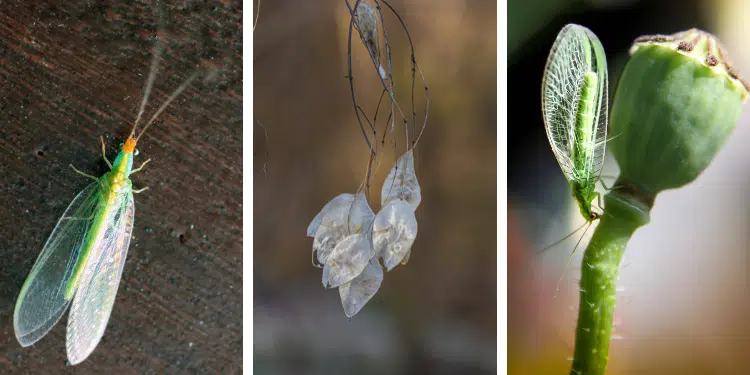
Lacewings are delicate-looking insects best known for their soft green bodies, golden eyes, and intricately veined wings that resemble fine lace.
The most common species used in biological pest control belong to the green lacewing family (Chrysopidae).
Adult lacewings are gentle, almost ethereal insects that feed primarily on nectar, pollen, and honeydew. But it’s their larvae that earn lacewings their heroic reputation.
Lacewing larvae are voracious predators – so effective that they’re often nicknamed “aphid lions.”
The Lacewing Life Cycle: Why Timing Matters
To understand why lacewings are so powerful, it helps to understand their life cycle.
Lacewings go through four stages:
- Egg
- Larva
- Pupa
- Adult
The larval stage is where the real pest control happens.
Female lacewings lay their eggs on thin stalks attached to leaves, usually near pest colonies. This clever strategy prevents newly hatched larvae from cannibalizing one another.
Once hatched, lacewing larvae immediately begin hunting.
Lacewing Larvae: Nature’s Precision Pest Controllers
Lacewing larvae look nothing like the fragile adults. They are small, elongated, and armed with curved, hollow jaws designed to pierce prey and extract their contents.
A single lacewing larva can consume:
- Hundreds of aphids in its lifetime
- Thrips
- Spider mites
- Whiteflies
- Mealybugs
- Leafhopper nymphs
- Small caterpillars and insect eggs
They don’t chew leaves, damage plants, or linger once prey is gone. They move methodically, clearing pest populations with astonishing efficiency.
This makes lacewings one of the most targeted and environmentally friendly forms of pest control available.
Why Lacewings Are So Effective Compared to Chemicals
Chemical pesticides may kill pests quickly, but they come with serious downsides. They often kill beneficial insects alongside pests, disrupt soil life, and can lead to resistant pest populations.
Lacewings work differently.
They:
- Target pests directly
- Do not harm plants
- Do not contaminate soil or water
- Do not create resistance
- Continue working as long as pests are present
Instead of wiping out everything in sight, lacewings restore balance. Once pest numbers drop, lacewing larvae naturally decline as well.
This self-regulating system is why lacewings are used widely in organic farming and integrated pest management programs.
The Hidden Advantage: Lacewings Don’t Disappear Overnight
Many beneficial insects are short-lived or highly seasonal. Lacewings, however, are surprisingly resilient.
Adult lacewings:
- Overwinter in leaf litter, bark, or garden debris
- Return year after year if conditions are right
- Reproduce multiple times in a single season
This means that once lacewings establish themselves in a garden, they often become a long-term solution, not a one-time fix.
Lacewings vs Ladybugs: An Important Difference
Ladybugs are often celebrated as pest-control champions, but lacewings are often more reliable.
Ladybugs tend to:
- Fly away quickly after release
- Migrate long distances
- Focus heavily on aphids only
Lacewing larvae, on the other hand:
- Stay where food is available
- Target a broader range of pests
- Work quietly and continuously
This makes lacewings especially valuable in gardens where pest pressure is persistent or varied.
Why Lacewings Are Often Overlooked
Despite their effectiveness, lacewings rarely get credit.
There are several reasons for this:
- Adult lacewings don’t visibly attack pests
- Larvae are small and easily mistaken for pests
- Their work happens mostly at night or hidden under leaves
Many gardeners unknowingly remove lacewing larvae, thinking they are harmful insects. In reality, doing so removes one of the garden’s strongest allies.
Learning to recognize lacewing larvae is a major step toward healthier, self-regulating gardens.
Lacewings and Aphids: A Natural Solution
Aphids are among the most common and destructive garden pests. They multiply rapidly, weaken plants, and attract ants that protect them.
Lacewing larvae specialize in aphid control.
They:
- Infiltrate dense aphid colonies
- Consume aphids faster than they can reproduce
- Reduce populations without chemicals
Unlike sprays, lacewings don’t leave residue or require repeated application. They simply keep hunting until the problem is solved.
Lacewings in Vegetable Gardens
Vegetable gardens benefit enormously from lacewing activity.
Lacewing larvae protect crops such as:
- Tomatoes
- Peppers
- Cucumbers
- Lettuce
- Beans
- Brassicas
Because lacewings target soft-bodied pests, they help prevent early infestations that can stunt growth or reduce yields.
This makes them especially valuable during seedling and early growth stages.
Lacewings in Fruit Trees and Orchards
Fruit trees often suffer from aphids, scale insects, and leafhoppers. Lacewings naturally patrol these environments, hunting pests without damaging blossoms or fruit.
In orchards, lacewings help:
- Protect young shoots
- Reduce honeydew buildup
- Limit ant activity indirectly
Their presence can significantly reduce the need for sprays during the growing season.
Lacewings and Houseplants
Lacewings aren’t limited to outdoor gardens.
In greenhouses and indoor plant collections, lacewings are commonly used to control:
- Fungus gnat larvae
- Thrips
- Whiteflies
- Mealybugs
Because they don’t rely on wind or large spaces, lacewing larvae adapt well to enclosed environments.
How Lacewings Find Pests So Efficiently
Lacewings use a combination of scent, vibration, and proximity to locate prey.
Plants under attack release chemical signals when damaged. Lacewings are attracted to these signals, which helps them find pest-infested plants faster than humans ever could.
This is one reason lacewings often appear precisely when pests begin to get out of control.
The Role of Lacewings in Garden Ecosystems
Beyond pest control, lacewings contribute to overall ecosystem health.
Their presence indicates:
- Low chemical use
- Healthy insect diversity
- Balanced predator–prey relationships
Gardens with lacewings tend to experience fewer pest outbreaks over time because the ecosystem becomes more resilient.
How to Attract Lacewings Naturally
The best way to benefit from lacewings is to invite them into your garden and encourage them to stay.
Lacewings are attracted to:
- Nectar-rich flowers
- Pollen sources
- Shelter and overwintering sites
Plants that attract lacewings include:
- Dill
- Fennel
- Yarrow
- Cosmos
- Sweet alyssum
- Coreopsis
- Sunflowers
Providing a diversity of flowering plants ensures adult lacewings have food when pests are scarce.
Why Pesticides Drive Lacewings Away
Even mild insecticides can disrupt lacewing populations.
Many products:
- Kill lacewing larvae directly
- Interfere with reproduction
- Remove food sources
Once lacewings disappear, pests rebound quickly because their natural predators are gone.
This leads to a cycle of increased spraying and worsening infestations.
Lacewings as a Long-Term Pest Strategy
Unlike short-term treatments, lacewings offer biological control that improves over time.
As lacewing populations stabilize:
- Pest outbreaks become less severe
- Plants experience less stress
- Gardens require less intervention
This is why experienced gardeners often focus on attracting beneficial insects rather than eliminating pests outright.
Common Myths About Lacewings
Some gardeners avoid lacewings due to misunderstandings.
Lacewings:
- Do not bite humans
- Do not damage plants
- Do not infest homes
- Do not harm beneficial insects significantly
They are selective, efficient predators with minimal downside.
When Lacewings Work Best
Lacewings are most effective when:
- Pest populations are still moderate
- Chemical use is minimal or absent
- Habitat is available year-round
They are not an instant fix for severe infestations, but they excel at prevention and long-term control.
Recognizing Lacewing Eggs and Larvae
Learning to recognize lacewing life stages helps protect them.
Lacewing eggs appear as:
- Tiny white ovals
- Suspended on thin stalks
Larvae resemble:
- Small, elongated insects
- Brown or gray with tapered bodies
- Active hunters on leaves
Once recognized, they are easy to protect and appreciate.
Why Gardens Still Need Lacewings More Than Ever
Modern gardens face increasing challenges:
- Warmer winters
- Longer pest seasons
- Resistant insects
- Reduced biodiversity
Lacewings offer a natural counterbalance. They adapt, reproduce, and respond to pest pressure without human intervention.
In a time when sustainability matters more than ever, lacewings represent a solution that works with nature instead of against it.
Lacewings don’t demand attention. They don’t announce their presence. They simply work – quietly, consistently, and effectively.