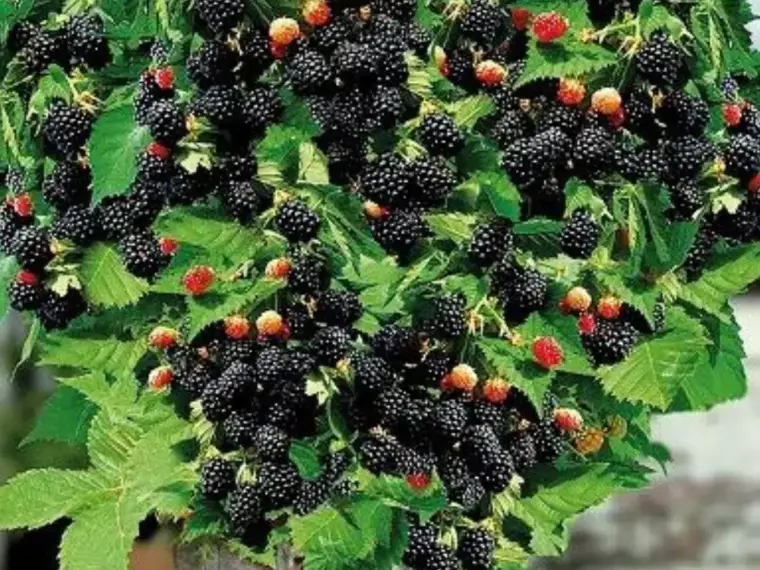
Blackberries are delicious, nutrient-rich fruits that taste like summer in every bite. Yet many gardeners think these berry bushes require sprawling garden plots or tangled bramble patches to grow. Fortunately, that’s far from true.
With the right methods, blackberries thrive in pots, making them perfect for patios, balconies, small yards, and urban spaces.
Growing blackberries in containers not only saves space but also makes maintenance and harvest significantly easier.
Why Grow Blackberries in Pots?
Before diving into the how-to, let’s look at the big advantages of container blackberry gardening:
- Space-saving: Great for small gardens, balconies, patios, or urban living.
- Mobility: Move pots for better sun exposure or to protect plants from harsh weather.
- Soil control: Prevents soil-borne diseases and allows customized soil conditions.
- Ease of maintenance: Pruning, watering, and harvesting are simpler.
- Pest control: Elevated pots help deter ground pests and invasive roots.
Growing blackberries in containers offers an ideal solution for those wanting fresh, homegrown fruit without the hassle of a full berry patch.
Understanding Blackberry Types
Choosing the right blackberry variety is key to success in containers.
Blackberries come in three main types:
1. Erect Blackberries
- Grow upright and don’t require much support.
- Ideal for containers due to their compact growth habit.
- Examples: ‘Navaho’, ‘Arapaho’
2. Semi-Erect Blackberries
- Grow upright initially but produce long canes that benefit from support or trellising.
- Work well in larger containers with stakes or trellises.
- Examples: ‘Chester Thornless’, ‘Triple Crown’
3. Trailing Blackberries
- Produce long, flexible canes that need trellising.
- Less suited to small containers but manageable in larger pots with strong support structures.
- Examples: ‘Marionberry’, ‘Boysenberry’
Thornless varieties are an excellent choice for pots, as they’re easier to manage and harvest without risking scratches.
Choosing the Right Pot
Container size and type matter greatly for blackberry plants to thrive.
Pot Size
- Minimum size: 15-20 gallons per plant.
- Depth: At least 16-18 inches.
- Diameter: Minimum of 18 inches.
A large pot ensures enough room for root development and retains adequate moisture.
Pot Material
- Plastic pots: Lightweight, affordable, and retain moisture well.
- Terracotta/clay pots: Attractive but dry out faster.
- Fabric grow bags: Excellent drainage and air pruning but require more frequent watering.
Ensure all containers have drainage holes to prevent waterlogging.
Soil Requirements for Blackberries in Pots
Blackberries thrive in fertile, slightly acidic, well-draining soil.
Ideal Soil Mix
- Two parts high-quality potting soil.
- One part compost or aged manure for nutrients.
- Optional: A handful of sand or perlite for better drainage.
Aim for a soil pH between 5.5 and 6.5. Test your potting mix and adjust if necessary using garden sulfur for acidity or lime to raise pH.
Planting Blackberries in Pots
When to Plant
- Early spring is the best time to plant blackberries, once all frost danger has passed.
- In mild climates, late fall is also suitable.
How to Plant
- Prepare the pot: Fill with your soil mix, leaving space at the top for watering.
- Plant depth: Place the blackberry plant at the same depth it grew in its nursery pot.
- Firm soil gently around the roots.
- Water thoroughly after planting to settle the soil.
Space trailing varieties 18-24 inches apart if growing multiple plants in larger containers.
Sunlight Requirements
Blackberries love sun. For the best yields:
- Provide at least 6-8 hours of direct sunlight daily.
- In very hot climates, some afternoon shade can help protect plants from scorching.
If sunlight is limited, grow blackberries in the sunniest spot available or consider moving pots during the day.
Watering Blackberries in Pots
Consistent moisture is crucial for blackberry plants, especially in containers where soil dries faster than in the ground.
Watering Tips
- Keep soil evenly moist but not soggy.
- Water deeply until it drains from the bottom of the pot.
- Check soil moisture by inserting your finger about 2 inches deep; if dry, it’s time to water.
- During hot weather, blackberries in pots may require watering daily.
Avoid overhead watering to reduce the risk of fungal diseases.
Fertilizing Blackberries in Containers
Blackberries are moderate feeders. Container-grown plants need regular feeding because nutrients wash away more quickly with watering.
Fertilizing Schedule
- Early spring: Apply a balanced fertilizer (10-10-10 or 14-14-14).
- After flowering: Switch to a low-nitrogen fertilizer to encourage fruiting rather than leafy growth.
- Optional: Use compost tea or organic slow-release fertilizers for gentle feeding.
Avoid over-fertilizing, which can lead to excessive foliage at the expense of fruit production.
Pruning Blackberry Plants
Pruning keeps blackberry plants productive and manageable.
How to Prune
- After harvest, remove all canes that produced fruit (they won’t fruit again).
- Keep new canes growing for next season’s harvest.
- Trim long canes to encourage branching and prevent tangling.
- Thin canes so plants have 4-6 strong canes for best yields.
For trailing types, train new canes along a trellis or support.
Supporting Blackberry Plants
Even erect blackberries benefit from some support in containers.
Trellising Options
- Tomato cages
- Stakes and garden twine
- Horizontal wires attached to a frame
- Bamboo poles
Supporting canes improves airflow, reduces disease risk, and makes harvesting easier.
Common Pests and Diseases
While generally hardy, blackberries can face pests and diseases.
Pests
- Aphids: Tiny insects sucking plant sap.
- Spider mites: Cause speckled leaves.
- Japanese beetles: Eat foliage and fruit.
Diseases
- Powdery mildew: White coating on leaves.
- Rust: Orange spots on leaves.
- Root rot: From overly wet soil.
Prevent issues by:
- Ensuring good drainage.
- Keeping foliage dry.
- Pruning for airflow.
- Inspecting plants regularly.
Winter Care for Blackberry Pots
In colder regions, blackberries in pots need protection because their roots are more exposed to freezing temperatures.
How to Overwinter
- Move pots to an unheated garage, shed, or sheltered spot.
- Wrap containers in bubble wrap or burlap for insulation.
- Water sparingly, just enough to keep soil slightly moist.
In mild climates, simply mulch heavily around the base of the plants.
Harvesting Blackberries
Few gardening moments rival picking fresh, sun-warmed blackberries.
How to Know When to Harvest
- Berries should be deeply colored (black, red, or purple, depending on variety).
- Fully ripe berries come off easily with a gentle tug.
- Taste a few; ripe berries should be sweet, juicy, and aromatic.
Harvesting Tips
- Pick every couple of days to avoid overripe fruit.
- Handle berries gently to prevent bruising.
- Refrigerate berries promptly if not eating them immediately.
Storing and Enjoying Homegrown Blackberries
Fresh blackberries are highly perishable. For the best flavor:
- Eat them the same day you harvest them.
- Store in the fridge for up to 3-4 days.
- Freeze extra berries for smoothies, baking, or preserves.
Blackberries are delicious:
- In yogurt parfaits
- Baked into pies and tarts
- Stirred into oatmeal
- Blended into sauces
- As a topping for ice cream
Growing blackberries in pots lets you enjoy these culinary delights straight from your patio.
Troubleshooting Common Blackberry Problems
Here’s how to handle typical container blackberry issues:
Problem: Small or Dry Berries
- Likely causes: Insufficient watering, poor soil nutrients, or too much heat.
- Solution: Maintain consistent moisture and feed regularly.
Problem: Weak Growth
- Likely causes: Small pot, poor soil, or lack of sunlight.
- Solution: Repot into a larger container, improve soil quality, or relocate to sunnier spot.
Problem: Leaf Yellowing
- Possible reasons: Overwatering, nutrient deficiency, or root rot.
- Solution: Check soil moisture and drainage; adjust watering and fertilize.
If you love the idea of picking fresh blackberries without dedicating half your yard to thorny brambles, container gardening is your answer.
By selecting the right variety, providing good soil, proper watering, and occasional pruning, you’ll enjoy an abundant harvest of sweet, juicy berries even in the smallest spaces.