Many plants fail not because of poor care, bad timing, or lack of fertilizer, but because their roots sit in water.
Poor drainage is one of the most common and least visible causes of plant loss.
From the surface, everything can look fine. Underground, however, roots may be slowly suffocating.
Before planting anything – trees, shrubs, vegetables, or perennials – there is one simple habit that can prevent this problem almost entirely: always check the drainage of the planting hole.
This single test takes only a few minutes, yet it can save years of growth and frustration.
Why Drainage Matters More Than Most Garden Decisions
Plant roots need water, nutrients, and oxygen. While gardeners often focus on watering and feeding, oxygen is just as essential.
Roots absorb oxygen from air pockets in the soil. When soil stays saturated, those air pockets fill with water, and roots begin to suffocate.
Poor drainage doesn’t usually kill plants instantly. Instead, plants decline slowly. Growth becomes weak, leaves yellow or droop, flowering is reduced, and eventually roots rot below the surface.
By the time symptoms appear above ground, the damage is often advanced.
Good drainage allows excess water to move away from the root zone, maintaining the balance roots need to stay healthy.
Why the Planting Hole Is the Critical Point
Even if your garden drains reasonably well overall, the planting hole itself can become a problem area. This happens often in clay soil or compacted ground.
When a hole is dug and filled with looser, amended soil, water drains easily through that improved soil until it hits the surrounding dense earth.
If the surrounding soil drains slowly, water collects in the hole and forms a basin. Roots end up sitting in standing water, even though the surface soil appears dry.
This “bathtub effect” is one of the most common reasons newly planted plants fail.
The One Drainage Test That Can Save the Plant
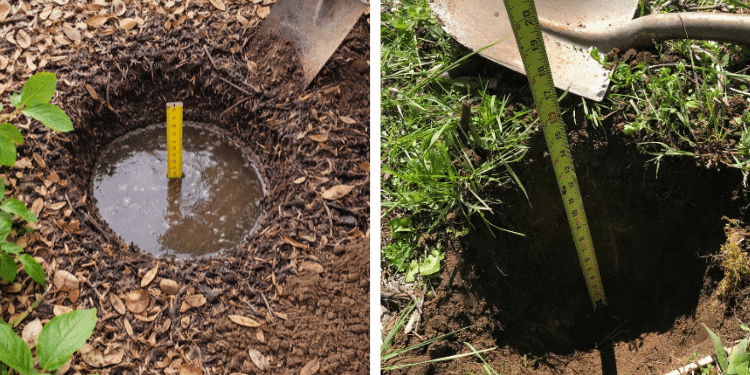
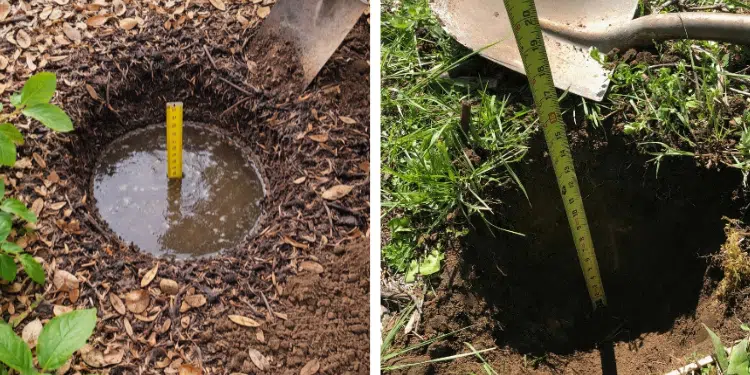
Before planting, dig the hole to the depth you intend to use. Fill it completely with water and let it drain once.
This step saturates the surrounding soil and gives a realistic result. Then fill the hole again and observe how long it takes for the water to disappear.
If the water drains within an hour, drainage is excellent. If it drains within a few hours, most plants will be fine.
If water remains in the hole for many hours, or even overnight, the drainage is poor and planting should be delayed until the issue is addressed.
This test reveals problems that cannot be seen by simply looking at the soil.
What Happens to Roots in Poorly Drained Soil
Roots in waterlogged soil struggle almost immediately. Without oxygen, root growth slows and nutrient uptake becomes inefficient.
Leaves may yellow even when nutrients are present because roots cannot absorb them properly.
As conditions remain wet, harmful microorganisms thrive. These organisms break down root tissue, leading to rot. Once rot begins, recovery is difficult, even if drainage improves later.
This is why plants often decline after periods of heavy rain rather than right after planting.
Why Overwatering Is Often Misdiagnosed
Many gardeners blame themselves for watering too much when plants fail. In reality, poor drainage makes even light watering behave like overwatering.
Rainfall alone can be enough to cause root stress if water cannot escape the planting hole. This is why plants sometimes struggle even when gardeners are careful with irrigation.
The real issue isn’t always how much water is added – it’s whether that water can leave.
Plants That Are Especially Sensitive to Drainage
While some plants tolerate wet soil better than others, most common garden plants prefer good drainage.
Mediterranean herbs, fruit trees, roses, many vegetables, and most perennials struggle when their roots remain wet for long periods.
Even plants described as “moisture-loving” usually prefer evenly moist soil, not stagnant water. There is a critical difference between moisture and waterlogging.
Clay Soil and Compaction Problems
Clay soil drains slowly because its particles are very small and pack tightly together. Digging into clay often creates smooth-sided holes that hold water like bowls.
Adding compost only inside the hole can make the problem worse by increasing the contrast between the amended soil and the surrounding clay. Without testing, this issue often goes unnoticed until plants begin to fail.
How to Fix Drainage Problems Before Planting
If the drainage test shows slow or poor drainage, there are several effective solutions.
Widening the planting hole encourages roots to grow outward rather than sitting in one wet pocket. Breaking up compacted soil along the sides of the hole helps water move laterally instead of pooling.
Planting slightly higher than ground level is another powerful solution. By raising the root crown a few centimeters above surrounding soil, gravity helps pull excess water away from roots.
This approach works especially well for trees, shrubs, and herbs that dislike wet soil.
Improving the soil across a larger area rather than just inside the hole creates consistent drainage and prevents water from becoming trapped.
In areas with severe drainage issues or high water tables, raised beds may be the most reliable option.
Why Gravel at the Bottom Rarely Helps
A common gardening myth suggests adding gravel to the bottom of planting holes to improve drainage. In practice, this often makes drainage worse.
Water does not move easily from fine soil into coarse gravel. Instead, it collects above the gravel layer, creating another basin.
True drainage improvement comes from soil structure and pathways for water movement, not layered materials.
Drainage Changes With the Seasons
Soil drainage is not constant throughout the year. Frozen soil, compacted winter ground, and heavy spring rains can all reduce drainage significantly.
A planting hole that drains well in summer may behave very differently in early spring or fall.
Testing drainage during wetter periods gives the most accurate picture of long-term conditions.
Signs a Plant Was Planted in Poorly Drained Soil
If a plant struggles despite good care, drainage may be the underlying cause. Common signs include wilting even when soil is wet, yellowing lower leaves, slow growth, and sudden decline after rain.
In severe cases, roots may smell foul or appear mushy when examined. At that point, correcting drainage becomes urgent.
Why Drainage Matters More Than Fertilizer
Plants can tolerate nutrient shortages far longer than oxygen deprivation. In poorly drained soil, roots cannot absorb nutrients effectively no matter how much fertilizer is applied.
This is why feeding a struggling plant often fails to help when drainage is the real problem. Healthy roots must come first.
The Habit That Prevents Most Plant Loss
Experienced gardeners test drainage not because problems are rare, but because they are common and invisible. That one simple test prevents wasted money, lost plants, and repeated replanting.
Checking the planting hole takes minutes, but it protects plants for years.
Plants can forgive many mistakes, but they rarely forgive being drowned. Roots trapped in water cannot breathe, grow, or support the plant above them.