Rooting plant cuttings doesn’t require expensive powders or synthetic hormones. Long before commercial rooting products existed, gardeners relied on simple, homemade solutions to encourage roots to form quickly and naturally.
These methods are still effective today – and most can be made in minutes using ingredients you already have at home or in the garden.
Homemade rooting solutions work by protecting cuttings from decay, supporting cell division, and creating the right environment for new roots to develop.
While they don’t force roots to grow overnight, they support the plant’s natural rooting process in a gentle, reliable way.
Why Rooting Solutions Help Cuttings Succeed
When a cutting is taken from a plant, it loses access to water and nutrients through its roots. Until new roots form, the cutting is vulnerable to dehydration, rot, and infection.
Rooting solutions help by:
- Protecting the cut surface
- Reducing bacterial and fungal problems
- Supporting cell regeneration
- Encouraging faster root initiation
Natural solutions don’t replace good technique, but they significantly improve success rates, especially for softwood and semi-hardwood cuttings.
1. Honey Water Rooting Solution
Honey is one of the oldest natural rooting aids used by gardeners.
Why honey works
Honey has natural antibacterial and antifungal properties. When applied to a cutting, it helps protect the stem from infection while roots are forming.
While honey doesn’t contain rooting hormones, it creates a clean, supportive environment for root development.
How to make it
Mix one teaspoon of raw honey into one cup of lukewarm water until fully dissolved.
How to use it
Dip the cut end of the plant into the honey solution, then plant it immediately into moist soil or a propagation medium.
Best plants for honey
- Soft-stem herbs
- Houseplants like pothos and philodendron
- Ornamental cuttings
Honey works best for plants that root easily but benefit from extra protection.
2. Aloe Vera Rooting Gel
Aloe vera is one of the most effective natural rooting aids – and one of the easiest to use.
Why aloe works
Aloe vera contains enzymes, amino acids, and natural plant compounds that support cell growth. It also has mild antimicrobial properties and helps keep cuttings hydrated.
Unlike many solutions, aloe acts as both a root-supporting gel and a moisture buffer, reducing stress on the cutting.
How to make it
Cut a fresh aloe vera leaf and squeeze out the clear gel. You can use it directly or dilute it slightly with water for thinner consistency.
How to use it
Dip the cutting directly into the gel before planting, or soak the cut end in diluted aloe water for a few minutes.
Best plants for aloe
- Houseplants
- Succulents (used sparingly)
- Garden flowers
- Vegetables like tomatoes and peppers
Aloe is especially useful for delicate cuttings.
3. Willow Water (Natural Rooting Hormone)
Willow water is the closest natural alternative to commercial rooting hormone.
Why willow works
Willow branches contain natural compounds related to auxins, the hormones responsible for root formation. They also contain salicylic acid, which helps reduce stress and supports plant defense.
This combination makes willow water one of the most powerful homemade rooting solutions.
How to make it
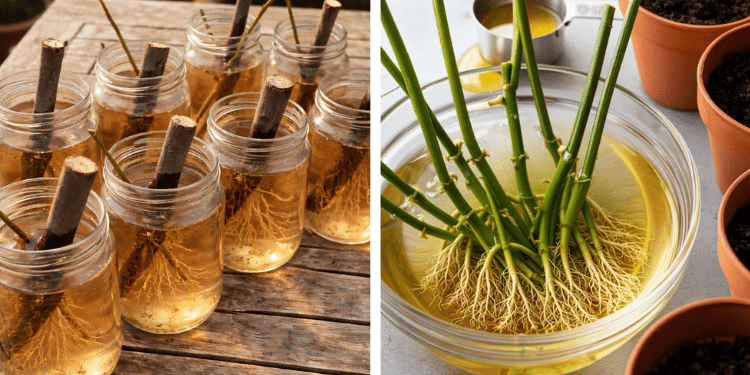
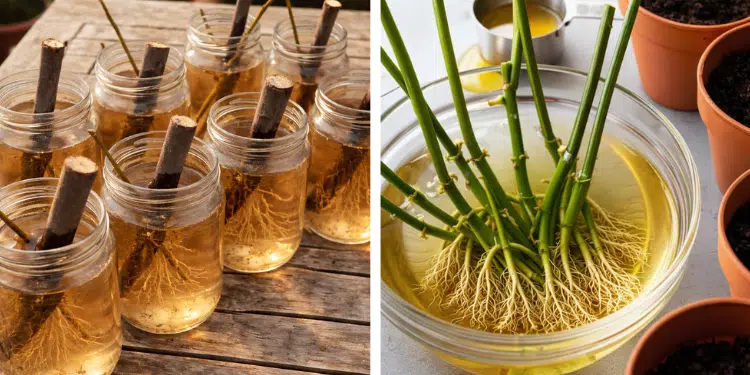
Cut young, green willow twigs into small pieces. Place them in a jar and cover with boiling water. Let the mixture steep for several hours or overnight, then strain.
How to use it
Soak cuttings in willow water for several hours before planting, or use it to water newly planted cuttings.
Best plants for willow water
- Woody shrubs
- Fruit cuttings
- Roses
- Perennials
Willow water is especially helpful for harder-to-root plants.
4. Cinnamon Rooting Aid
Cinnamon may seem like a kitchen spice, but it’s surprisingly effective in propagation.
Why cinnamon works
Cinnamon has strong antifungal properties. While it doesn’t stimulate roots directly, it prevents rot and fungal infections at the cut site, which is often what kills cuttings before roots can form.
How to use it
Dip the cut end of the plant into ground cinnamon, tapping off excess before planting.
Best plants for cinnamon
- Succulents
- Cacti
- Houseplants prone to rot
- Cuttings planted directly into soil
Cinnamon is ideal for plants that struggle with stem rot.
Choosing the Right Rooting Solution
Each solution works slightly differently.
- Use honey or cinnamon for protection
- Use aloe for hydration and gentle growth support
- Use willow water when stronger rooting stimulation is needed
You can rotate solutions depending on the plant type rather than relying on just one.
Best Practices for Successful Rooting
Even the best rooting solution won’t work if basic propagation rules are ignored.
For best results:
- Use clean, sharp scissors
- Take cuttings from healthy plants
- Remove lower leaves
- Keep soil moist, not wet
- Provide bright, indirect light
Humidity and patience matter as much as the solution itself.
Plants That Root Easily With Homemade Solutions
Many common plants respond well to these methods:
- Pothos
- Spider plants
- Coleus
- Basil
- Mint
- Geraniums
- Roses
Fast-rooting plants show results in days, while woody plants may take weeks.
Common Mistakes to Avoid
Avoid these common errors:
- Using too much solution
- Letting cuttings sit in water too long
- Overwatering soil
- Using unhealthy parent plants
Rooting is about balance, not force.
Homemade vs Commercial Rooting Hormone
Commercial rooting hormones are concentrated and fast-acting, but they’re not always necessary. Homemade solutions are gentler, more sustainable, and ideal for everyday propagation.
For most home gardeners, natural rooting solutions are more than sufficient.
Rooting new plants doesn’t need to be complicated or expensive.
With ingredients like honey, aloe vera, willow twigs, and cinnamon, you can create effective rooting solutions in minutes – no special tools required.