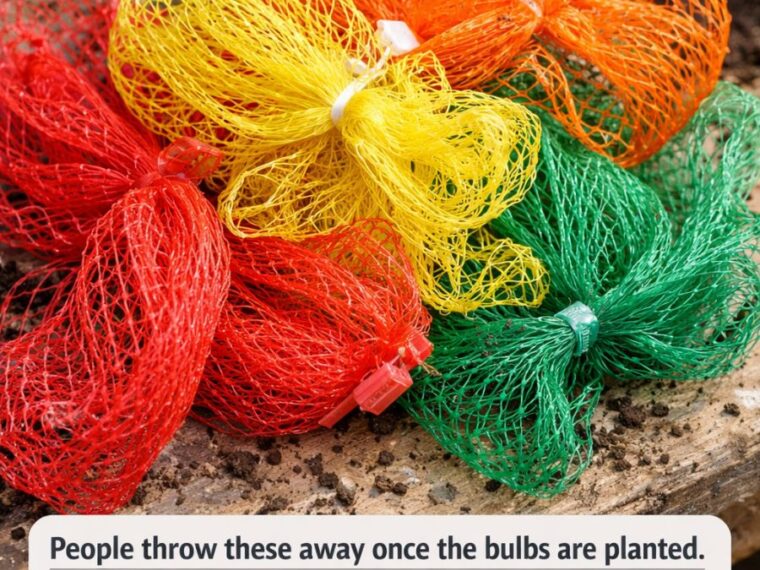
In the hustle and bustle of everyday life, many of us overlook the potential of items we consider waste. One such item is the humble mesh produce bag. Typically used to store fruits and vegetables, these bags often end up in the trash once their contents have been used. However, with a little creativity, these bags can find a second life in the garden, offering practical and eco-friendly solutions to common gardening challenges.
Mesh produce bags are not only durable but also versatile, making them ideal for a variety of garden uses. By repurposing these bags, gardeners can save money and reduce waste, all while enhancing their gardening practices. In this article, we will explore ten innovative ways to reuse mesh produce bags in your garden, transforming them from discarded items into valuable gardening tools.
1. Turn Mesh Bags Into Simple Bulb Cages
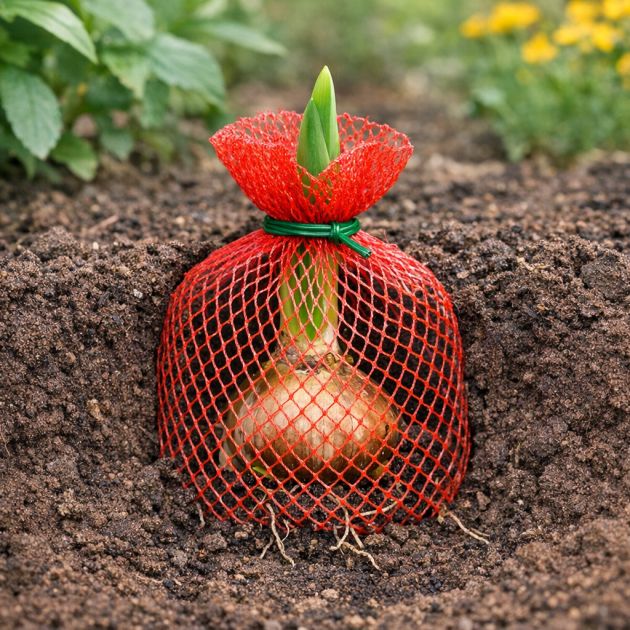
Mesh produce bags can be easily turned into bulb cages to protect your bulbs from being unearthed by curious wildlife. Simply cut the mesh bag to the desired size, ensuring it’s large enough to encompass the bulb while allowing for growth. Place the bulb inside the mesh, gather the ends, and secure them with a twist tie or garden twine. Once your bulbs are ready to be planted, bury the entire assembly in the soil, leaving the top open for the plant to grow through.
This method not only safeguards your bulbs from being dug up by squirrels or other animals but also makes it easier to locate and retrieve bulbs during their dormant phase. The mesh allows the plant to grow and roots to spread while providing a strong barrier against unwanted disturbances.
2. Protect Tender Seedlings From Pests
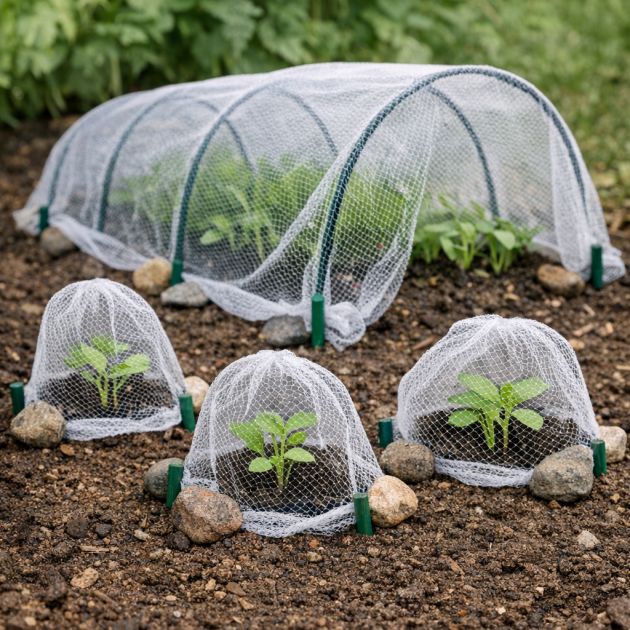
Young seedlings are particularly vulnerable to pests such as slugs, snails, and birds. Mesh produce bags can act as protective barriers to keep these pests at bay. Cut the bags and place them over the seedlings, securing them at the base with garden stakes or stones. This creates a makeshift cloche that shields the plants while allowing light, air, and water to reach them.
For larger seedlings, you can fashion a small hoop house by bending wire into arches and covering the structure with the mesh bag. This setup can easily be removed for weeding or harvesting, and re-secured as needed. Utilizing mesh bags in this way is a cost-effective solution to protect your young plants from common garden pests.
3. Use as Hanging Planters and Support Slings
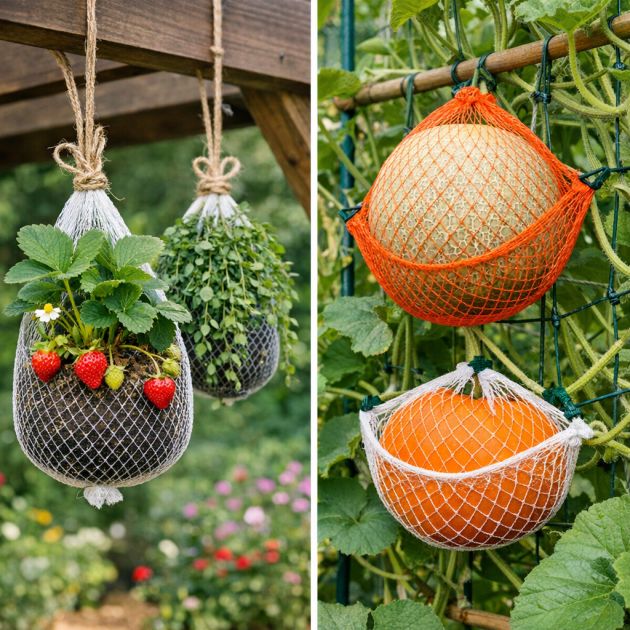
Mesh produce bags can be repurposed into hanging planters, perfect for small spaces or as decorative garden accents. To create a hanging planter, fill the mesh bag with soil and a plant of your choice, then secure the top with twine or wire, creating a loop for hanging. These planters are especially suited for trailing plants like strawberries or herbs.
Additionally, mesh bags can be used as support slings for melons, pumpkins, or other heavy fruits growing on trellises. Simply wrap the fruit in a mesh bag and tie it to the trellis, distributing the weight and preventing the fruit from breaking off the vine prematurely. The flexibility and strength of the mesh make it an ideal support material.
4. Make DIY Compost and Leaf Mold Bags
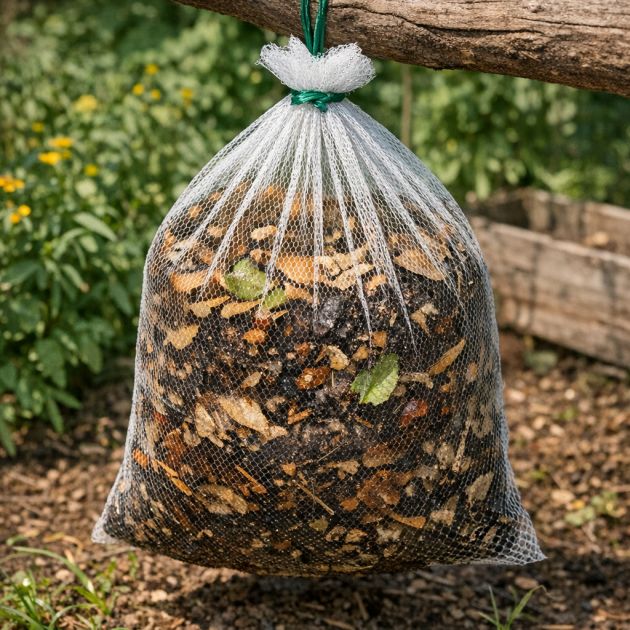
Mesh produce bags are excellent for creating small composting containers or for gathering leaves to make leaf mold. Simply fill the bag with kitchen scraps or fallen leaves, and secure it with a twist tie. The mesh material allows for airflow, which is crucial for the decomposition process.
Hang the filled bag in a sunny spot or lay it on the ground, turning it occasionally to aerate. Over time, the contents will break down into nutrient-rich compost or leaf mold, which can be used to enrich your garden soil. This method of composting is particularly useful for gardeners with limited space or those who want to test small batches of compost materials.
5. Create Reusable Garden Sifters and Strainers
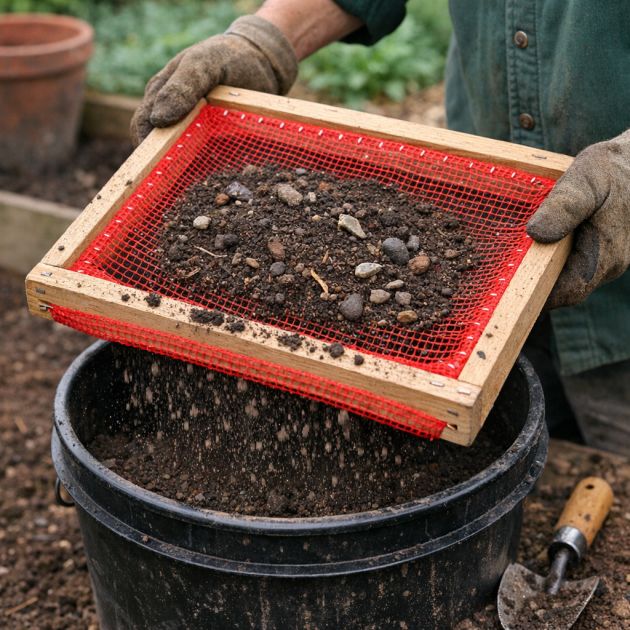
Gardeners often need to sift soil or compost to remove debris and unwanted materials. Mesh produce bags can be used to create simple, effective garden sifters. Cut the bag to fit over a wooden frame or a bucket, securing it with nails, staples, or a tight-fitting elastic band.
To sift soil, pour it over the mesh and shake the frame or bucket. The fine soil will fall through, leaving larger particles on top. This method is also useful for straining liquids, such as when making compost tea or rinsing harvested produce. The durability of the mesh makes it a long-lasting tool in any gardener’s arsenal.
6. Corral Garden Tools, Labels, and Small Supplies
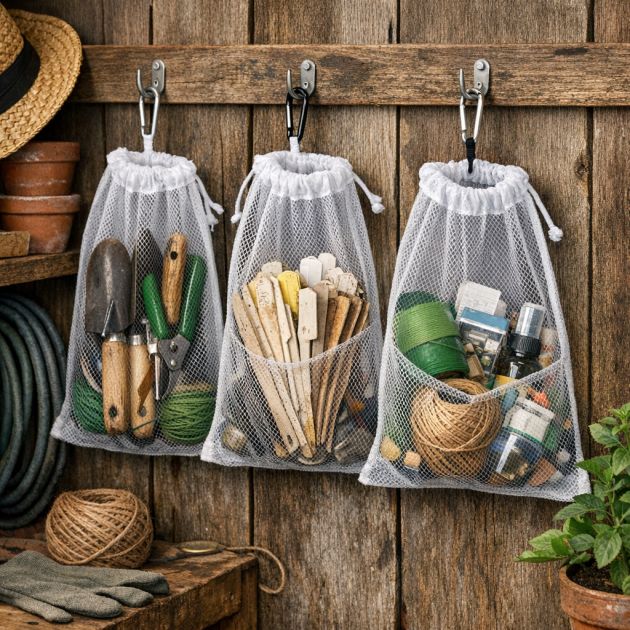
Mesh produce bags are perfect for organizing and storing small garden tools, plant labels, and other supplies. Their see-through nature makes it easy to locate items quickly, and the breathable material prevents moisture buildup, reducing the risk of rust or mildew.
Hang the bags in your garden shed or on a fence for easy access. You can even use them to temporarily store used plant labels, ensuring they don’t get lost between seasons. This simple organization system helps keep your garden space tidy and efficient.
7. Fashion Plant Ties, Trellis Nets, and Supports
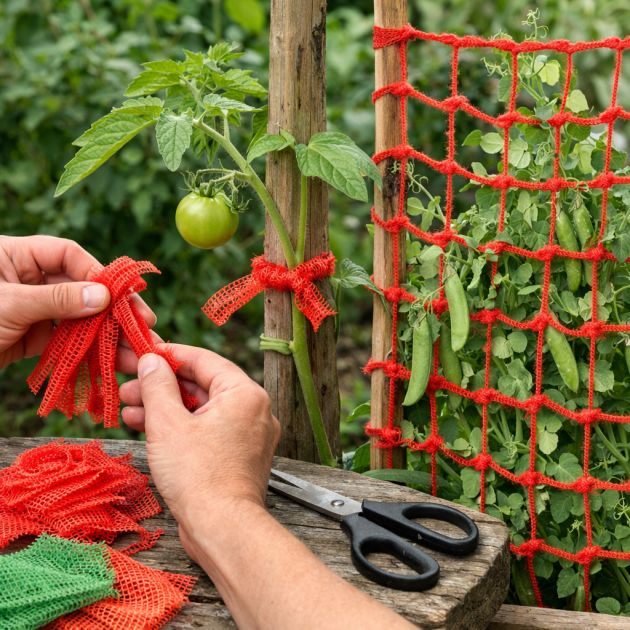
Cut mesh produce bags into strips to create durable plant ties that are gentle on stems yet strong enough to support growing plants. These ties can easily be adjusted or removed as needed. For larger support structures, several mesh bags can be tied together to form a net, which can be used as a trellis for climbing plants like peas and beans.
The flexibility of the mesh material makes it an excellent choice for creating various garden supports, and since it’s made from recycled material, it’s a sustainable option that reduces waste. The use of mesh bags for plant ties and supports is a clever way to utilize an item that might otherwise be discarded.
8. Cover Fruits and Veggies to Deter Birds and Bugs
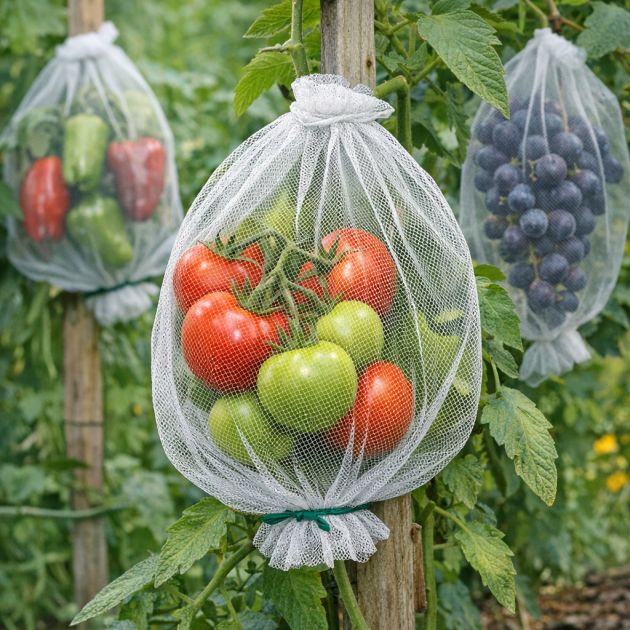
Protect your ripening fruits and vegetables from birds and insects by using mesh produce bags as covers. Slip the bag over the fruit or vegetable and secure it at the base with a twist tie or string. The mesh allows for air circulation and sunlight penetration while preventing pests from reaching your produce.
This method is especially effective for fruits like tomatoes, peppers, and grapes, which are often targeted by garden invaders. By using mesh bags as protective covers, you can reduce crop loss and ensure a bountiful harvest.
9. Upcycle Into Scrubbers for Pots, Trays, and Tools
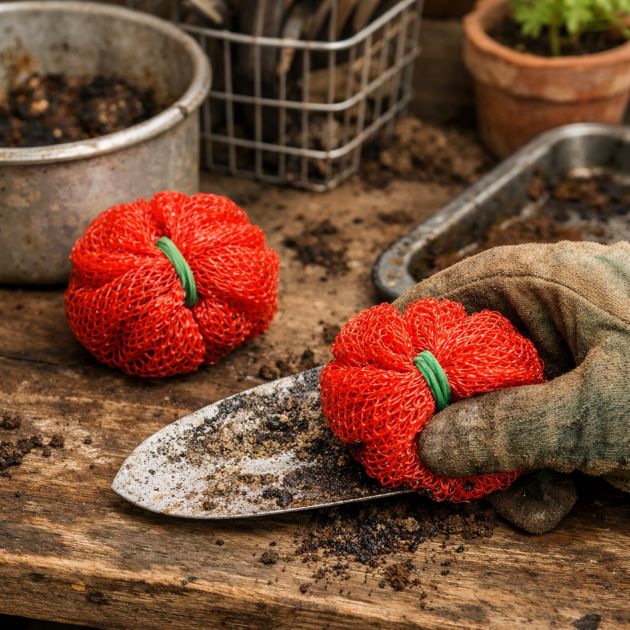
Mesh produce bags can be transformed into practical scrubbers for cleaning pots, trays, and gardening tools. Simply bunch up the bag into a ball and secure it with a rubber band or twist tie. The texture of the mesh is abrasive enough to remove dirt and grime without scratching surfaces.
These DIY scrubbers are a great way to clean up after a day of gardening, and once they become too worn, they can be composted or disposed of with minimal environmental impact. This upcycling project is a simple and effective way to extend the life of your mesh bags while maintaining your gardening equipment.
10. Store and Dry Bulbs, Garlic, and Seed Heads
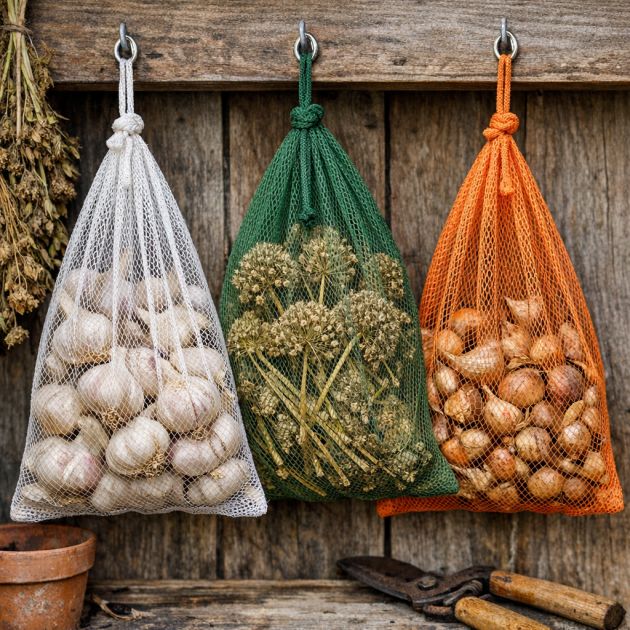
Mesh produce bags are ideal for storing and drying bulbs, garlic, and seed heads. The breathable material allows for air circulation, preventing mold and rot during the drying process. To use, fill the bag with your chosen produce and hang it in a cool, dry place.
This method is particularly useful for gardeners who grow their own garlic or save seeds for the next planting season. The mesh bags keep your harvest organized and protected, ensuring that your gardening efforts are preserved for future use. Using mesh bags for storage is an efficient way to manage your garden yields.