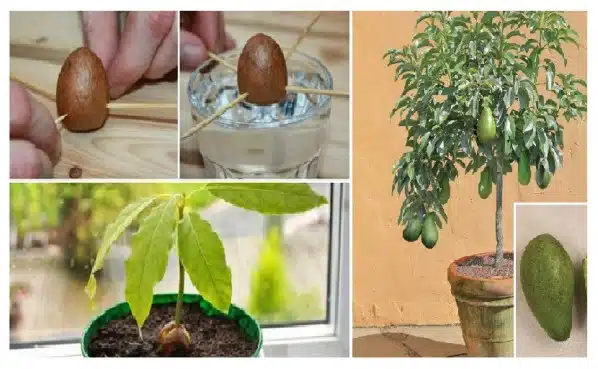
The avocado (Persea americana) has become one of the most popular fruits in the world, celebrated for its creamy texture, heart-healthy fats, and versatility in everything from salads to smoothies.
While many gardeners assume avocado trees need vast yards and subtropical climates, the truth is you can grow a thriving avocado tree in a small garden pot – even on a balcony or patio.
Why Grow Avocado in a Pot?
- Space Efficiency: Perfect for apartment dwellers, urban gardens, or patios.
- Control Over Growing Conditions: Easier to manage soil quality, watering, and light.
- Mobility: You can move the plant indoors during cold weather.
- Faster Growth Control: Potted trees are smaller, easier to prune, and more manageable.
- Year-Round Greenery: Avocado trees have beautiful evergreen foliage, adding ornamental value to your garden.
Choosing the Right Avocado Variety
Not all avocado trees are suitable for pots. Some grow up to 40 feet tall in the ground. For container gardening, pick dwarf or semi-dwarf varieties that adapt well to small spaces.
Best Varieties for Pots
- Wurtz (Little Cado): The only true dwarf avocado variety. Reaches about 8–10 feet in a pot.
- Holiday: Compact growth, produces fruit around holidays.
- Lamb Hass: Smaller version of the famous Hass variety, great for pots.
- Fuerte (semi-dwarf): Larger but manageable with pruning.
Tip: If you’re starting from seed, it will grow into a full-sized tree unless grafted. For fruiting in pots, it’s better to buy a grafted dwarf avocado sapling from a nursery.
Materials You’ll Need
- A large, sturdy pot (start with at least 10–15 gallons; upgrade as tree grows).
- Well-draining potting mix (sandy-loamy, rich in organic matter).
- Gravel or stones for drainage layer.
- A dwarf avocado sapling (or seed if experimenting).
- Slow-release fertilizer formulated for citrus or avocados.
- Mulch (bark, straw, or shredded leaves).
- Pruning shears.
- A rolling plant stand if mobility is needed.
Step-by-Step Guide: Planting Avocado in a Pot
Step 1: Select the Pot
- Minimum 10–15 gallons to start; avocados have large roots.
- Use clay or terracotta for breathability, or plastic/fiberglass for lightweight mobility.
- Ensure the pot has drainage holes.
Step 2: Prepare the Soil
- Mix: 40% potting soil + 30% sand or perlite + 30% compost.
- Avocados dislike waterlogged soil, so drainage is critical.
- Add a handful of crushed eggshells for calcium.
Step 3: Plant the Sapling or Seed
- For sapling: Place it in the pot so the root ball is level with the soil surface.
- For seed: Start by sprouting in water (toothpick method), then transplant once roots and shoots form.
- Fill soil around roots, leaving 1–2 inches below the rim.
- Water thoroughly after planting.
Step 4: Location & Sunlight
- Place in full sun (6–8 hours daily).
- Indoors: Use a south-facing window or grow light.
- Rotate pot weekly for even growth.
Growing an Avocado from a Seed – The Toothpick Method
While many gardeners prefer starting with grafted dwarf avocado saplings for quicker fruiting, there’s something magical about sprouting your own avocado tree from a simple seed.
It’s a rewarding process that teaches patience, makes a beautiful indoor plant, and connects you directly to the life cycle of the avocado.
The most popular way to sprout an avocado pit is known as the toothpick method, and it has been passed down by home gardeners for generations.
Preparing the Seed
The journey begins with choosing a ripe avocado. After enjoying the fruit, carefully remove the pit and rinse it under lukewarm water.
Be sure to wash away any flesh clinging to the seed, since leftover pulp can invite mold.
Once clean, dry the pit and take a close look: the pointed end is the top, where the stem will sprout, and the flatter, broader end is the bottom, from which roots will emerge. Correct orientation is essential for success.
Setting Up with Toothpicks
Next, you’ll need three or four sturdy toothpicks. Insert them into the avocado seed at a slight downward angle, evenly spaced around the middle.
These little “legs” will allow you to suspend the seed over a glass of water, holding it steady while the lower half remains submerged. Place the seed so that the bottom is in water and the top remains dry.
The Waiting Stage
Now comes the part that requires patience. Put the glass on a sunny windowsill, preferably south-facing, where it will get plenty of warmth and light.
Change the water every three to four days to keep it fresh and oxygenated. Over the next two to six weeks, watch for changes: the seed will begin to crack, roots will push downward into the water, and eventually a small green shoot will emerge from the top.
This is the most exciting stage – the seed you once discarded has now awakened into a new plant.
Transplanting to Soil
When the stem grows to about six to eight inches tall, it’s time for its first haircut. Trim it back to around three inches to encourage stronger branching and a sturdier stem.
Once it regrows to six to eight inches again, the young tree is ready for transplanting. Choose a pot with excellent drainage and fill it with a sandy, well-draining mix enriched with compost.
Plant the seed so that the top half remains visible above the soil line. Keep the pot in a sunny spot and water consistently, making sure the soil stays moist but not soggy.
Watering Your Potted Avocado
- Keep soil consistently moist, but never soggy.
- Test by inserting your finger 2 inches deep – water if dry.
- In summer: Water 2–3 times weekly.
- In winter: Reduce to once a week.
- Ensure excess water drains freely from the bottom.
Fertilizing Avocado in Pots
- Use a balanced fertilizer (10-10-10 or citrus fertilizer) every 6–8 weeks during growing season.
- Supplement with iron, zinc, and magnesium for healthy leaves.
- Avoid over-fertilizing; excess nitrogen reduces fruiting.
Pruning & Training
- Start pruning early to encourage a bushy, compact shape.
- Pinch back the top after the plant reaches 12–18 inches.
- Regularly prune long branches to maintain 6–8 feet size in pots.
- Remove dead or crossing branches to improve airflow.
Pollination & Fruiting
- Avocado flowers are “A” and “B” types with different pollination times.
- In pots, hand-pollination increases success: Use a small brush to transfer pollen between flowers.
- Grafted dwarf trees can fruit in 3–4 years, while seed-grown trees may take 7–10 years.
Common Problems and Solutions
1. Yellow Leaves
- Cause: Overwatering.
- Fix: Improve drainage, reduce watering.
2. Brown Leaf Tips
- Cause: Salt buildup from fertilizer.
- Fix: Flush soil monthly with clean water.
3. Drooping Leaves
- Cause: Water stress (too little or too much).
- Fix: Adjust watering schedule.
4. No Flowers or Fruit
- Cause: Immaturity or lack of sunlight.
- Fix: Ensure 6–8 hours sunlight and patience (trees fruit only when mature).
Seasonal Care Guide
Spring
- Fertilize as growth resumes.
- Repot if roots are crowded.
Summer
- Provide shade in extreme heat.
- Water deeply and mulch to retain moisture.
Fall
- Reduce fertilizer as growth slows.
- Protect from early cold snaps.
Winter
- Move indoors if below 40°F (4°C).
- Reduce watering.
- Use grow lights if daylight is limited.
Harvesting Avocados in Pots
- Unlike most fruits, avocados don’t ripen on the tree.
- Harvest when fruit is mature (darkened skin, slightly soft to touch after picking).
- Leave harvested avocados at room temperature for a few days until ripe.
Bonus Tips for Small Space Avocado Success
- Use a rolling plant caddy for easy mobility.
- Grow companion plants like basil or marigolds in smaller pots nearby to repel pests.
- Mulch heavily to mimic natural forest conditions.
- If indoors, mist leaves occasionally to maintain humidity.
Frequently Asked Questions
1. Can I grow an avocado tree from a store-bought seed?
Yes, but it will likely be a full-sized tree and may not produce fruit for 7–10 years unless grafted.
2. Do I need two avocado trees for pollination?
Not always – self-pollinating varieties exist, but having two (type A and B) increases yield.
3. How long will a potted avocado tree live?
With proper care, 20–30 years. Repotting and pruning are key.
4. Can avocado trees stay small forever in pots?
Yes, through regular pruning and root trimming every 2–3 years.
Growing an avocado tree in a small garden pot may take patience, but the rewards are worth it.
With the right dwarf variety, proper soil, pruning, and care, you can enjoy a lush evergreen plant that eventually produces creamy, delicious avocados – even if you only have a balcony or patio.