Gardening has always been an art passed down through generations, with each gardener adding their own unique touch to the collective wisdom. Our grandmothers, with their time-honored practices and natural solutions, have always had a special knack for nurturing plants with minimal resources. These gardening hacks, which they swore by, are not only effective but also environmentally friendly.
In today’s world, where sustainability is becoming increasingly important, these traditional methods are making a comeback. By incorporating these simple yet ingenious hacks into your gardening routine, you can improve plant health, enhance soil quality, and promote a lush, thriving garden. Let’s explore twelve of these timeless gardening secrets that have stood the test of time.
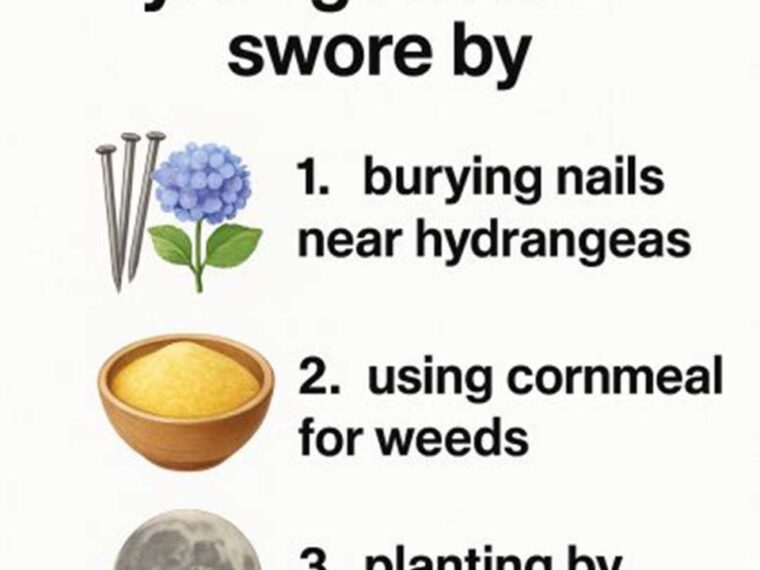
1. Burying Nails Near Hydrangeas for Vibrant Colors
One of the fascinating tricks your grandma might have used involves burying rusty nails around hydrangea bushes. The iron from the nails can alter the pH level of the soil, which in turn affects the color of the hydrangea blooms. By increasing the soil’s acidity, you can turn pink hydrangeas into beautiful blue ones.
To try this hack, simply bury a few rusty nails (about 3-5) approximately 6 inches away from the base of the plant and 2-3 inches deep into the soil. Over time, as the nails rust and release iron, you’ll notice a change in the hue of your hydrangea flowers, providing an enchanting transformation in your garden.
2. Using Cornmeal to Control Weeds Naturally
Cornmeal is not just for baking; it can also serve as a natural herbicide in your garden. The gluten in cornmeal inhibits seed germination, making it an effective way to control weeds without resorting to harsh chemicals.
To use cornmeal for weed control, sprinkle a thin layer (about 1/4 inch) over the soil in areas where you don’t want weeds to sprout. It’s important to apply cornmeal to bare soil, as it will prevent all seeds from germinating, including those of desirable plants. For best results, apply it after planting established seedlings or once your desired plants have germinated.
3. Planting by the Moon for Optimal Growth
The lunar calendar has long been used by gardeners to time their planting activities. The theory suggests that the moon’s gravitational pull affects the moisture in the soil, and by planting during specific lunar phases, you can encourage better plant growth.
During the new moon, plant crops that produce their yield above ground, such as lettuce, spinach, and tomatoes. The full moon is ideal for root crops like carrots and potatoes. Many gardeners find that following this age-old practice not only enhances plant growth but also leads to higher yields.
4. Utilizing Wood Ashes as a Natural Fertilizer
Wood ashes, a byproduct of burning wood, are a rich source of potassium and lime, making them an excellent natural fertilizer for your garden. They can help balance soil pH and add essential nutrients to your plants.
To use wood ashes, sprinkle them lightly over your garden beds, ensuring they are well-incorporated into the soil. A general guideline is 5-10 pounds of ashes per 100 square feet of garden space. Avoid using them around acid-loving plants like blueberries and azaleas, as the ashes can raise the pH too much for these species.
5. Eggshells to Deter Pests and Enrich Soil
Eggshells are not only a kitchen waste but also a valuable resource for your garden. When crushed and sprinkled around plants, they can deter pests like slugs and snails, which are repelled by the sharp edges.
Additionally, eggshells are high in calcium, which can help prevent blossom end rot in plants like tomatoes and peppers. To use, rinse the shells, let them dry, then crush them into small pieces. Distribute the crushed shells around the base of your plants or mix them into the soil for long-term benefits.
6. Coffee Grounds for a Nutrient Boost
Don’t throw away those used coffee grounds; they are a treasure trove of nutrients for your garden. Rich in nitrogen, coffee grounds can improve soil structure and enhance plant growth.
Sprinkle a thin layer of coffee grounds around the base of your plants or add them to your compost pile to enrich the overall mixture. Be cautious not to over-apply, as too much can increase soil acidity, which might not be suitable for all plants. A handful per plant every few weeks is usually sufficient.
7. Companion Planting for Pest Management
Companion planting is a strategy that involves growing certain plants together to naturally deter pests and improve growth. For instance, planting marigolds alongside tomatoes can repel nematodes, while basil planted near peppers can enhance their flavor and growth.
This method relies on the natural properties of plants to support each other, making it a sustainable and chemical-free approach to gardening. By carefully selecting plant pairings based on their mutual benefits, you can create a more resilient and productive garden.
8. Creating Compost Tea for Plant Health
Compost tea is a liquid fertilizer made by steeping compost in water, allowing beneficial microorganisms and nutrients to leach into the liquid. This ‘tea’ can be used as a foliar spray or soil drench to promote plant health.
To make compost tea, fill a bucket with water and add a handful of compost. Let it steep for about 24-48 hours, stirring occasionally. Strain the liquid and use it to water your plants or spray directly on the leaves. This nutrient-rich solution can help improve plant resilience to diseases and boost overall growth.
9. Milk as a Natural Fungicide for Plants
Milk, often a staple in the kitchen, can also be used as a natural fungicide in the garden. Its antifungal properties can help control diseases like powdery mildew.
To make a milk fungicide spray, mix one part milk with two parts water and apply it to affected plants every 10-14 days. The proteins in milk can act as a barrier, preventing fungal spores from taking hold, while also providing a slight nutrient boost.
10. Banana Peels for Rose Bushes
Banana peels are rich in potassium and can be used to nourish rose bushes, promoting healthy growth and vibrant blooms. Potassium is essential for plant vigor and flower development.
To use banana peels, chop them into small pieces and bury them at the base of your rose bushes. Alternatively, you can blend the peels with water to create a slurry and pour it around the plants. This simple addition can lead to more beautiful and resilient roses.
11. Cinnamon to Prevent Damping Off in Seedlings
Cinnamon is a natural antifungal agent that can help prevent damping off, a common problem in seedlings caused by fungal pathogens. Sprinkling cinnamon on the soil surface of seedling trays can create a protective barrier.
To use, simply dust a light layer of cinnamon over the soil after planting seeds. This hack not only protects against fungal infections but also adds a pleasant aroma to your indoor planting areas.
12. Epsom Salt for Greener, Stronger Plants
Epsom salt, composed of magnesium sulfate, can be a powerful ally in the garden. Magnesium is crucial for photosynthesis, and applying Epsom salt can help plants develop lush, green foliage.
To use Epsom salt, dissolve 1 tablespoon in a gallon of water and apply as a foliar spray every two to four weeks. This can be particularly beneficial for magnesium-hungry plants like tomatoes, peppers, and roses. Regular use of Epsom salt can result in healthier, more vigorous plants.