A lush, green lawn is often seen as a hallmark of a well-maintained home. However, achieving and maintaining the perfect lawn is more than just watering and fertilizing; it requires proper mowing techniques. Unfortunately, many homeowners unknowingly adopt mowing habits that can damage their grass. Understanding the impact of these habits is crucial for anyone looking to cultivate a healthy lawn.
In this article, we’ll explore ten common mowing habits that can harm your grass, and we’ll provide insights on how to adjust these practices for the benefit of your lawn’s health. By making a few simple changes to your mowing routine, you can ensure that your grass remains vibrant and resilient throughout the growing season.
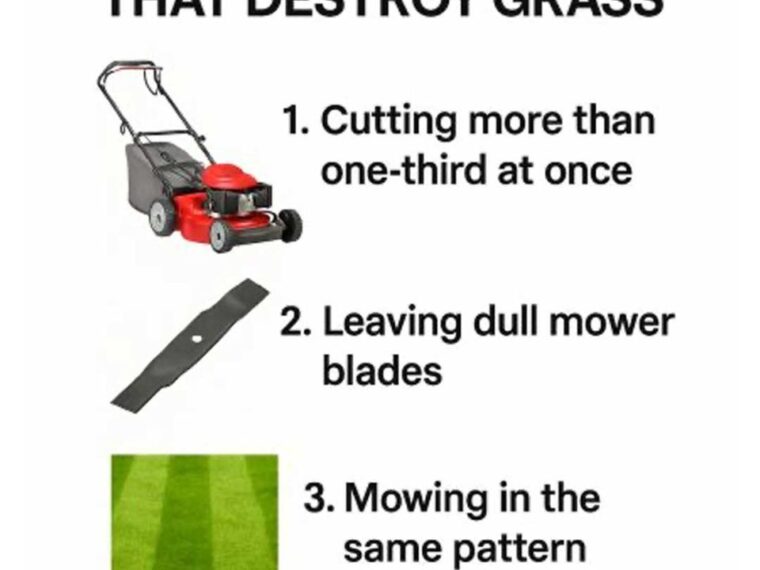
1. Cutting More Than One-Third of Grass Height at Once
One of the most common mistakes homeowners make is cutting too much of the grass height in a single mowing session. The ‘one-third rule’ is a widely accepted guideline, suggesting that you should never remove more than one-third of the grass blade at any one time. Cutting more than this can shock the grass, leading to a weakened root system and making it more susceptible to diseases and pests.
For example, if your grass is 3 inches tall, you should only cut it back to 2 inches. This gradual approach allows the grass to recover between mowing sessions and maintains its photosynthesis capability, which is vital for healthy growth and development.
2. Leaving Dull Mower Blades
Using dull mower blades is a silent killer of healthy grass. Instead of making clean cuts, dull blades tear and shred the grass blades, leaving ragged edges that can turn brown and become more prone to disease. It’s recommended to sharpen mower blades after every 20-25 hours of use to ensure they remain in optimal condition.
Regularly inspecting your mower blades for sharpness can make a significant difference in the health of your lawn. Sharp blades make clean cuts that heal quickly, reducing stress on the grass and promoting a lush, green lawn.
3. Mowing in the Same Pattern Every Time
Mowing in the same pattern each time can lead to soil compaction and the development of ruts in the lawn. Over time, these compacted areas can inhibit root growth and water absorption. To prevent this, it’s advisable to vary your mowing pattern frequently.
By changing the direction and pattern of your mowing, you allow the grass to grow more upright and reduce the wear on any one area. This practice not only encourages healthier grass growth but also ensures a more even cut across the entire lawn.
4. Bagging Clippings Instead of Mulching
Bagging grass clippings and removing them from the lawn might seem like a neat and tidy approach, but it deprives your lawn of essential nutrients. Grass clippings can act as a natural fertilizer when left on the lawn, returning nitrogen and other nutrients to the soil.
Mulching mowers are designed to cut clippings into fine pieces that decompose quickly, enriching the soil without smothering the grass. By adopting mulching instead of bagging, you can reduce the need for additional fertilizers and promote a healthier lawn ecosystem.
5. Mowing When Grass Is Wet
Mowing wet grass can cause numerous problems, from uneven cuts to increased risk of disease. Wet grass blades tend to bend under the weight of a mower, resulting in an uneven cut. Additionally, wet clippings can clump together and block sunlight from reaching the grass below.
It’s best to wait until the grass is dry before mowing to ensure a clean, even cut. If you must mow wet grass, consider using a high-lift blade that can handle the moisture better and prevent clumping.
6. Ignoring the Mower’s Height Setting
Many people overlook the importance of adjusting their mower’s height setting according to the season and grass type. Different grass species have optimal growth heights, and mowing too low can scalp the lawn, damaging the grass crown and roots.
For example, cool-season grasses like Kentucky bluegrass thrive when cut to a height of about 2.5 to 3.5 inches, while warm-season grasses like Bermuda grass prefer a height of 1 to 2 inches. Adjusting your mower to the correct height is crucial for preventing stress and encouraging robust growth.
7. Mowing Too Infrequently
While it may be tempting to mow less frequently to save time, infrequent mowing can lead to overgrowth, making it challenging to adhere to the one-third rule. Overgrown grass can also shade out the lower blades, leading to thinning and weaker turf.
Regular mowing, especially during peak growing seasons, helps maintain a uniform height and prevents weeds from taking hold. Establish a consistent mowing schedule based on the growth rate of your grass to keep your lawn in top condition.
8. Overlapping Mowing Sessions
Overlapping the same areas multiple times during a single mowing session can cause unnecessary stress on the grass and compact the soil. This practice often happens when trying to achieve a perfectly manicured look but can actually do more harm than good.
To avoid this, ensure your mower is properly calibrated and that you are mowing in straight, even lines. This will help prevent over-mowing and allow the grass to recover more effectively between cuts.
9. Mowing During the Hottest Part of the Day
Mowing during the hottest part of the day can place additional stress on your grass. The heat can cause the freshly cut grass blades to lose moisture rapidly, leading to wilting and browning.
It’s best to mow in the early morning or late afternoon when temperatures are cooler. This reduces the stress on the grass and allows it to recover more quickly, maintaining its vibrant green appearance.
10. Neglecting to Clean the Mower Between Uses
Grass clippings, dirt, and debris can build up under the mower deck and on the blades, reducing the efficiency of the mower and leading to uneven cuts. Over time, this buildup can also harbor diseases that could spread to your lawn.
Regularly cleaning your mower after each use is essential for maintaining its performance and preventing the spread of lawn diseases. A simple rinse with a garden hose or brushing off debris can go a long way in keeping your mower in top shape.
11. Ignoring Lawn’s Seasonal Needs
Grass has different needs depending on the season, and ignoring these can harm your lawn. During the growing season, more frequent mowing is necessary, while in dormancy, less frequent mowing is required.
Understanding the specific requirements of your grass type during different seasons can help you adjust your mowing habits accordingly. For instance, cool-season grasses may require more attention in the spring and fall, whereas warm-season grasses thrive in the summer. Tailoring your lawn care routine to meet these seasonal needs is key to maintaining a healthy lawn year-round.