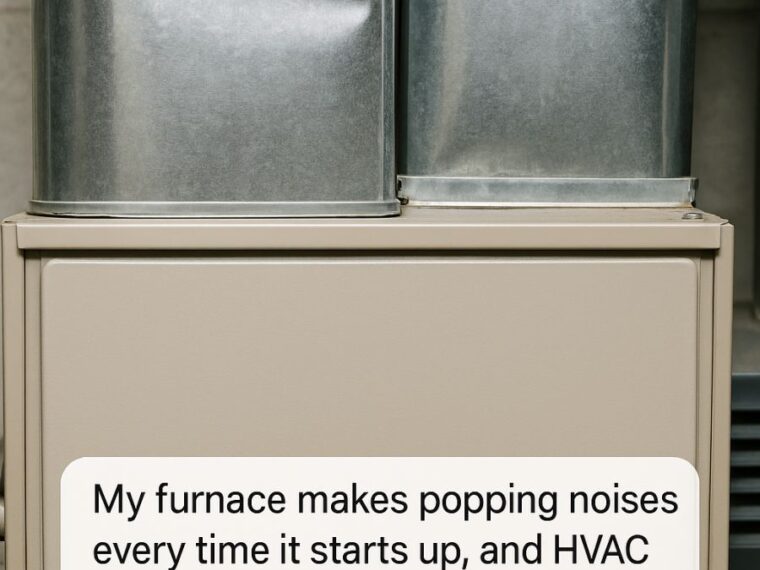
As the colder months set in, a well-functioning furnace becomes crucial for maintaining a warm and comfortable home environment. However, unexpected noises from your furnace, such as popping sounds, can be both alarming and inconvenient. These noises often indicate underlying issues that, if left unaddressed, could lead to more severe problems.
Unfortunately, during peak seasons, HVAC technicians can be overwhelmed with service calls, leaving homeowners to wait weeks for professional help. In such situations, understanding the possible causes and taking initial investigative steps on your own can be invaluable. This article will guide you through the first checks you can perform to diagnose the source of the popping noise, ensuring your furnace operates safely until expert assistance is available.
1. Start With Safety: Turn Off Power And Fuel
Before you begin any inspection or maintenance work on your furnace, safety should be your top priority. Turn off your furnace’s power by switching off the circuit breaker dedicated to it. This prevents any accidental electrical shock while you inspect the system. Additionally, if your furnace uses natural gas or propane, locate the gas valve and turn it off. This step is crucial to prevent any gas leaks or potential fires during your examination. If you smell any gas, evacuate your home immediately and contact the gas company.
Safety gear, such as gloves and safety goggles, should be worn when inspecting your furnace to protect your hands and eyes from dust, debris, and sharp edges. Ensuring a safe environment will allow you to focus on finding the source of the noise without the risk of injury.
2. Listen Closely: Confirm It’s A Duct Pop, Not A Burner Boom
The first step in diagnosing the noise is to determine what type of sound it is. A popping noise can originate from the ductwork or the burner. If the noise seems to come from the ducts, it’s likely due to metal expansion or contraction. Ducts can pop when the metal expands rapidly in response to hot air flow. However, if the noise is more of a boom, it could be related to the furnace burner, which may indicate delayed ignition.
To distinguish between them, try to listen closely when the furnace starts up. Duct pops are usually less loud and more of a quick pop, whereas a burner boom is more substantial and might be accompanied by a vibration. Identifying the sound can help you narrow down the issue and decide on the next steps.
3. Check The Thermostat’s Fan And Heat Settings
Sometimes, the cause of the popping noise can be as simple as incorrect thermostat settings. Check your thermostat to ensure that the fan is set to ‘Auto’ rather than ‘On.’ When set to ‘On,’ the fan runs continuously, which can cause extra stress on the ductwork, leading to popping sounds when it turns on and off.
Also, verify that the heat setting is appropriately adjusted. If the temperature setting is significantly higher than the current room temperature, the furnace may work harder than necessary, causing the ducts to expand and pop more noticeably. Adjusting these settings can sometimes resolve the issue without further intervention.
4. Inspect Supply Vents: Are Any Registers Closed Or Blocked?
Closed or blocked supply vents can lead to increased air pressure in the ductwork, which might cause popping noises. Walk through your home and ensure that all supply vents are open and unobstructed. Objects like furniture, curtains, or rugs should be moved away from vents to allow proper air circulation.
If you find any closed vents, open them to relieve pressure build-up. This could immediately reduce or eliminate the popping noise. Ensuring all vents are open and unblocked is a simple yet effective measure in maintaining optimal airflow and preventing duct noise.
5. Look For Crushed, Kinked, Or Disconnected Duct Runs
Inspect your ductwork for any visible signs of damage or disconnection. Crushed or kinked ducts can restrict airflow, leading to pressure changes that cause popping noises. Walk along the accessible areas of your ductwork and check for any flattened sections or kinks, particularly in flexible duct sections.
If you notice any disconnected ducts, try to reconnect them securely. In some cases, duct tape or duct clamps may be needed to secure the connection temporarily until a professional can assess the situation. Correcting these issues can improve airflow and reduce stress on the ductwork, potentially eliminating the popping sounds.
6. Find The Thinnest Metal Ducts Near The Furnace
Thinner metal ducts are more prone to expansion and contraction, which can cause popping noises. Locate the sections of ductwork closest to the furnace, as these are likely to experience the most significant temperature changes.
If you identify thin metal ducts, consider reinforcing them with additional insulation or adding support brackets to minimize movement. This can help reduce the noise caused by thermal expansion and contraction, providing a quieter operation until a more permanent solution can be implemented.
7. Check Filter First: A Clogged Filter Can Stress Ductwork
A clogged air filter can restrict airflow, causing the furnace to work harder to push air through the ducts. This increased pressure can lead to popping sounds as the ductwork expands and contracts. Locate your furnace filter, typically found near the return air duct or blower compartment, and remove it for inspection.
If the filter appears dirty or clogged, replace it with a new one. Furnace filters should be replaced every 1 to 3 months, depending on the type and usage. A clean filter will improve airflow and reduce stress on the system, potentially resolving the popping noise.
8. Examine Return Air Grilles For Obstructions
Return air grilles that are blocked can also cause pressure imbalances, leading to popping noises. Check each return grille in your home to ensure they are not obstructed by furniture, drapes, or other objects. Proper airflow through these grilles is essential for maintaining balanced pressure in the duct system.
If you find any obstructions, clear them away to allow unrestricted airflow. This simple adjustment can help maintain even pressure levels throughout your ductwork, reducing the potential for popping noises.
9. Do The Simple ‘Door Crack’ Test For Negative Pressure
Negative pressure in your home can exacerbate duct popping noises. To test for negative pressure, close all exterior doors and windows and turn on your furnace. Then, crack open an interior door slightly and observe whether it moves or closes on its own.
If the door moves noticeably, this could indicate negative pressure, where the air pressure inside your home is lower than outside. To alleviate this, ensure adequate ventilation by opening a window slightly or installing an air exchanger. Addressing negative pressure can help balance airflow and reduce stress on your ductwork.
10. Try The Viral Hack: Open A Few Extra Vents To Relieve Pressure
If your home has more supply vents than return vents, pressure imbalances can occur, leading to popping noises. A popular hack is to open a few extra supply vents to help balance the pressure in your duct system.
Walk through your home and identify any vents that are partially or fully closed. Open these vents to increase airflow, which can help reduce pressure build-up and minimize popping sounds. While this is a temporary solution, it can provide relief until professional HVAC assistance is available.
11. Note When The Pop Happens In The Startup Cycle
Pay attention to when the popping noise occurs during the furnace startup cycle. Does it happen immediately after the furnace turns on, or does it occur after a few minutes of operation? The timing can provide clues about the source of the noise.
If the noise occurs immediately, it may be related to the initial rush of air through the ducts. If it happens later, it could be due to thermal expansion as the ducts heat up. Documenting this information can be helpful for HVAC technicians when they investigate the issue further.
12. Record A Video And Document What You Find For The HVAC Tech
While waiting for professional help, record a video capturing the popping noise and the conditions under which it occurs. This documentation can be invaluable to HVAC technicians, providing them with a clearer understanding of the issue before they arrive
Additionally, keep a record of any adjustments or observations you make during your inspection. This information can help technicians diagnose and resolve the problem more efficiently, ensuring a quicker resolution when they are able to service your furnace.