If you’re both a gardener and a coffee lover, you’ll be glad to know that your daily cup of coffee can do more than energize you – it can also energize your plants.
Instead of tossing used coffee grounds into the trash, you can recycle them into your garden as a natural, eco-friendly fertilizer.
Coffee grounds are rich in organic matter and essential nutrients, making them a valuable soil amendment when used correctly.
But not every flower benefits from them. Some species love the nitrogen boost and slight soil acidification that coffee grounds provide, while others prefer neutral or alkaline conditions.
Why Coffee Grounds Benefit Some Flowers
Coffee grounds aren’t just waste; they’re a complex organic material that breaks down into valuable plant nutrients. Here’s what they bring to the garden:
1. Nutrient Content
Used grounds are particularly high in nitrogen, a nutrient that fuels leafy growth, supports photosynthesis, and helps plants recover after blooming. They also contain small amounts of:
- Phosphorus – essential for roots and flowers.
- Potassium – supports overall plant health and bloom strength.
- Calcium, magnesium, copper, iron – micronutrients plants need in trace amounts.
2. Soil Structure Improvement
Coffee grounds are high in organic matter. When mixed into soil, they:
- Improve drainage in clay soils.
- Improve water retention in sandy soils.
- Encourage a crumbly, well-aerated texture that roots love.
3. Support for Microbial Life
Coffee grounds encourage the growth of beneficial microorganisms like bacteria and fungi that break down organic material and make nutrients more available to plants.
Earthworms also love coffee grounds, and their activity further improves soil health.
4. Slightly Acidifying Effect
While fresh grounds are acidic, used grounds are closer to neutral pH (6.5–6.8).
However, they still tend to slightly acidify the soil, which is why acid-loving flowers like hydrangeas, azaleas, and camellias respond so well.
5. Natural Pest Deterrent
Sprinkling coffee grounds on the soil surface can help deter:
- Slugs and snails – they dislike the texture and caffeine.
- Ants – grounds disrupt scent trails.
- Fungal diseases – compounds in coffee can help suppress mold and fusarium.
How to Use Coffee Grounds Correctly
Before diving into the flower list, it’s important to know how to apply coffee grounds safely.
- Always use brewed grounds. Fresh coffee is too acidic and contains too much caffeine, which can harm seedlings and beneficial microbes.
- Use in moderation. Too many grounds can create a compacted, crusty layer that blocks water and air. Think of them as a supplement, not a primary fertilizer.
- Mix, don’t pile. Blend coffee grounds into compost or soil instead of piling them thickly on the surface.
- Pair with “brown” materials. In composting, coffee grounds are a “green” (nitrogen source). Balance them with “browns” like shredded leaves, straw, or cardboard.
- Dry before storing. Keep used grounds in a dry container until you’re ready to apply. Wet grounds can mold.
- Check soil pH. If your soil is already acidic, test before applying more – some flowers prefer neutral conditions.
11 Flowers That Love Coffee Grounds
Here are the flowers that truly benefit from coffee grounds, with detailed explanations and care tips for each.
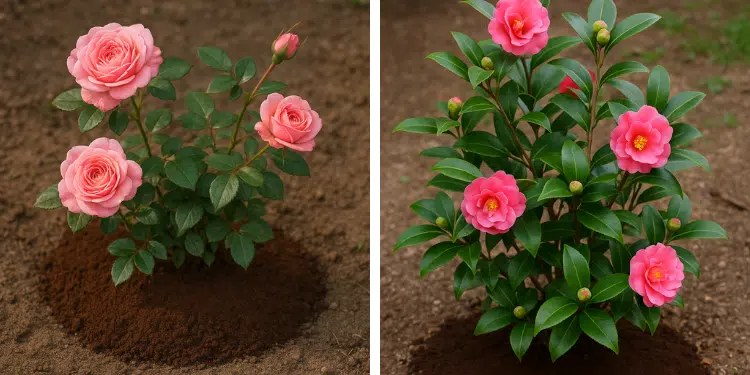
1. Roses (Rosa spp.)
Why they love coffee grounds: Roses are heavy feeders, especially during their growing season. They respond well to nitrogen and organic matter, both of which coffee grounds supply.
Healthy soil with extra nitrogen promotes lush foliage, strong stems, and bigger blooms.
How to apply:
- Sprinkle 1–2 tablespoons of used coffee grounds around the base every 2–4 weeks.
- Mix lightly into the topsoil to prevent clumping.
- Alternatively, add grounds to compost and spread that around your rose bed.
Extra tip: A diluted “coffee tea” (grounds steeped in water) makes a gentle liquid feed that roses absorb quickly.
2. Hydrangeas (Hydrangea macrophylla)
Why they love coffee grounds: Hydrangea flower color is famously pH-sensitive. Coffee grounds gently acidify soil, helping to turn hydrangea blooms blue rather than pink.
They also improve soil’s water-holding ability, which hydrangeas love.
How to apply:
- Add a small handful to the soil around each plant in spring.
- Work it in gently to avoid compaction.
- Monitor pH with a soil test kit if you’re aiming for specific flower colors.
3. Camellias (Camellia japonica)
Why they love coffee grounds: Camellias are evergreen shrubs that bloom in late winter or spring. They prefer acidic, organically rich soils – a perfect match for coffee grounds.
How to apply:
- Apply a light mulch of used coffee grounds in late winter.
- Keep a 3–4 inch gap around the trunk to prevent stem rot.
- Mix into compost for a balanced feed during the growing season.
4. Azaleas and Rhododendrons (Rhododendron spp.)
Why they love coffee grounds: Both plants are native to woodland environments with acidic, humus-rich soils.
Coffee grounds replicate that natural setting, enriching the soil while helping suppress weeds.
How to apply:
- Incorporate grounds into mulch around the plants in spring.
- Add them to compost to enrich organic matter.
- Avoid thick surface layers to prevent compaction.
5. Lily of the Valley (Convallaria majalis)
Why they love coffee grounds: This fragrant spring bloomer thrives in moist, rich, slightly acidic soil. Coffee grounds add organic matter and improve structure, keeping the soil damp without becoming soggy.
How to apply:
- Mix coffee grounds into compost.
- Apply monthly during the active growing season.
- Water well after application.
6. Daffodils (Narcissus spp.)
Why they love coffee grounds: After a long winter, daffodils need an energy boost. Coffee grounds provide nitrogen that helps bulbs recover and store strength for the next year.
How to apply:
- Scatter a thin layer over the soil where bulbs are planted in early spring.
- Lightly water to prevent crusting.
- Pair with compost for a more balanced feeding.
7. Begonias (Begonia spp.)
Why they love coffee grounds: Begonias prefer well-aerated, moisture-retentive soil – exactly what coffee grounds help create. They also benefit from the extra organic matter and nutrients.
How to apply:
- Mix grounds into potting soil at a 1:3 ratio with compost.
- For potted begonias, add grounds sparingly to prevent soggy soil.
- Composting coffee first often works best for container begonias.
8. Marigolds (Tagetes spp.)
Why they love coffee grounds: Marigolds are robust but enjoy nitrogen and phosphorus. Coffee grounds also provide a side benefit: deterring slugs, snails, and root pests that sometimes target marigolds.
How to apply:
- Sprinkle dried grounds in a ring around each plant.
- Reapply every 2–3 weeks, especially after rain.
- Mix into garden beds before planting for a nutrient boost.
9. Geraniums (Pelargonium spp.)
Why they love coffee grounds: Geraniums bloom heavily, especially in pots, and deplete soil nutrients quickly.
Coffee grounds enrich the soil, keeping geraniums vibrant and encouraging continuous flowering.
How to apply:
- Add used grounds directly to potting mix before planting.
- For in-ground plants, sprinkle lightly around roots every month.
- Always mix into soil to avoid surface crusting.
10. Impatiens (Impatiens walleriana)
Why they love coffee grounds: Impatiens love moist, shaded conditions. Coffee grounds enhance water retention in soil, keeping them consistently hydrated while improving fertility.
How to apply:
- Mix grounds into the top inch of soil when planting.
- Brew a “coffee tea” (1 tablespoon grounds in 1 liter water) and use to water plants weekly.
- Avoid direct thick layers that can mold in shade.
11. Fuchsias (Fuchsia spp.)
Why they love coffee grounds: Fuchsias thrive in slightly acidic soils rich in organic matter. Coffee grounds feed the soil and help maintain the right pH for abundant, colorful blooms.
How to apply:
- Work used grounds into compost or soil around the root zone every few weeks.
- For container fuchsias, mix sparingly into potting mix.
- Avoid fresh grounds, which are too acidic.
Tips for Success With Coffee Grounds
- Less is more: Think of coffee grounds as a supplement, not a replacement for fertilizer.
- Mix, don’t layer: Always blend into soil or compost instead of piling on top.
- Compost first for containers: Container plants are more sensitive; composted coffee grounds are safer.
- Monitor your plants: If leaves yellow or growth slows, reduce coffee applications and rebalance with other fertilizers.
- Know your soil: Acid-loving plants thrive, but neutral or alkaline lovers (like lavender or clematis) won’t benefit.
Coffee grounds are a simple, sustainable way to recycle waste while giving your garden a boost.
When used correctly, they can enrich soil, support beneficial microbes, deter pests, and improve the health of acid-loving flowers.
From roses and hydrangeas to fuchsias and begonias, the 11 flowers in this guide are proven to thrive when given a modest dose of used coffee grounds.
The key is balance – use moderately, mix into soil or compost, and always tailor your approach to each plant’s needs.