Calendula oil has been trusted for centuries as one of the most effective natural remedies for soothing, repairing, and protecting the skin.
Made from the vibrant orange and yellow flowers of Calendula officinalis, this gentle herbal oil has been used in traditional European, Ayurvedic, and folk medicine to support wound healing, calm inflammation, and restore damaged skin.
What makes calendula oil especially valuable is its gentle strength. It works deeply but safely, making it suitable even for sensitive skin, children, and long-term use.
Learning how to make calendula oil at home allows you to preserve its healing compounds in their purest form – without preservatives, fragrances, or synthetic additives.
Why Calendula Is One of the Best Herbs for Skin Repair
Calendula flowers are rich in bioactive compounds that directly support skin healing.
These include triterpenoids, flavonoids, carotenoids, and resins, all of which contribute to calendula’s anti-inflammatory, antimicrobial, and tissue-repairing properties.
Traditionally, calendula was applied to:
- cuts and scrapes
- burns and sunburn
- rashes and eczema
- cracked skin and lips
- insect bites
- slow-healing wounds
Modern herbalists still rely on calendula because it supports skin regeneration without irritating fragile tissue.
How Calendula Oil Supports Skin Healing
Calendula oil works on several levels of skin repair. It helps calm inflammation, encourages circulation to damaged tissue, and supports the body’s natural collagen production.
This combination allows the skin to repair itself faster and with less scarring.
Calendula also helps protect broken or irritated skin from infection thanks to its mild antimicrobial activity. Unlike harsh antiseptics that dry the skin, calendula nourishes while it protects.
Why Oil Infusion Is the Best Way to Use Calendula
While calendula can be used in teas and washes, infusing the flowers into oil allows their fat-soluble compounds to be absorbed effectively.
Oil acts as both a preservative and a delivery system, helping calendula’s healing components penetrate the skin barrier.
Calendula oil forms the base for many natural products, including salves, balms, creams, baby oils, and massage blends.
Fresh vs. Dried Calendula Flowers
Calendula oil can be made using fresh or dried flowers, but dried flowers are preferred. Fresh flowers contain moisture, which increases the risk of mold during infusion.
Drying calendula concentrates its healing compounds and ensures a stable, long-lasting oil. Flowers should be fully dry, crisp, and vibrant in color before use.
Choosing the Best Carrier Oil
The carrier oil you choose influences both the texture and shelf life of calendula oil. Gentle, skin-friendly oils work best.
Common choices include:
- olive oil for deep nourishment
- sweet almond oil for lightweight absorption
- jojoba oil for sensitive or acne-prone skin
- sunflower oil for affordability and stability
All of these oils extract calendula’s compounds effectively.
How to Make Calendula Oil at Home (Slow Infusion Method)
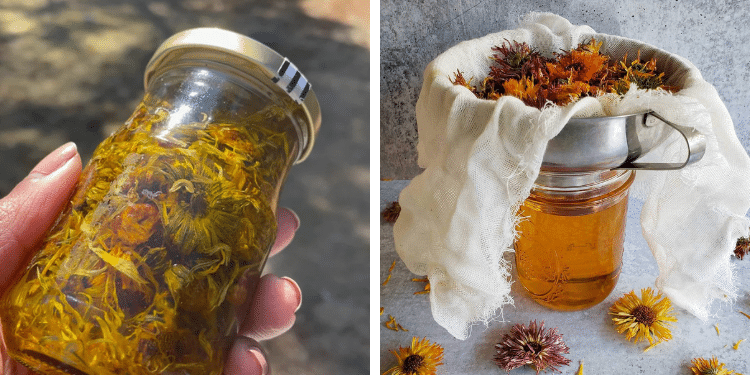
To begin, lightly crumble dried calendula petals and place them into a clean glass jar. Fill the jar loosely, allowing room for oil to circulate. Pour your chosen carrier oil over the flowers until they are fully submerged.
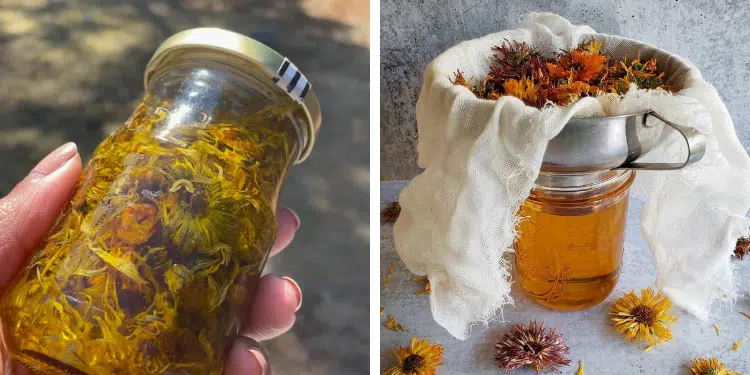
Seal the jar and place it in a warm, dark location for four to six weeks. Gently shake the jar every few days to encourage extraction. Over time, the oil will take on a rich golden color, indicating successful infusion.
Once ready, strain the oil through a fine cloth or mesh strainer and store it in a clean, airtight bottle away from light and heat.
Faster Warm Infusion Method
For quicker results, calendula oil can be made using gentle heat. Place dried flowers and oil in a heat-safe container and warm it using a double boiler or slow cooker on very low heat for several hours.
The oil should never simmer or fry. Gentle warmth is enough to extract calendula’s healing compounds while preserving their effectiveness. Once cooled, strain and store as usual.
How to Use Calendula Oil for Skin Repair
Calendula oil can be applied directly to clean skin or used as a base for other products.
It is commonly used to:
- soothe irritated or inflamed skin
- support healing of minor cuts and burns
- reduce redness and dryness
- soften scars over time
- nourish cracked hands and heels
- calm eczema-prone or sensitive skin
Because it is mild, it can be used daily without irritation.
Calendula Oil for Babies and Sensitive Skin
Calendula oil is often used in baby care products due to its gentleness. It helps soothe diaper rash, dry patches, and skin irritation without harsh ingredients.
For sensitive skin, calendula oil provides relief without clogging pores or causing redness.
How Long Calendula Oil Lasts
When stored properly in a cool, dark place, calendula oil typically lasts up to one year. Using a stable carrier oil and ensuring flowers are completely dry helps extend shelf life.
If the oil develops an unpleasant smell or cloudiness, it should be discarded.
Who Should Use Calendula Oil With Caution
Calendula is generally safe, but individuals with allergies to plants in the daisy family should perform a patch test before use. Avoid applying to deep or severe wounds without professional guidance.
Why Calendula Oil Is Making a Comeback
As people move away from synthetic skincare and toward gentle, plant-based solutions, calendula oil is being rediscovered for its effectiveness and simplicity.
It supports the skin’s natural healing process rather than suppressing symptoms.
Calendula oil fits perfectly into minimalist, low-toxicity lifestyles and homemade skincare routines.
Making calendula oil at home connects you to centuries of herbal wisdom while giving you one of the most versatile and effective skin-healing remedies available.
From soothing irritation to supporting tissue repair, calendula oil works gently but deeply.