The Christmas cactus, an epiphytic plant native to the tropical rainforests of Brazil, is a beloved holiday staple known for its vibrant blooms. However, achieving those striking flowers requires more than just routine care. Many plant enthusiasts inadvertently sabotage their Christmas cactus through calendar-based watering, leading to root issues and bud drop.
Understanding the unique needs of the Christmas cactus is crucial to its success. This plant thrives on moisture cues rather than a rigid schedule, and missteps can quickly lead to trouble. In this article, we’ll explore why a calendar approach to watering can be detrimental and how to adjust your care routine to ensure a healthy and blooming Christmas cactus.
The ‘Once-A-Week’ Myth: How Calendar Watering Took Over Plant Care
The notion of watering plants on a strict weekly schedule is a pervasive myth that has infiltrated plant care routines. This approach, often advertised as a simple solution, fails to account for the diverse needs of different plant species and their varying environments. Many houseplants, including the Christmas cactus, require a more nuanced approach to watering.
Calendar watering emerged as a convenient guideline, especially for busy individuals, but it neglects essential factors such as humidity levels, pot size, and the plant’s growth phase. For instance, a plant in a small pot with well-draining soil may dry out faster and require more frequent watering than one in a larger pot with denser soil. Adhering strictly to a once-a-week schedule can lead to overwatering or underwatering, both of which are detrimental to plant health.
Why Christmas Cactus Roots Hate a Rigid Watering Schedule
The Christmas cactus has unique water requirements, as it is adapted to the humid and shaded conditions of tropical rainforests. Unlike desert cacti, it does not store water in its leaves or stems. Instead, it relies on consistent moisture levels in its environment. A rigid watering schedule fails to accommodate the plant’s need for a balance between moisture and aeration.
When the soil is consistently wet without adequate drying periods, the roots of the Christmas cactus can become waterlogged and deprived of oxygen. This can lead to root rot, a condition where the roots begin to decay. Conversely, allowing the soil to dry out completely between waterings can stress the plant, causing the roots to dry and wither, which can be equally harmful.
Soil Moisture, Not the Date: What This Epiphyte Actually Responds To
The Christmas cactus responds to the moisture content of its growing medium rather than a pre-determined watering schedule. This plant thrives when its soil is allowed to dry out partially between waterings, mimicking the natural drying and moistening cycles it would experience in its native habitat.
Monitoring soil moisture is key to providing the right conditions. Using tools like moisture meters or simply checking the top inch of soil with your finger can give a more accurate indication of when to water. By prioritizing soil moisture over calendar dates, you can better support the health and flowering potential of your Christmas cactus.
How Overwatering on Schedule Suffocates Roots and Triggers Rot
Overwatering is a common issue with calendar-based watering schedules, especially for plants like the Christmas cactus that do not tolerate waterlogged conditions. When the soil remains saturated, the roots are starved of oxygen, which is essential for their function and overall plant health.
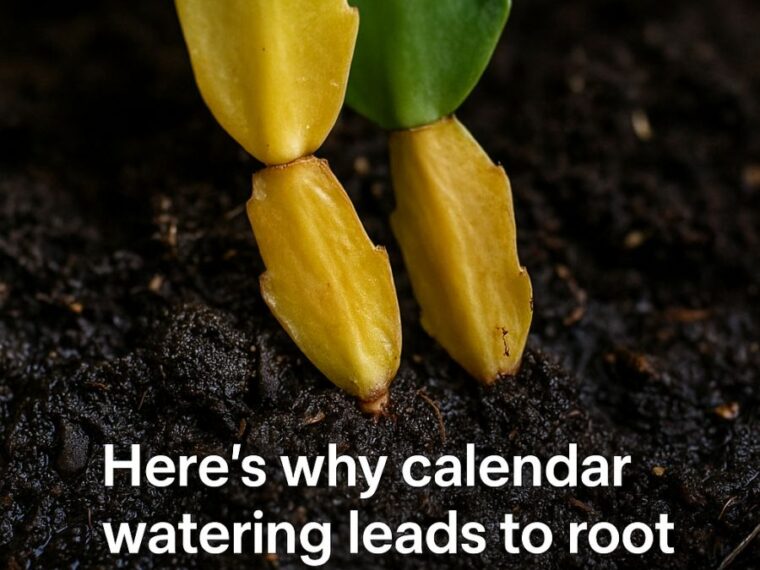
Root rot is a direct consequence of overwatering, leading to mushy, discolored roots that can no longer support the plant. As the roots fail, the plant struggles to uptake water and nutrients, leading to signs of distress such as wilting, yellowing leaves, and ultimately, bud drop. To avoid these issues, it is crucial to adjust watering frequency based on the plant’s needs and environmental conditions rather than a fixed schedule.
The Hidden Damage of Underwatering Between Calendar Waterings
Underwatering can occur when a rigid schedule does not align with the plant’s actual needs, particularly during periods of increased growth or heat. The Christmas cactus, when deprived of adequate moisture, will exhibit signs of stress such as shriveled leaves and stunted growth.
Chronically underwatered plants may also drop their buds as a survival mechanism to conserve resources. This can be particularly disappointing when anticipating blooms during the holiday season. Ensuring that the soil does not dry out completely between waterings is essential for maintaining a healthy and thriving plant.
Stress Chain Reaction: From Root Problems to Bud Drop
Root problems caused by improper watering eventually manifest in the above-ground parts of the Christmas cactus. When roots are compromised, whether by rot from overwatering or dehydration from underwatering, the plant’s ability to absorb water and nutrients is impaired.
This stress often leads to bud drop, as the plant prioritizes survival over reproduction. Buds may fail to develop fully or fall off prematurely, leaving the plant bare during its expected blooming period. Addressing the root cause of these issues is essential for restoring the plant’s vitality and ensuring future blooms.
Why Viral Watering Hacks (Ice Cubes, Shot Glasses, Timers) Backfire
In an attempt to simplify plant care, many viral watering hacks have emerged, such as using ice cubes or shot glasses to measure water, or setting timers for automatic watering. While these methods may seem convenient, they often fail to meet the specific needs of plants like the Christmas cactus.
Ice cubes can shock the roots with cold temperatures, disrupting the plant’s natural processes. Similarly, using a fixed volume of water, regardless of the plant’s current needs, can lead to over- or underwatering. Timers also neglect fluctuations in environmental conditions. These hacks overlook the importance of observing and responding to the plant’s actual moisture needs.
Potting Mix and Drainage: How the Wrong Medium Makes Calendar Watering Worse
The choice of potting mix and drainage capabilities significantly affect how well a Christmas cactus can handle watering. A dense, water-retentive mix exacerbates the problems of overwatering, while a mix that dries too quickly can contribute to underwatering.
Opting for a well-draining mix, such as one containing peat, perlite, and orchid bark, can help maintain the right balance of moisture and aeration. Ensuring that pots have adequate drainage holes is also crucial to prevent water from pooling at the bottom, which can suffocate roots and promote rot.
Seasonal Shifts: Light, Temperature, and Why Your Schedule Stops Making Sense
The Christmas cactus experiences different growth phases and environmental conditions throughout the year, which affect its watering needs. During the growing season in spring and summer, the plant may require more frequent watering due to increased evaporation and growth demands.
In contrast, during the cooler, less active months, the plant’s water needs decrease. Rigidly adhering to a set watering schedule fails to account for these seasonal shifts, leading to potential over- or underwatering. Adjusting watering practices to align with seasonal changes is essential for maintaining plant health.
Reading the Plant, Not the Planner: Signs Your Christmas Cactus Needs Water
Understanding the signs that indicate when a Christmas cactus needs water is crucial for effective care. Look for cues such as the soil feeling dry to the touch an inch below the surface, the plant appearing slightly wilted, or the pot feeling unusually light.
Observing the plant’s overall vigor and leaf condition can also provide insights into its hydration status. Healthy, plump leaves generally indicate adequate moisture, while shriveled or limp leaves suggest the need for water. By tuning into these signs, you can provide more responsive and effective care for your Christmas cactus.
Better Than a Schedule: The Finger Test, Pot Weight, and Moisture Meters
Abandoning a rigid schedule and instead using practical methods to gauge when to water can greatly benefit your Christmas cactus. The finger test, where you insert your finger into the soil to check for moisture, is a simple and effective method.
Weighing the pot is another technique; pots that feel light are likely due for watering. For more accuracy, moisture meters provide real-time feedback on soil conditions, helping you avoid both over- and underwatering. By employing these strategies, you can better meet the specific needs of your plant.
How to Rescue a Christmas Cactus From Root Trouble and Falling Buds
If your Christmas cactus is suffering from root issues or bud drop, prompt intervention is necessary. Begin by removing the plant from its pot and inspecting the roots. Trim any mushy, discolored roots with sterile scissors to prevent the spread of rot.
Repot the plant in fresh, well-draining soil and ensure proper drainage. Adjust your watering routine to focus on soil moisture rather than a schedule. Providing stable conditions and avoiding further stress will help the plant recover and regain its blooming potential.
Building a Flexible Watering Routine That Prevents Future Bud Drop
Developing a flexible watering routine that responds to your Christmas cactus’s needs can prevent future issues. Regularly assess soil moisture and environmental conditions to guide your watering schedule.
Incorporate seasonal adjustments and observe the plant’s cues to ensure it receives the right amount of water. By moving away from a rigid schedule and towards a more intuitive approach, you can support the health and vitality of your Christmas cactus, resulting in vibrant blooms during the holiday season.