Basil is one of the most popular and rewarding herbs to grow, but it has one frustrating habit: it wants to flower as quickly as possible.
Once basil begins flowering, leaf production slows, the flavor turns bitter, and the plant shifts its energy away from producing those tender, aromatic leaves we love.
The secret to keeping basil productive all season long lies in one simple technique – pinching.
When done correctly, pinching basil encourages bushy growth, delays flowering, and dramatically increases your harvest.
When done incorrectly, it can stress the plant, slow growth, or even cause early flowering. Understanding how basil grows – and how to guide that growth – makes all the difference.
This guide explains exactly how to pinch basil the right way so it stays leafy, flavorful, and productive for months.
Why Basil Flowers Too Early
Basil flowers in response to maturity, heat, and stress. In nature, flowering is the plant’s way of completing its life cycle and producing seeds.
Once flowers appear, the plant’s chemistry changes, reducing essential oil production in the leaves and altering the flavor.
Common triggers for early flowering include:
- letting the plant grow too tall without pruning
- hot weather stress
- inconsistent watering
- poor pinching technique
- overcrowding
Pinching interrupts this process by redirecting energy back into leaf and branch development.
Understanding Basil’s Growth Pattern
Basil grows upward from a central stem, producing pairs of leaves at nodes. Between each leaf pair is a growth point that can develop into either a flower stalk or new branches.
When the main stem is left untouched, basil grows tall and eventually forms flowers at the top.
When that stem is pinched at the correct location, the plant responds by sending out two new branches from the node below the cut.
Each new branch then produces more leaves – and more opportunities to pinch again.
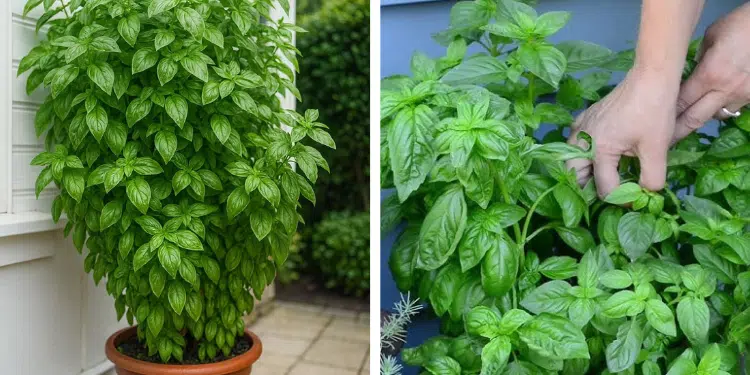
This cycle is what creates a full, bushy basil plant instead of a tall, flowering one.
When to Start Pinching Basil
The best time to start pinching basil is early, once the plant has developed at least 6–8 true leaves and stands about 6–8 inches tall.
Many gardeners wait too long, allowing the main stem to dominate and flower prematurely.
Early pinching builds structure and sets the foundation for long-term leaf production.
If basil is grown indoors or in warm climates, pinching may begin even sooner.
Where to Pinch Basil for Best Results
The most important rule of pinching basil is never pinch randomly or at the very top.
Look for a section of the stem where:
- two large leaves grow opposite each other
- small new shoots are forming at their base
Pinch the stem just above this leaf pair. This leaves two active growth points intact, which will each become new branches.
Avoid pinching below the lowest leaves or removing too much foliage at once.
How to Pinch Basil Step by Step
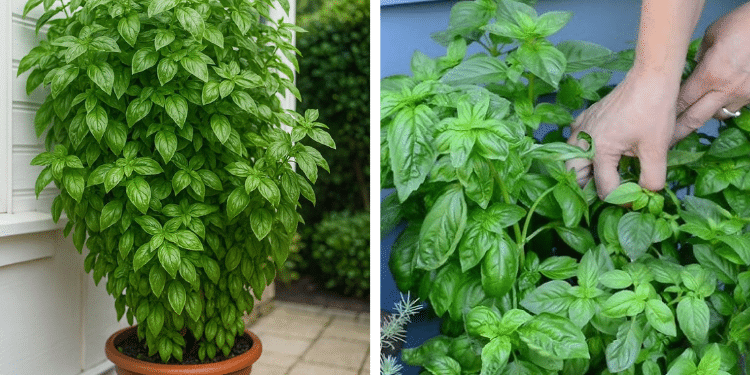
Using clean fingers or sharp scissors, gently pinch or snip the stem cleanly just above a healthy leaf node. The cut should be smooth, not crushed.
This single cut triggers branching immediately. Within days, you’ll notice two new stems forming where one used to be.
Repeat this process on each new branch as the plant grows.
How Often to Pinch Basil
Pinching should be done every 1–2 weeks, depending on how fast the plant is growing.
Basil thrives on regular harvesting, and frequent pinching actually stimulates faster growth.
Never allow the plant to grow tall without pruning, especially during warm weather.
Consistent pinching is the key to delaying flowering indefinitely.
What to Do If Flower Buds Appear
Even well-pinched basil may attempt to flower, especially during heat waves. If you notice small buds forming at the top of a stem, act immediately.
Pinch off the entire stem below the flower buds, cutting back to the nearest healthy leaf node. Removing buds early prevents the plant from entering full flowering mode.
The sooner you remove them, the faster the plant returns to leaf production.
How Pinching Affects Flavor
Pinched basil plants produce leaves with higher concentrations of essential oils, which are responsible for basil’s aroma and taste. Regular pinching keeps leaves:
- tender
- aromatic
- sweeter
- less bitter
Once flowering begins, essential oil production drops, which is why unpinched basil often tastes sharp or bland.
Pinching Basil in Hot Weather
Heat accelerates flowering. During summer, basil may require more frequent pinching.
To support the plant:
- pinch weekly
- water consistently
- mulch to keep roots cool
- provide light afternoon shade in extreme heat
These steps, combined with proper pinching, can delay flowering even in very warm climates.
How Pinching Creates a Bushy Basil Plant
Each pinch doubles the number of stems. One stem becomes two, two become four, and so on.
This exponential branching is what transforms basil into a compact, productive plant rather than a tall, spindly one.
Bushy basil plants produce:
- more harvestable leaves
- better airflow
- stronger stems
- longer lifespan
This structure also makes the plant more resistant to pests and disease.
Common Pinching Mistakes That Cause Early Flowering
Many gardeners accidentally encourage flowering without realizing it. Common mistakes include:
- pinching too late
- cutting below leaf nodes
- removing too much foliage at once
- allowing long periods without harvesting
- ignoring early flower buds
Correcting these mistakes can immediately improve basil performance.
Using Pinched Basil Leaves
Every pinch produces edible leaves. Use them fresh or preserve them through freezing, drying, or making pesto. Frequent harvesting not only benefits the plant – it keeps your kitchen well stocked.
Pinching Basil Grown in Containers
Container-grown basil flowers faster due to limited root space and heat buildup. Pinching is especially important for potted basil.
Ensure:
- good drainage
- adequate pot size
- regular watering
- frequent pinching
This keeps container basil productive much longer.
Pinching basil the right way is the single most important technique for preventing early flowering and maximizing harvest.
By starting early, cutting above healthy leaf nodes, and pinching consistently, you can keep basil lush, bushy, and flavorful for months.