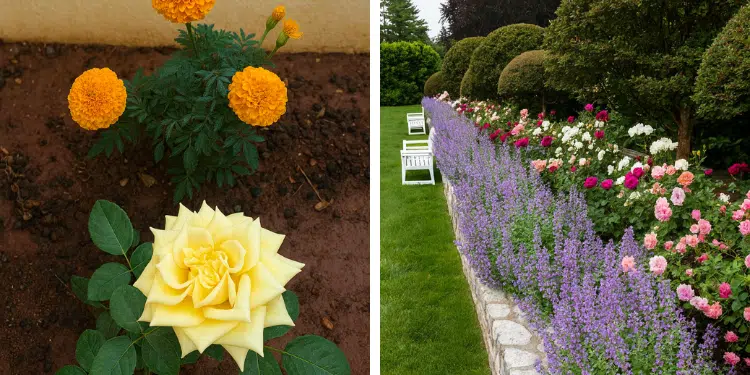
Roses are often called the queens of the garden – admired for their beauty, fragrance, and timeless elegance. But despite their reputation for romance, roses are surprisingly sensitive plants when it comes to garden neighbors.
Planting the wrong flowers nearby can lead to poor growth, increased disease, pest infestations, and disappointing blooms.
On the other hand, choosing the right companion flowers can dramatically improve rose health, repel pests, and enhance flowering.
Understanding which flowers clash with roses – and which ones support them – can make the difference between struggling bushes and thriving, bloom-filled plants.
Here’s a complete guide to 10 flowers you should never plant with roses, followed by 5 powerful companions that help protect and strengthen them.
Why Companion Planting Matters for Roses
Roses have specific needs. They require good air circulation, rich soil, steady moisture, and plenty of sunlight.
They are also vulnerable to common garden problems such as aphids, spider mites, black spot, powdery mildew, and nutrient competition.
The wrong companion plants can:
- compete aggressively for nutrients and water
- block airflow around rose foliage
- increase humidity near leaves
- attract rose-specific pests
- spread fungal diseases
The right companions, however, can:
- repel insects naturally
- improve soil conditions
- attract beneficial predators
- enhance fragrance and bloom production
- reduce disease pressure
10 Flowers You Shouldn’t Plant With Roses
These flowers may look attractive next to roses, but they often cause hidden problems below the surface.
1. Sunflowers
Sunflowers are heavy feeders with deep, aggressive root systems that drain soil nutrients roses need.
They also cast significant shade, reducing sunlight exposure for roses, which directly impacts blooming.
Additionally, sunflowers can host pests such as aphids that easily spread to rose bushes.
2. Peonies
Although peonies and roses bloom around the same time, they should not be planted together. Peonies are prone to fungal diseases like botrytis, which can spread to roses.
They also require different soil drainage and spacing, making them poor long-term companions.
3. Dahlias
Dahlias compete heavily for nutrients and water, especially during peak growing season. They also attract aphids, thrips, and spider mites – all pests that love roses.
Their dense foliage restricts airflow, increasing humidity and fungal risk.
4. Lilies
Lilies are heavy feeders and often attract beetles and aphids that migrate easily to roses.
Their upright growth may look visually appealing, but below ground they compete aggressively, weakening rose root systems over time.
5. Impatiens
Impatiens thrive in moist, humid conditions and prefer partial shade – the opposite of what roses need.
When planted near roses, they increase moisture retention at the soil surface, encouraging fungal diseases like black spot and mildew.
6. Begonias
Begonias require frequent watering and prefer shaded conditions. Their moisture-loving nature raises humidity levels around roses, creating an environment where fungal infections thrive.
They also restrict airflow at the base of rose plants.
7. Foxglove
Foxglove is toxic and attracts aphids, which often spread to roses. It also prefers slightly acidic soil and partial shade, conflicting with the sun-loving needs of roses. Its tall growth can block sunlight and disrupt air circulation.
8. Zinnias
Zinnias are beautiful, but they attract powdery mildew and aphids – two major rose enemies.
When planted too close, they act as a disease bridge that spreads fungal infections quickly between plants.
9. Ranunculus
Ranunculus prefers consistently moist soil and cooler temperatures. This conflicts with roses, which require well-drained soil and air circulation.
Ranunculus also struggles in the same soil conditions roses prefer, making neither plant thrive.
10. Sweet Peas
Sweet peas are climbers that compete for vertical space and airflow. They also attract aphids and require regular watering, which raises humidity levels around rose foliage and increases disease risk.
5 Flowers That Help Protect Roses and Improve Their Health
While some flowers harm roses, others act like natural bodyguards – repelling pests, improving soil health, and attracting beneficial insects.
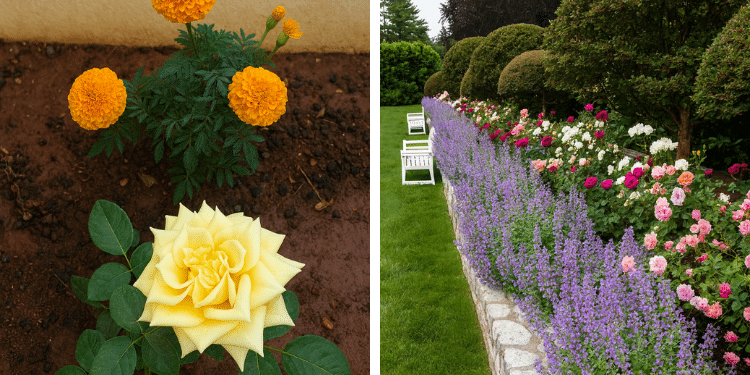
1. Marigolds
Marigolds are one of the best rose companions. Their roots release compounds that deter nematodes, while their scent repels aphids, whiteflies, and beetles.
They also attract pollinators and beneficial insects that feed on rose pests.
Marigolds planted at the base of roses help create a protective barrier without competing aggressively for nutrients.
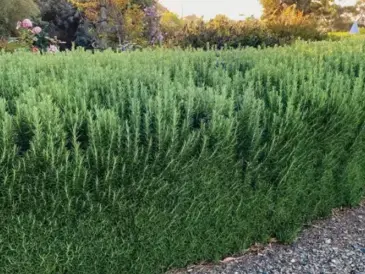
2. Lavender
Lavender repels aphids, moths, and beetles while attracting bees and predatory insects.
It prefers similar soil and sunlight conditions as roses and improves air circulation due to its upright growth habit.
Lavender’s fragrance also enhances the sensory experience of a rose garden.
3. Alliums (Ornamental Onions)
Alliums release sulfur compounds that repel aphids, spider mites, and thrips. Their tall, airy flower heads do not block airflow, and their shallow roots avoid competition with roses.
They also add visual interest and bloom at different times, extending seasonal beauty.
4. Calendula
Calendula attracts beneficial insects such as hoverflies and ladybugs that prey on aphids. It also helps suppress soil pathogens and improves overall garden biodiversity.
Calendula is easy to grow, blooms continuously, and provides gentle protection for rose bushes.
5. Alyssum
Sweet alyssum acts as a living mulch around roses. It attracts beneficial insects, suppresses weeds, and helps regulate soil temperature.
Its low-growing habit improves ground coverage without competing with rose roots.
Alyssum also enhances airflow by preventing dense weeds from forming near rose stems.
How to Arrange Flowers Around Roses Properly
Spacing matters just as much as plant choice. Roses need breathing room.
For best results:
- allow at least 18–24 inches of space around rose bushes
- plant companions in loose clusters, not dense rings
- avoid plants that trap moisture near rose stems
- prioritize airflow and sun exposure
Companion plants should support roses – not crowd them.
Common Mistakes Gardeners Make With Roses
Many rose problems stem from companion planting mistakes such as:
- planting too closely
- mixing shade-loving flowers with sun-loving roses
- overcrowding with moisture-heavy plants
- ignoring airflow needs
Fixing these issues often results in healthier plants without chemicals.
Roses reward gardeners who respect their space and needs. Avoiding incompatible flowers like sunflowers, peonies, dahlias, begonias, and impatiens prevents nutrient competition, disease, and pest infestations.