The Christmas cactus, a popular houseplant during the holiday season, is cherished for its vibrant blooms and easy maintenance. However, despite its reputation as a low-maintenance plant, improper care practices can lead to significant problems, particularly when it comes to watering.
One common mistake many indoor gardeners make is misting their Christmas cactus in an effort to provide humidity and moisture. While misting can be beneficial for some plants, it can have adverse effects on the Christmas cactus, leading to issues like rot. Understanding why misting can be detrimental is crucial for maintaining the health of this beloved plant.
1. The Viral Misting Hack That Can Backfire on Christmas Cacti
Misting has become a popular hack among plant enthusiasts, often touted as a simple way to increase humidity and keep houseplants healthy. However, for the Christmas cactus, which hails from the tropical rainforests of Brazil, this practice can do more harm than good. Unlike the air plants and orchids that thrive on misting, the Christmas cactus has different moisture requirements.
While misting might temporarily raise the humidity around the plant, it often leads to water pooling on the plant’s surface, which can be a recipe for disaster. The constant presence of water droplets can promote fungal growth and invite rot, especially if misting is done frequently without allowing time for the plant to dry out.
2. How Christmas Cactus Actually Absorbs Moisture
The Christmas cactus absorbs moisture primarily through its root system rather than through its leaves or stems. The plant’s roots are adept at taking in water from the soil, which is why proper watering practices are essential. Overhead watering or misting can lead to water accumulation on the plant’s surface, which is not how the plant naturally receives moisture.
In its natural habitat, the Christmas cactus grows in well-draining soil that allows roots to absorb moisture efficiently. Mimicking these conditions indoors by ensuring the plant is in a pot with drainage holes and using a suitable potting mix is more effective than misting.
3. Why Constant Surface Dampness Invites Fungal Rot
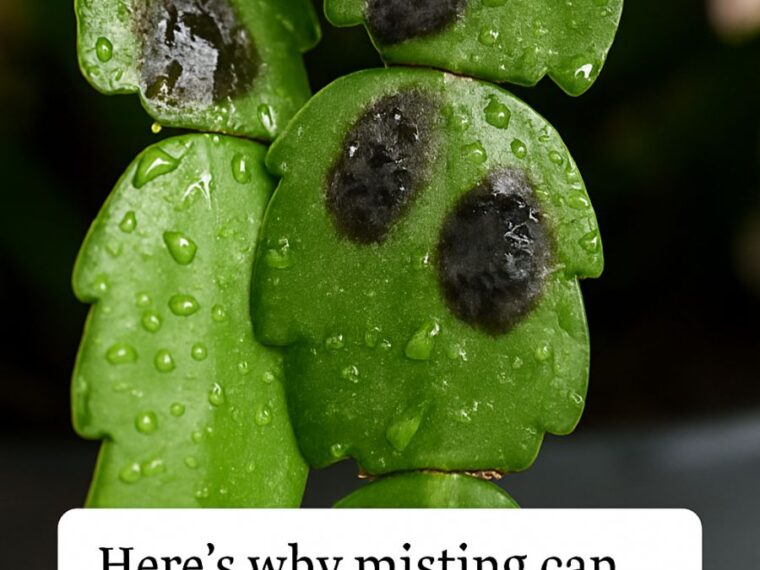
When a Christmas cactus is misted, the water left on the surface of its stems creates a damp environment that is ideal for fungal growth. Fungi thrive in moist conditions, and the constant presence of water can lead to infections that manifest as rot. Fungal rot can quickly spread through the plant, leading to soft, decaying tissues.
To prevent fungal rot, it’s important to allow the plant to dry out between waterings. The surface of the plant should be kept dry, and any water that does accumulate should be gently wiped away to prevent the onset of rot.
4. The Hidden Risk of Water Sitting in Stem Joints and Crevices
A Christmas cactus has a unique structure with flat, segmented stems that can easily trap water in their joints and crevices. When misting is done, water can settle in these areas, leading to a prolonged dampness that is detrimental to the plant’s health.
Water sitting in the crevices of the plant can lead to localized rot, which can spread if not addressed promptly. This is especially problematic because the signs of rot in these areas may not be immediately visible, allowing the problem to worsen before it is detected.
5. Misting and Poor Air Circulation: A Perfect Storm Indoors
Indoors, poor air circulation can exacerbate the problems caused by misting. Without adequate airflow, water on the surface of the plant takes longer to evaporate, extending the time the plant remains damp. This creates an environment conducive to rot and fungal infections.
To improve air circulation, consider placing the plant in a room with a fan or near a window where there is a gentle breeze. This helps to ensure that the plant dries quickly after watering, reducing the risk of rot.
6. How Misting Keeps Potting Mix Too Damp for Too Long
Misting can inadvertently lead to an overly damp potting mix if water droplets collect and drip into the soil. This repeated addition of moisture can prevent the soil from drying out properly, creating conditions that are too wet for the Christmas cactus.
Constantly damp soil is a breeding ground for root rot, which can severely damage the plant’s root system. It is essential to water the plant only when the top inch of soil feels dry to the touch, ensuring that the roots have access to the necessary moisture without being waterlogged.
7. The Role of Cool Indoor Temperatures in Accelerating Rot
Cool indoor temperatures can slow down the evaporation of water from the plant’s surface and soil, exacerbating the issues caused by misting. In a cooler environment, water remains on the plant longer, increasing the likelihood of rot and fungal infections.
Maintaining a moderate temperature range of 60-70°F (15-21°C) indoors can help mitigate these risks. Additionally, avoiding placing the plant near cold drafts or air conditioning vents can prevent temperature fluctuations that may stress the plant.
8. Why Soft, Succulent Tissues Are Especially Vulnerable to Decay
The Christmas cactus is a succulent with soft, fleshy tissues that are particularly susceptible to decay when exposed to prolonged moisture. These tissues can absorb and retain water, making them ideal targets for rot if misting is done excessively.
Once rot sets in, it can rapidly spread through the plant’s soft tissues, leading to wilting and eventual death if not addressed. Ensuring that the plant’s surface remains dry and that watering is done with care can help preserve the health of its succulent tissues.
9. Fertilizer, Dust, and Misting: A Sticky Film for Pathogens
When misting is done in conjunction with fertilizing, it can create a sticky residue on the plant’s surface. This film can trap dust and serve as a breeding ground for pathogens, further increasing the risk of rot and disease.
To avoid this, it’s important to apply fertilizer directly to the soil rather than the plant’s surface, and to occasionally clean the plant’s leaves with a damp cloth to remove dust and residues that could harbor pathogens.
10. Confusing Humidity With Wetness: Common Care Myths
Many plant enthusiasts mistakenly believe that misting is necessary to provide humidity for the Christmas cactus. However, humidity refers to the amount of moisture in the air, not on the plant itself. Misting creates wetness rather than increasing ambient humidity levels.
Understanding the difference between humidity and wetness can help prevent over-misting. Utilizing a humidity tray or a humidifier are more effective ways to provide the humidity that the Christmas cactus needs without wetting the plant’s surface.
11. Safe Alternatives to Misting for Raising Humidity
Instead of misting, there are several safer alternatives to raise humidity levels for a Christmas cactus. One simple method is to place a shallow tray filled with water and pebbles near the plant. As the water evaporates, it increases the humidity in the immediate area.
Using a humidifier in the room where the Christmas cactus is kept can also effectively raise humidity levels without the risks associated with misting. These methods ensure that the plant receives the moisture it needs through the air rather than direct application to its surface.
12. Watering Practices That Prevent Root and Stem Rot
To prevent root and stem rot, it’s crucial to adopt proper watering practices. Water the Christmas cactus thoroughly, allowing excess water to drain from the bottom of the pot, and only water again when the top inch of soil feels dry.
Using a well-draining potting mix designed for cacti and succulents can also help prevent water retention in the soil. Ensure that the pot has drainage holes to allow excess water to escape, reducing the risk of waterlogged soil and root rot.
13. Early Warning Signs Your Christmas Cactus Is Rotting From Over-Misting
Early signs that a Christmas cactus might be rotting due to over-misting include wilting, yellowing leaves, and a mushy texture at the base of the plant or the segments. If any part of the plant feels soft or appears discolored, it may be suffering from rot
Addressing these issues promptly by reducing misting, improving air circulation, and allowing the plant to dry out can help save the plant. Removing any affected areas and repotting the plant in fresh, dry soil may be necessary to halt the spread of rot.