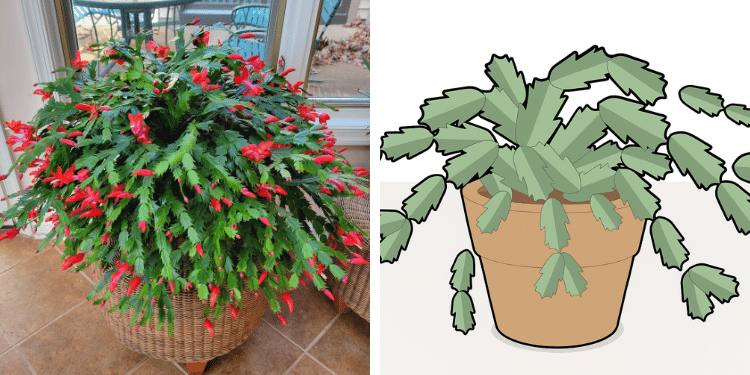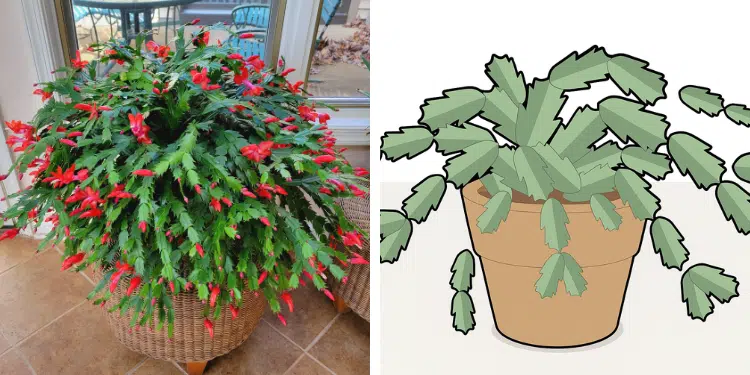
The Christmas cactus is one of the most beloved holiday plants, known for its cascading stems and vibrant winter flowers that brighten any home during the darkest months of the year.
But like all long-lived houseplants, it needs occasional pruning to stay full, healthy, and productive.
The challenge is that a Christmas cactus blooms on new growth formed during the year, which means improper trimming can accidentally remove next year’s flower buds before they even form.
Trimming a Christmas cactus is simple – as long as you understand when, where, and how to prune without disrupting future blooms.
Done correctly, pruning encourages fuller growth, prevents legginess, stimulates branching, and leads to more abundant flowers the following season.
Understanding How a Christmas Cactus Forms Blooms
Before trimming, it’s essential to know how the plant develops buds.
A Christmas cactus (Schlumbergera bridgesii) blooms when:
- daylight hours shorten
- temperatures cool
- stems have matured enough to produce buds
Each flower develops at the tips of the segments, meaning the ends of your cactus hold the potential for next year’s flowers.
If you cut these tips too late in the season, you remove the exact parts that would have bloomed.
That’s why the timing of pruning is everything.
The Best Time to Trim a Christmas Cactus
The safest and most effective time to prune a Christmas cactus is:
Late spring to early summer (April–June)
This window is ideal because:
- blooming has ended
- the plant is ready to enter an active growth phase
- new segments will have time to grow and mature before fall
- pruning stimulates branching during the warm months
- new tips will be strong enough to set buds by late September–October
Trimming outside this window – especially in fall – can directly interfere with bud formation and result in fewer (or no) flowers during the holidays.
Avoid pruning during:
- August to December: this is bud-formation and blooming season
- late winter during rest period: trimming shocks the plant while it’s recovering
If you prune at the wrong time, you slow the plant’s growth and sacrifice blooms.
Signs Your Christmas Cactus Needs a Trim
Not all cacti need pruning every year. But your plant will benefit from trimming if:
- stems look too long or stringy
- the shape has become uneven or lopsided
- the plant has sparse growth or bare centers
- segments break off easily
- blooming has slowed down
- the plant looks “tired” or overgrown
Pruning encourages thicker, bushier growth and helps rejuvenate older, woody plants.
How to Trim a Christmas Cactus Without Causing Damage
Pruning a Christmas cactus is simple and gentle. Unlike other houseplants, Christmas cacti don’t require sharp tools—you can often prune by hand.
Step 1: Identify the Segments to Remove
Each Christmas cactus stem is made up of flat, jointed segments. You prune by removing whole segments at natural joints, not by cutting through a segment.
Choose segments that are:
- overly long
- misshapen
- growing in awkward directions
- thin or weak
- causing the plant to look unbalanced
Avoid removing newly formed, soft segments unless they are damaged.
Step 2: Use the Twist-and-Snap Method
This is the most traditional and plant-friendly method.
Hold a segment between your fingers, gently twist, and snap it off at the joint. This avoids crushing or tearing and reduces the risk of infection.
If segments are thick or woody, you may use:
- clean scissors
- pruning shears
- sterilized household scissors
Always sanitize with alcohol to prevent fungal issues.
Step 3: Never Remove More Than One-Third of the Plant
Christmas cacti respond well to pruning, but removing too much at once can stress the plant and slow its recovery.
One-third is the maximum safe amount. For older, woody plants, prune gradually over two seasons.
Step 4: Focus on Terminal Tips for Shaping
If your cactus is long and droopy, trimming 1–3 segments off the end of each stem encourages branching. Each tip you remove usually grows two or more new segments.
This improves:
- fullness
- future bloom density
- overall shape
Pruning tips in spring leads to more blooming tips in fall.
What Happens After You Trim
Within 4–6 weeks of trimming, your Christmas cactus will begin producing new growth at each pruned point.
These new branches will develop into the stems that eventually hold next year’s flower buds.
Pruning early enough allows:
- the new growth to mature
- segments to reach blooming size
- the plant to redirect energy into healthy branching
A well-trimmed cactus produces more flowers because it has more tip points capable of forming buds.
How to Care for a Christmas Cactus After Pruning
After trimming, give your cactus the right conditions to grow strong new segments.
Provide Bright, Indirect Light
New growth requires energy. Place the plant near an east-facing window or bright room with filtered sunlight.
Water Consistently but Avoid Overwatering
After pruning, water only when the top inch of soil is dry. Moisture helps recovery, but saturated soil causes rot.
Feed Lightly
Use a gentle, balanced fertilizer (like 10-10-10 or 20-20-20) once every 3–4 weeks during spring and summer. Too much nitrogen creates leafy growth but fewer flowers.
Maintain Warm Temperatures
Ideal temperature for recovery and summer growth is around 65–75°F (18–24°C).
Let the Plant Rest Before Bloom Season
By late September, reduce watering slightly and give cooler nights to trigger bud formation.
How Pruning Affects Next Year’s Blooms
By pruning in spring or early summer, you create more blooming tips, which results in:
- more branches
- more mature segments
- more buds
- fuller bloom displays
A single trim can double the number of flowers the following year. On the other hand, trimming too late removes the segments necessary for bloom formation and can leave you with a plant that didn’t flower at all.
Common Mistakes That Ruin Next Year’s Flowers
Many Christmas cactus owners unintentionally reduce their blooms due to incorrect pruning habits. Avoid these pitfalls:
Pruning in the Fall
This removes the very segments that are about to produce buds.
Cutting Off Young New Growth
Soft, new segments are immature and won’t bloom if removed.
Using Dirty or Dull Tools
Can spread disease or cause stem rot.
Removing Too Much at Once
The plant needs time to recover and rebuild energy.
Pruning During Bud Formation
Any disturbance at this time leads to bud drop.
How to Shape a Christmas Cactus Without Damaging It
If your plant is uneven or has long stems on one side, prune selectively.
For shaping:
- trim long stems back to match surrounding ones
- prune around the plant slowly to maintain symmetry
- avoid making a “hard cut” in one area
- encourage branching by removing 1–2 segments per stem
Shaping should always be done using small, consistent trims – not drastic cuts.
How to Rejuvenate an Old or Woody Christmas Cactus
Older cacti often look woody at the base and thin at the tips. Pruning encourages new growth from the top and sometimes even from hardened stems.
To rejuvenate:
- trim back long, woody stems by 2–3 segments
- remove weak, unhealthy sections
- repot into fresh soil if the plant is root-bound
- provide more light and gentle fertilizer after pruning
Within a season, the plant becomes fuller and healthier.
Don’t Throw Away the Cuttings – Propagate Them
Every segment you remove can become a new plant.
To propagate:
- let cut segments dry for 24 hours
- plant the jointed ends into slightly moist cactus mix
- place in bright, indirect light
- keep soil lightly moist until roots form
Within a few weeks, cuttings root and begin growing. These make wonderful gifts or backups of your main plant.
Trimming a Christmas cactus is one of the most important steps in keeping it healthy, full, and blooming year after year.
The key is to prune at the right time – late spring to early summer – and to remove only whole segments, never cutting deeply or trimming during the vital bloom-setting months.