As the temperatures drop and frost becomes a garden’s worst enemy, plant lovers everywhere begin the annual scramble to protect their beloved greenery. While traditional methods like moving potted plants indoors or using commercial frost covers are effective, they can be costly and not always feasible for larger gardens. Fortunately, there are several unconventional and creative techniques that can help shield your plants from the cold, often using items you already have around the house.
In this article, we’ll explore ten weird yet effective ways to protect your plants from frost. These methods not only offer practical solutions but can also be a fun and inventive way to engage with your garden during the colder months. Whether you’re a seasoned gardener or a curious beginner, these tips will ensure your plants survive and thrive even when the temperature dips.
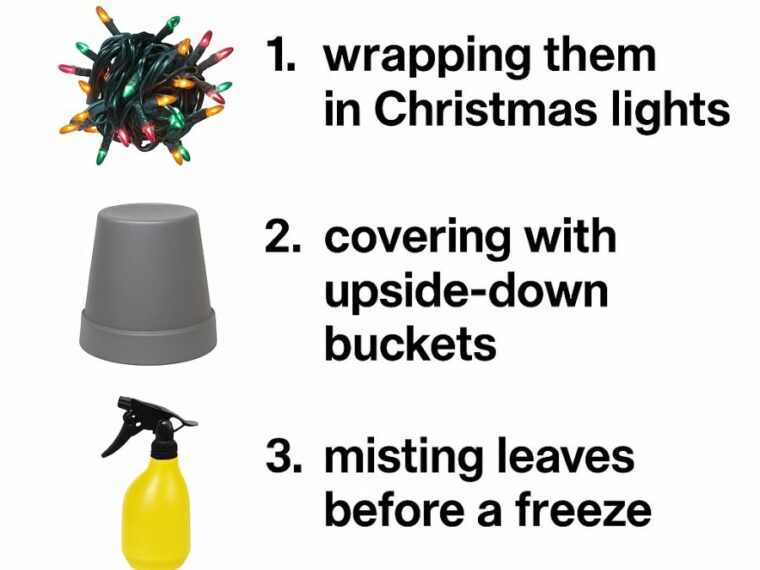
1. Wrap Your Plants in Christmas Lights
One quirky yet functional method to protect your plants from frost is to wrap them in old-fashioned Christmas lights. The small amount of heat emitted by these lights can help to raise the temperature around your plants just enough to ward off frost. Opt for the larger, traditional C7 or C9 bulbs rather than the newer LED types, as they produce more heat.
To do this, gently wrap the string of lights around the plant, ensuring not to damage any branches or leaves. Keep in mind that you should use outdoor-rated lights and plug them into a GFCI outlet to prevent any electrical issues. This method is particularly effective for small trees and shrubs, and it adds a festive glow to your garden!
2. Cover with Upside-Down Buckets
Using buckets or large containers is a simple and cost-effective way to protect individual plants from frost. By placing a bucket upside down over a plant, you create a mini-greenhouse effect, trapping heat from the ground and keeping the frost at bay.
Ensure the bucket is large enough to cover the entire plant without bending or damaging any branches. If the weather is particularly windy, you might need to weigh down the bucket with a stone or brick to prevent it from blowing away. Remember to remove the bucket in the morning once the temperature rises to avoid trapping too much heat and moisture.
3. Mist Leaves Before a Freeze
It may seem counterintuitive, but lightly misting the leaves of your plants before a freeze can actually help protect them. When water freezes, it releases a small amount of heat, known as the latent heat of fusion. This can help to keep the plant tissues just above freezing.
Use a fine misting spray bottle to evenly coat the leaves with water, avoiding oversaturating the plant. This technique works best on nights when frost is expected but temperatures aren’t expected to plummet far below freezing. It’s particularly useful for frost-sensitive plants like tomatoes and peppers.
4. Use Cardboard Boxes Overnight
Cardboard boxes can serve as excellent temporary shelters for plants during frosty nights. Simply place a box over each plant, ensuring that it is fully covered to trap in warmth and protect against frost.
For taller plants, you can cut the box to fit, or tape multiple boxes together to create a larger cover. Make sure to remove the boxes the following morning to let the plants receive sunlight and fresh air. This method is both sustainable and effective, as it reuses materials that might otherwise be discarded.
5. Employ a Layer of Bubble Wrap
Bubble wrap isn’t just for protecting fragile packages; it can also be a great insulator for plants. Wrap the bubble wrap loosely around pots or containers to keep the soil warm and prevent roots from freezing.
For larger plants or those in the ground, you can create a bubble wrap tent. Simply stake some poles around the plant and drape the bubble wrap over them, securing it with tape or clips. This method is especially handy for potted plants and is a fantastic way to repurpose packing materials.
6. Create a DIY Greenhouse from Plastic Bottles
Plastic bottles can be transformed into mini-greenhouses for individual plants. Cut the bottom off a large plastic bottle and place it over the plant, pushing it slightly into the soil to secure it.
This creates a small, warm environment around the plant, protecting it from frost while allowing light to penetrate. For ventilation, you can remove the bottle cap during the day and replace it at night. This method is great for seedlings and small plants, and it utilizes materials that might otherwise end up in the recycling bin.
7. Utilize Old Blankets or Bed Sheets
Old blankets and bed sheets are perfect for covering plants during frosty nights. They provide a layer of insulation that can help keep the cold air from settling on the plants.
Simply drape the blankets or sheets over your plants, ensuring they reach the ground to trap heat effectively. You can use stakes or poles to prop up the material, preventing it from crushing delicate plants. Be sure to remove the coverings in the morning to allow sunlight to reach the plants.
8. Try a Water-Filled Jug for Heat Retention
Water-filled jugs can act as thermal mass, absorbing heat during the day and releasing it slowly at night. Place jugs of water around your plants to create a buffer against frost.
Paint the jugs black to maximize heat absorption, and arrange them around the base of the plants. This method works well in conjunction with other coverings, like blankets or frost cloths, to provide an extra layer of protection.
9. Use a Frost Cloth or Garden Fabric
Frost cloths or garden fabrics are specially designed to protect plants from cold temperatures while allowing moisture and sunlight to pass through. They’re lightweight and can be draped directly over plants without causing damage.
Secure the edges of the fabric with rocks or stakes to prevent it from blowing away. This method is versatile and can be used on a variety of plants, providing effective protection during unexpected cold snaps.
10. Surround Plants with Mulch or Straw
Mulch or straw can serve as an insulating layer around the base of plants, helping to retain soil warmth and prevent roots from freezing. Apply a thick layer, about 2-4 inches, around the base of each plant.
This method is particularly beneficial for perennials and root vegetables, as it helps to maintain a stable soil temperature. In addition to frost protection, mulch and straw also offer the added benefit of weed suppression and moisture retention.
11. Set Up a Makeshift Tent with Bamboo Stakes
Create a simple and effective frost barrier by constructing a makeshift tent with bamboo stakes and plastic sheeting. Insert the stakes into the ground around your plants, forming a teepee or tent-like structure
Cover the framework with plastic sheeting, securing it with clips or garden ties. This creates a protected microenvironment that traps heat and shields plants from frost. Be sure to provide ventilation during the day by opening one end of the tent to prevent overheating.