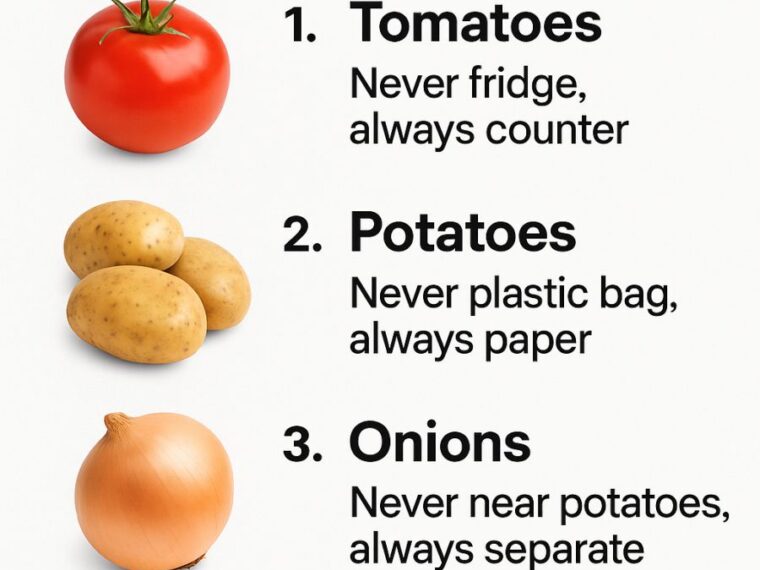
When it comes to storing produce, many of us are guilty of simply tossing everything into the refrigerator without much thought. While this might seem like a convenient approach, it can actually shorten the lifespan of your fruits and vegetables, as well as affect their taste and nutritional value. To make the most of your fresh produce, it’s important to understand that different types of fruits and vegetables have specific storage needs.
By following proper storage techniques, you can extend the shelf life of your produce, reduce waste, and enjoy fresher flavors. In this article, we’ll explore the best ways to store common produce items, ensuring they stay fresh and delicious for as long as possible. From tomatoes to fresh herbs, we’ll cover all the essentials you need to know.
1. The Best Way to Store Tomatoes: Countertops Over Fridges
Tomatoes are one of the most commonly misunderstood produce items when it comes to storage. Many people instinctively place them in the refrigerator, thinking it will prolong their freshness. However, refrigeration can cause tomatoes to lose their flavor and develop a mealy texture. Instead, store your tomatoes on the countertop, ideally in a single layer to prevent bruising.
Room temperature is perfect for tomatoes, which allows them to maintain their flavor and ripen evenly. If you’ve purchased tomatoes that are not yet fully ripe, placing them stem-side down on the countertop can help them ripen more uniformly. Once they reach the desired ripeness, consume them within a few days for the best taste and texture.
2. Potatoes Done Right: Paper Bags Over Plastic
Potatoes are best stored in a cool, dark, and well-ventilated area. It’s important to keep them away from light, which can cause them to turn green and develop solanine, a toxic compound. Instead of using plastic bags, which can trap moisture and lead to spoilage, opt for paper bags or a cardboard box to store your potatoes.
Ensure the storage area is around 45-50°F (7-10°C), which is slightly warmer than a refrigerator but cooler than room temperature. A pantry or a cellar can be ideal places for storing potatoes. Check them regularly, and remove any that show signs of sprouting or spoilage to prevent the spread to the rest of the batch.
3. Keeping Onions and Potatoes Separate: A Must for Freshness
Onions and potatoes are both staple ingredients in many kitchens, but storing them together can lead to early spoilage. Onions release gases and moisture that can cause potatoes to sprout and spoil more quickly. To keep both vegetables fresh for longer, store them separately.
Onions do well in a cool, dry, and well-ventilated space, much like potatoes, but they should be kept in mesh bags or baskets that allow air circulation. Keeping them apart not only extends their shelf life but also helps maintain their flavors.
4. The Ideal Spot for Apples: Crisper Drawers Over Bowls
Apples are one of the few fruits that truly benefit from being stored in the refrigerator. The crisper drawer is the perfect spot, as it helps maintain the right humidity level to keep apples fresh and crisp. Before storing, remove any apples with bruises or blemishes, as these can cause others to spoil more quickly.
If you prefer to keep your apples at room temperature, be aware that they will ripen much faster. In a bowl on the countertop, apples will last about a week, but in the refrigerator, they can remain fresh for several weeks.
5. Leafy Greens: How to Keep Them Crisp and Fresh
Leafy greens like lettuce, spinach, and kale are prone to wilting and losing their crispness if not stored properly. To keep them fresh, first rinse the greens thoroughly and then dry them completely using a salad spinner or paper towels. Excess moisture can lead to spoilage.
Once dried, wrap the greens in a dry paper towel and store them in a breathable container or perforated plastic bag in the refrigerator’s crisper drawer. This method helps maintain the right balance of moisture and airflow, keeping your greens fresh for up to a week.
6. Berries and Their Fragile Nature: The Right Way to Store
Berries are delicate fruits that require careful storage to prevent spoilage. Before storing, sort through them and remove any that are moldy or damaged, as they can quickly affect the rest. Avoid washing berries until right before consumption, as moisture can accelerate mold growth.
Store berries in the refrigerator in a single layer on a paper towel-lined tray or container. This setup helps absorb excess moisture and allows air circulation. Some people find that placing a fresh paper towel on top of the berries can also help extend their freshness.
7. Citrus Fruits: Should They Be Refrigerated?
Citrus fruits like oranges, lemons, and limes can be stored at room temperature if you plan to consume them within a week. For longer storage, refrigeration is recommended. The crisper drawer works well, as it helps maintain the right humidity and temperature.
To prevent them from drying out, you can store citrus fruits in a mesh bag or in the produce drawer without any covering. If you find that the skin is starting to dry, consider placing them in a sealed plastic bag to retain moisture.
8. Bananas: The Right Time and Place for Ripening
Bananas are unique in that they continue to ripen after being picked. To ripen bananas, store them at room temperature, away from direct sunlight, ideally hanging from a banana hook to prevent bruising. If you want to slow down the ripening process, once they reach the desired ripeness, move them to the refrigerator.
In the fridge, the skin may turn brown, but the fruit inside will remain fresh for a few more days. If bananas become overripe, consider peeling and freezing them for use in smoothies or baking.
9. Avocados: From Firm to Perfectly Ripe
Avocados are often bought firm and need some time at room temperature to ripen. Place them in a paper bag with an apple or banana to speed up the ripening process, as these fruits release ethylene gas that promotes ripening. Once ripe, avocados can be stored in the refrigerator to slow down further ripening.
If you have leftover avocado, sprinkle the cut surface with lemon juice to prevent browning and cover it tightly with plastic wrap before refrigerating. This can help maintain its freshness for an additional day or two.
10. Root Vegetables: Long-Term Storage Techniques
Root vegetables like carrots, beets, and parsnips benefit from cool and humid storage conditions. Remove any leafy tops, as these draw moisture from the roots, and store them in a perforated plastic bag or a container with a lid in the refrigerator’s crisper drawer.
For longer storage, root vegetables can be kept in a cool, dark cellar or basement in a box filled with sand or sawdust, which helps maintain moisture levels and prevents sprouting.
11. The Dos and Don’ts of Storing Fresh Herbs
Fresh herbs can quickly lose their flavor and vitality if not stored correctly. For most herbs, the best method is to trim the ends and place them upright in a glass of water, covering the leaves with a plastic bag to create a mini greenhouse effect. Store this setup in the refrigerator.
However, for herbs like basil, which can turn black in the cold, it’s better to store them at room temperature using the same water method. Change the water every few days to keep it fresh and discard any leaves that have started to wilt or decay