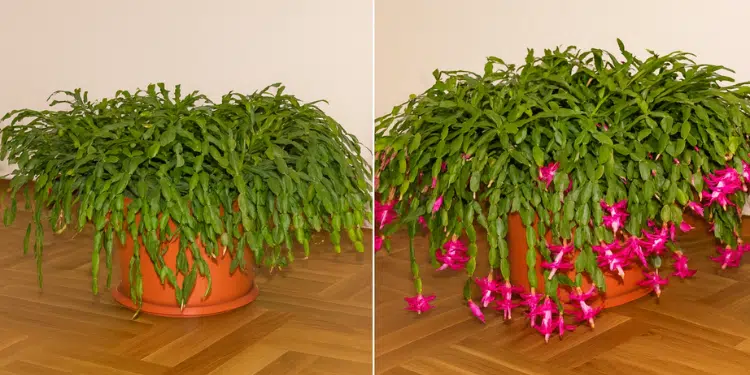
If you love your Christmas cactus (Schlumbergera bridgesii), you already know how magical it looks when it bursts into bright pink, red, or white blooms around the holidays.
But did you know that you can make it bloom twice in one season – once in winter and again in late spring or early summer?
While this plant is known for its once-a-year spectacular display, under the right conditions, it can be encouraged to produce a second round of flowers.
The secret lies in mimicking its natural tropical environment and managing light, temperature, and watering carefully after its first bloom.
Understanding How the Christmas Cactus Blooms
Unlike desert cacti, the Christmas cactus comes from Brazil’s humid rainforests. It’s an epiphytic plant, which means it grows on trees, not in dry soil.
Its bloom cycle is triggered by short days and cool temperatures – conditions that tell it the holidays (and rainy season) are coming.
Each blooming cycle begins when:
- Daylight hours shorten to about 10–12 hours.
- Night temperatures drop between 50–60°F (10–15°C).
- The plant receives slightly less water.
If you can recreate this pattern again after the first bloom ends, you can often trigger a second flowering phase.
Step 1: Let It Rest After the First Bloom
After the initial winter bloom (usually between November and January), your cactus needs a rest period before it can bloom again.
What to Do:
- Remove spent blooms to prevent energy waste.
- Reduce watering – keep the soil slightly moist but never soggy.
- Stop fertilizing for 4–6 weeks.
- Place it in a cool room (around 55–60°F / 13–16°C) with indirect light.
This short dormancy period allows the plant to conserve energy and prepare for another bloom cycle.
Step 2: Resume Watering and Feeding
Once the resting period ends, it’s time to wake your cactus up and encourage new growth.
Do this around late February to early March:
- Gradually increase watering frequency, allowing excess to drain.
- Start feeding with a balanced, water-soluble fertilizer (10-10-10 or 20-20-20).
- Move the plant to a warmer location with bright, indirect sunlight.
This mimics the cactus’s natural growing season, signaling that conditions are right for blooming again.
Step 3: Trigger a Second Dormancy Cycle
Around late spring, repeat the short-day, cool-night treatment that triggers flower buds.
To do this:
- Reduce light exposure: Give the plant about 10 hours of light and 14 hours of darkness per day.
- Lower the temperature: Keep it between 55–60°F (13–16°C) at night.
- Limit watering: Allow the top inch of soil to dry between waterings.
After 4–6 weeks of this treatment, you should see new buds forming on the leaf tips.
Tip: Don’t move the plant once buds appear – changes in light or temperature can cause buds to drop.
Step 4: Maintain High Humidity
Christmas cacti love humidity, especially when forming buds. Dry indoor air (especially from heating) can prevent flowering.
How to Add Humidity:
- Place a tray of water with pebbles beneath the pot.
- Mist the plant lightly every few days.
- Group it near other plants to create a naturally humid microclimate.
Step 5: Provide Balanced Light and Gentle Care
For the second bloom, your cactus needs bright, indirect light – too much sun will scorch it, but too little will stop bud development.
Ideal Conditions:
- Place it near an east or north-facing window.
- Keep soil consistently moist, not wet.
- Avoid sudden drafts or temperature changes.
Once the second bloom finishes, repeat the cycle: rest, revive, and re-trigger dormancy next season.
Extra Tips for Double Blooming Success
1. Use the Right Soil
A mix of cactus soil, peat, and perlite provides perfect drainage and aeration. Avoid heavy potting soil that holds too much moisture.
2. Don’t Over-Fertilize
Too much nitrogen promotes leaf growth but not flowers. Switch to a high-phosphorus fertilizer (like 5-10-10) during bud formation.
3. Repot Every 2–3 Years
Slight root crowding encourages blooming. Repotting into a slightly larger pot with fresh soil after flowering helps maintain healthy growth.
4. Avoid Stress
Environmental stress – such as moving the plant, inconsistent watering, or sudden light changes – can cause buds to drop before opening.
5. Use Darkness Strategically
If you want precise control, place the plant in a dark closet or covered box for 12–14 hours daily for a few weeks. Return it to light during the day. This helps you “schedule” a second bloom exactly when you want it.
Common Reasons Your Cactus Won’t Rebloom
- Not enough darkness during the bud formation phase.
- Too much heat or direct sunlight.
- Overwatering during rest periods.
- Lack of nutrients after the first bloom.
- Buds dropping due to low humidity or sudden movement.
Adjusting these factors can often restart the blooming process within weeks.
Getting your Christmas cactus to bloom twice in one season takes a bit of timing and care – but it’s absolutely possible.
By understanding its natural rhythm of rest, growth, and dormancy, you can trick the plant into thinking it’s experiencing two seasons in one year.