Imagine a plant that brightens your garden with vivid blooms, attracts beneficial insects, repels pests, thrives on neglect – and provides a gourmet feast from leaves to seeds. That plant exists, and its name is nasturtium.
Often grown for their cheerful flowers, nasturtiums are among the most versatile – and edible – plants you can add to your yard.
Whether you’re a gardener, a foodie, or simply someone looking for low-maintenance beauty, nasturtiums deserve a spot in your planting plans.
What Are Nasturtiums?
Nasturtiums (Tropaeolum majus and Tropaeolum minus) are annual plants native to South America.
Known for their:
- Bright, trumpet-shaped flowers in hues of orange, yellow, red, and even creamy white
- Round, shield-shaped leaves with a slightly waxy surface
- Peppery, spicy flavor reminiscent of arugula or watercress
- Easy-to-grow nature and resistance to poor soil
They’re commonly planted in flower beds, vegetable gardens, containers, and hanging baskets. But nasturtiums are more than just eye candy.
They’re entirely edible, making them a fantastic choice for edible landscaping and creative cooking.
Why You Should Grow Nasturtiums in Your Yard
1. They’re Stunningly Beautiful
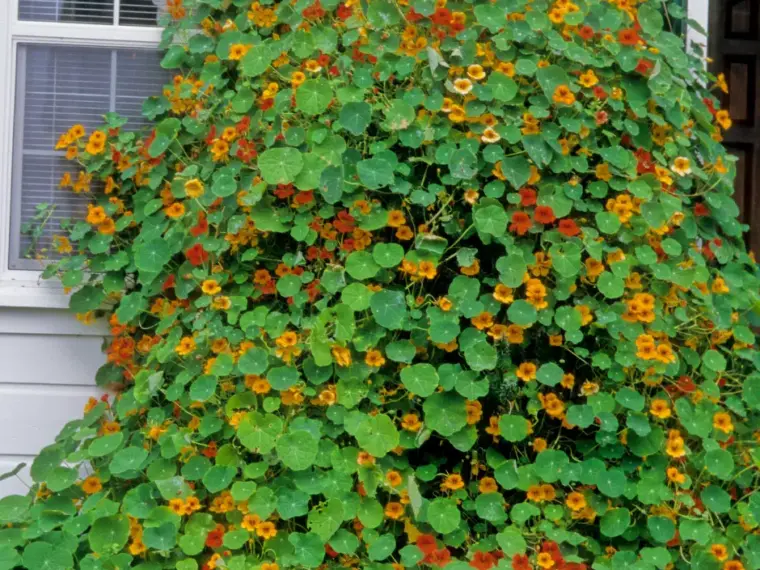
Few garden plants rival nasturtiums for pure visual impact. The leaves are a lush green, while the flowers bloom in brilliant jewel tones.
The flowers appear above the foliage, creating an explosion of color that lasts from late spring through fall.
Their trailing or bushy growth habits make nasturtiums perfect for:
- Filling garden beds
- Spilling gracefully over container edges
- Climbing trellises or fences (in the case of climbing varieties)
They’re truly one of the best plants for adding instant charm to any outdoor space.
2. Nasturtiums Attract Pollinators
Bees, butterflies, and hummingbirds flock to nasturtiums, thanks to the nectar hidden deep in their long floral spurs.
If you want to encourage pollinators in your yard – especially in your vegetable garden – plant nasturtiums nearby.
Pollinators not only help your garden flourish but also support healthy local ecosystems.
3. Nasturtiums Repel Garden Pests
Here’s where nasturtiums truly shine as garden companions.
While they attract beneficial insects, they also repel or trap harmful pests such as:
- Aphids
- Whiteflies
- Squash bugs
- Cabbage loopers
Some gardeners plant nasturtiums as sacrificial crops, letting pests concentrate on the nasturtiums rather than valuable crops like cabbages, tomatoes, and cucumbers. Think of them as your garden’s bodyguards!
4. They’re Incredibly Easy to Grow
If you’ve ever struggled to grow demanding plants, nasturtiums will feel like a breath of fresh air.
They:
- Thrive in poor or average soil
- Require minimal watering once established
- Tolerate full sun to partial shade
- Rarely suffer from diseases
They’re perfect for busy gardeners, beginners, and anyone who wants a low-maintenance splash of color.
5. Nasturtiums Are Edible from Root to Flower
One of the most exciting reasons to grow nasturtiums is their complete edibility. Every part of the plant can be eaten, offering unique flavors and countless culinary possibilities.
Let’s explore how to eat every part of this versatile plant.
How to Eat Every Part of the Nasturtium Plant
Eating Nasturtium Leaves
Nasturtium leaves are round, tender, and slightly waxy, with a bold peppery flavor similar to watercress.
They’re perfect for:
- Salads: Chop or leave whole for a spicy kick.
- Sandwiches: Add leaves instead of lettuce for a peppery crunch.
- Pesto: Substitute nasturtium leaves for basil to create a unique, spicy pesto.
- Green wraps: Use large leaves as wraps for hummus, cheese, or veggie fillings.
Nasturtium leaves also contain vitamin C and beneficial phytonutrients, making them as nutritious as they are flavorful.
Eating Nasturtium Flowers
Nasturtium flowers are not only gorgeous – they’re edible and delicious. They have a milder peppery taste compared to the leaves.
Ways to use nasturtium flowers:
- Garnishes: Top salads, soups, and cocktails with vibrant petals.
- Stuffed blooms: Fill large flowers with cream cheese, goat cheese, or herb spreads for a stunning appetizer.
- Flavored vinegar: Infuse white wine vinegar with flowers for a spicy, floral vinegar.
- Decorations: Freeze flowers in ice cubes for pretty party drinks.
Their bright colors make any dish look gourmet.
Eating Nasturtium Seeds
Nasturtium seeds are sometimes called “poor man’s capers.” When young and tender, they’re perfect for pickling.
How to pickle nasturtium seeds:
- Harvest seeds while they’re still green and soft.
- Rinse and soak in brine overnight.
- Drain and cover seeds with white vinegar and spices (such as peppercorns or mustard seeds).
- Store in the refrigerator.
Pickled nasturtium seeds make a fantastic garnish for fish dishes, salads, and charcuterie boards.
Even mature, dried nasturtium seeds can be ground into a peppery spice similar to mustard.
Eating Nasturtium Stems
Although often overlooked, the stems of nasturtiums are edible too. Young stems are crisp and mildly peppery.
- Chop into salads for extra crunch.
- Add to stir-fries for a spicy note.
- Use as a garnish for savory dishes.
How to Grow Nasturtiums: A Step-By-Step Guide
Choosing Varieties
Nasturtiums come in two main forms:
- Climbing/Trailing Types: Such as ‘Jewel of Africa’ or ‘Moonlight,’ these varieties can climb trellises or spill over baskets.
- Bush/Dwarf Types: Such as ‘Empress of India,’ these stay compact and are ideal for beds or small containers.
Choose based on your available space and aesthetic goals.
When and Where to Plant Nasturtiums
Nasturtiums grow best in:
- Full sun to partial shade
- Well-drained soil
- Soil that’s not overly fertile (too much nitrogen leads to fewer flowers)
Sow seeds directly outdoors after your last frost date, as nasturtiums dislike transplanting.
How to Sow Nasturtium Seeds
- Soak seeds for a few hours before planting to speed germination.
- Plant seeds about 1/2 inch deep and 10-12 inches apart.
- Keep soil moist until seedlings appear, usually within 7-14 days.
Caring for Nasturtiums
Once established, nasturtiums need very little care:
- Watering: Water during prolonged dry spells, but avoid soggy soil.
- Pruning: Pinch back long stems to encourage bushier growth.
- Deadheading: Remove spent flowers to prolong blooming.
Avoid over-fertilizing, which produces lush foliage but fewer blooms.
Companion Planting with Nasturtiums
Nasturtiums make fantastic companion plants in vegetable gardens.
Plant them near:
- Tomatoes
- Cucumbers
- Squash
- Cabbage
- Broccoli
Their peppery scent helps repel pests like aphids and squash bugs, while their flowers attract pollinators.
Are Nasturtiums Safe for Everyone?
Nasturtiums are safe to eat for most people, though the peppery taste might be too strong for some palates.
Always:
- Rinse flowers and leaves before eating.
- Avoid plants treated with pesticides or chemical fertilizers if you plan to consume them.
People with allergies to plants in the Tropaeolaceae family should exercise caution.
Nasturtiums Beyond the Plate
Nasturtiums aren’t just edible – they’re also useful for:
- Natural dyes: Flowers can dye fabric or Easter eggs beautiful shades of yellow and orange.
- Medicinal use: Historically, nasturtiums were used for their antiseptic properties and vitamin C content.
- Attracting beneficial insects: Bees, hoverflies, and other pollinators love nasturtium blooms.
Common Questions About Nasturtiums
Do nasturtiums grow every year?
Nasturtiums are annuals in most climates. However, in frost-free regions, they may reseed themselves and return the following season.
Can I grow nasturtiums indoors?
Yes! Nasturtiums can grow in containers indoors with bright light and regular watering. Bush types are best for small indoor spaces.
Why are my nasturtium leaves turning yellow?
Possible causes include overwatering, nutrient-rich soil (too much fertilizer), or pests. Nasturtiums prefer lean soil and moderate watering.
Nasturtiums are more than just pretty flowers.
They’re garden workhorses that:
- Beautify your yard
- Attract pollinators
- Repel pests
- Require minimal care
- Provide an entire menu of edible delights
From salads and sandwiches to pickled seeds and decorative garnishes, nasturtiums add unique flavor and vibrant color to any dish