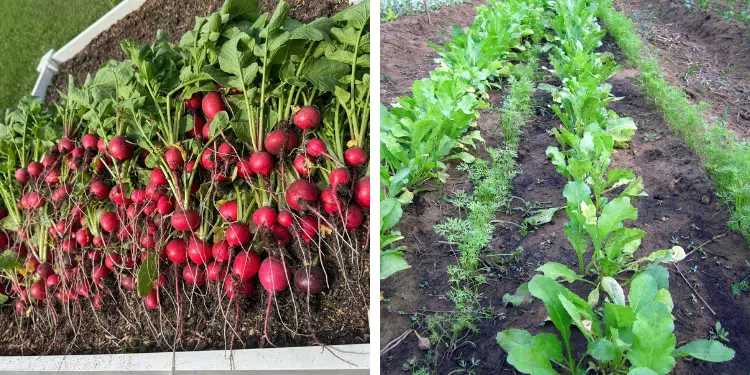
Radishes are one of the fastest, easiest vegetables to grow – but what makes them truly powerful in the garden is not just their speed.
Radishes are one of the best companion plants you can use, and when planted between rows of other vegetables, they save space, improve soil, speed up germination for slow growers, reduce pests, and help maximize every square inch of your garden.
Here’s everything you need to know about how and why to plant radishes between your garden rows, and how this simple practice boosts productivity and keeps your garden healthier all season long.
Why Planting Radishes Between Rows Works So Well
Radishes aren’t just root vegetables – they are natural helpers. Their biology and growth habits make them ideal for intercropping and companion planting.
Radishes grow extremely fast
Most radishes mature in just 20–30 days, which means they can be planted in spaces that would otherwise remain empty while slower crops establish themselves.
They loosen the soil for neighboring plants
Radish roots break up compacted soil, improving drainage, root penetration, and air circulation for crops like carrots, beets, onions, lettuce, and cucumbers.
They act as a natural “trap crop”
Pests like flea beetles, aphids, root maggots, and leaf miners prefer radish foliage over many other vegetables. When planted between rows, radishes lure pests away from your main crops.
They mark slow-growing rows
Some vegetables take a long time to sprout, such as carrots, parsnips, or beets. Radishes show where the row is planted, preventing accidental weeding and helping maintain spacing.
They save space in tight gardens
Because radishes are harvested early, they don’t interfere with larger vegetables. They simply occupy temporary space that would otherwise remain bare.
They create natural mulch as they grow
Radish leaves shade the soil surface, helping retain moisture and prevent early-season weeds.
This makes radishes one of the best tools for an efficient, productive garden layout.
The Best Crops to Pair With Radishes
Radishes pair beautifully with many vegetables – especially those with slow germination or long growth periods. Here are the top matches:
1. Carrots
Radishes break up the soil and prevent crusting, making it easier for tiny carrot seeds to push through. They also mark the row and reduce competition from weeds.
2. Lettuce
Both grow quickly, but radishes can be harvested earlier, giving lettuce more space as it matures.
3. Beets
Radishes prepare the soil and discourage pests that often damage young beet leaves.
4. Spinach
Radishes shade the soil and keep spinach cool, encouraging better germination.
5. Cucumbers and squash
Radishes act as a trap crop for cucumber beetles and squash bugs.
6. Peas and beans
These crops grow vertically, leaving plenty of soil space for radishes beneath them.
7. Onions
Radishes help repel pests attracted to onion foliage and loosen soil around bulbs.
8. Tomatoes and peppers
Radishes improve soil aeration and serve as early-season space fillers in wide tomato rows.
Avoid planting radishes with potatoes (they encourage flea beetles) or hyssop (a poor companion).
How to Plant Radishes Between Rows: Step-by-Step
You can use this method in raised beds, in-ground beds, containers, and even grow bags.
Step 1: Prepare your main crop rows
Plant your slow-growing or long-season vegetables first – for example:
- Carrots
- Beets
- Lettuce
- Cucumbers
- Tomatoes
- Onions
Leave the normal spacing between rows: typically 12–18 inches, depending on your main vegetable.
Step 2: Identify the unused space
Between each row, you have a strip of soil that will remain unused for several weeks to months. This is where your radishes will grow.
Step 3: Plant radishes in a single or double row
Draw a shallow line (½ inch deep) between the existing rows.
You can plant:
- A single row of radishes in narrow beds
- Two rows in wider beds or between large crops like tomatoes
Space the radish seeds 1–2 inches apart.
Step 4: Water lightly
Radish seeds germinate quickly – often within 3–5 days. Keep the soil moist but not soggy.
Step 5: Harvest before the main crop needs space
Most radishes are ready in 3–4 weeks, long before your main crop reaches maturity.
Removing them gently loosens the soil, giving the neighboring plants better rooting conditions.
What Happens When You Use This Companion Planting Trick
Planting radishes between rows creates a chain reaction of benefits throughout your garden.
Benefit 1: Faster Germination for Slow Seeds
Carrot, beet, and parsnip seeds are notorious for slow germination. Radishes sprout quickly, marking the row and keeping soil loose for seedlings.
Benefit 2: Better Soil Structure
As radish roots grow downward, they open the soil naturally. When harvested, they leave behind little channels that improve drainage and oxygen flow.
Benefit 3: Fewer Weeds
Radishes grow fast and canopy quickly. Their leaves shade the soil, reducing weed growth around slower plants.
Benefit 4: Natural Pest Control
Many pests are attracted to radishes first. Gardeners often plant “sacrificial radishes” between rows to protect more valuable crops.
Benefit 5: More Harvest in Less Time
Instead of leaving soil empty, you get a quick radish harvest while waiting for summer vegetables to grow.
Benefit 6: Moisture Retention
Radish leaves reduce sun exposure on bare soil, helping retain moisture around seedlings.
Advanced Tips for Maximum Success
Use Radishes as a Living Indicator
Radishes wilt quickly when soil dries. If your radish row droops, your main crop also needs water.
Leave Some Radishes Unharvested for Natural Pest Defense
If flea beetles or aphids are a problem, allow a few radishes to remain. They pull pests away from vegetables you want to protect.
Mix Varieties for Continuous Yield
Plant fast-growing radishes like French Breakfast or Cherry Belle alongside slower ones like Daikon to extend productivity.
Use Radish Greens
Don’t throw away radish leaves – they’re edible, nutritious, and perfect for sautéing, salads, soups, or pesto.
Best Bed Layout for This Method
Here is a layout example for a highly productive garden bed:
Row 1: Carrots
Row between rows: Radishes
Row 2: Beets
Row between rows: Radishes
Row 3: Lettuce
Row between rows: Radishes
Row 4: Spinach
This method multiplies your harvest without requiring larger beds.
Growing Radishes Between Tomato Rows
Radishes do extremely well between tomato plants early in the season.
Tomatoes start as small seedlings, leaving wide spaces that remain unused for weeks. Radishes fill this temporary gap and even help repel root-damaging pests.
By the time tomatoes begin spreading and shading the ground, the radishes are ready for harvest.
Perfect for Small Gardens and Raised Beds
If you garden in limited space, this method is a lifesaver. Radishes require only a sliver of soil, and because they grow so quickly, they fit into almost any schedule.
Even in a 4×4 raised bed, this method can increase productivity by 20–30%.
Mistakes to Avoid
Planting too densely
Radishes need airflow, or they become spicy and woody.
Leaving them in too long
Harvest promptly – oversized radishes turn pithy.
Not watering consistently
Radishes grow best with evenly moist soil.
Planting in mid-summer heat
Radishes prefer cool weather; use this method early spring or fall.
Planting radishes between rows is one of the smartest companion planting tricks in the gardening world.
It saves space, boosts soil health, protects your crops, speeds germination, and rewards you with fast, delicious harvests while your slower vegetables grow.