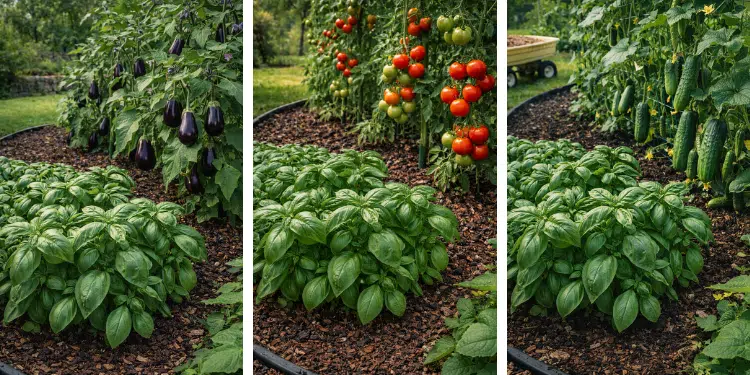
9 Vegetables That Grow Better With Basil Nearby

Basil is more than just a flavorful kitchen herb – it’s also one of the most useful companion plants you can grow in a vegetable garden.

Gardeners have long noticed that when basil is planted near certain vegetables, those crops often grow more vigorously, suffer fewer pest problems, and sometimes even produce better-tasting harvests.

This is not garden folklore alone. Basil releases aromatic oils, attracts beneficial insects, and helps create a more biologically active growing environment around nearby plants.

While it’s not a magic shield, it is one of the most practical and proven companion plants you can add to your beds and containers.

Why Basil Works as a Companion Plant

Basil supports nearby vegetables through several mechanisms:

  • Strong aroma that confuses or repels some pests
  • Flowers that attract pollinators and beneficial insects
  • Dense leafy growth that shades soil lightly
  • Root-zone biological activity
  • Trap-crop effect for certain insects
  • Increased garden biodiversity

Basil is especially effective when interplanted – not isolated – among crops.

1. Tomatoes – The Classic Basil Partner

Tomatoes and basil are the most famous companion pairing – in the kitchen and in the garden. Many growers report improved tomato vigor and fewer pest issues when basil is planted nearby.

Basil may help by:

  • Confusing tomato hornworm moths
  • Attracting pollinators to tomato flowers
  • Increasing beneficial insect activity
  • Slightly shading soil around roots

How to plant: Place 1 basil plant for every 1–2 tomato plants, about 8–12 inches away from the stem.

2. Peppers

Peppers benefit from the same pest-confusing aroma that helps tomatoes. Because peppers and basil share similar warmth and sunlight preferences, they grow well side by side.

Gardeners often observe:

  • Reduced aphid presence
  • Better pollinator visits
  • Improved garden space efficiency

How to plant: Alternate basil between pepper plants in rows or containers.

3. Cucumbers

Cucumbers attract beetles and sap-sucking insects. Basil’s scent can help mask cucumber odor signatures that pests use to locate plants.

Basil nearby may help:

  • Reduce cucumber beetle visits (not eliminate)
  • Attract predatory insects
  • Increase pollination activity

How to plant: Plant basil at the ends of cucumber rows or between every second plant.

4. Lettuce

Lettuce grows well near basil, especially in mixed beds. Basil helps diversify scent and insect patterns, which can reduce pest targeting in monocrop lettuce patches.

There’s also a spacing advantage – lettuce occupies lower space while basil grows upright.

Benefits include:

  • Better space use
  • Mixed-root-zone biology
  • Reduced uniform pest targeting

How to plant: Dot basil plants every 12–18 inches through lettuce beds.

5. Brassicas (Broccoli, Cabbage, Kale)

Brassica crops are often attacked by moths and caterpillars. While basil is not a full defense, its strong aroma can interfere with pest detection patterns.

Basil flowers also attract parasitic wasps and hoverflies – both beneficial against caterpillar pests.

Works with:

  • Broccoli
  • Kale
  • Cabbage
  • Cauliflower

How to plant: Border brassica beds with basil clusters.

6. Eggplant

Eggplant shares pest pressures with tomatoes and peppers. Companion planting with basil follows the same protective logic.

Because eggplant grows slowly early on, basil can help fill space and increase beneficial insect presence during establishment.

How to plant: Plant basil on the sunny side of eggplant to avoid shading.

7. Beans (Bush Types Especially)

Bush beans and basil make a good low-height pairing. Beans enrich soil nitrogen, while basil attracts pollinators and predator insects.

This pairing supports:

  • Better insect balance
  • Efficient bed layering
  • Improved biodiversity

How to plant: Alternate short basil rows with bush beans.

8. Root Vegetables (Carrots & Beets – With Spacing)

Root crops don’t directly benefit from basil chemistry – but they benefit from the insect diversity basil brings.

Because basil attracts hoverflies (whose larvae eat aphids), nearby root crops often see fewer sap pests above ground.

Important: Do not crowd – root crops still need open soil.

How to plant: Use basil as border plants – not mixed directly in rows.

9. Zucchini and Summer Squash

Squash plants rely heavily on pollinators. Basil flowers are excellent pollinator attractors, helping bring more bees into the area.

More pollinators = better squash fruit set.

Basil may also slightly confuse squash bug host targeting.

How to plant:  Plant basil in clusters near – but not under – squash leaves.

How Close Should Basil Be to Companion Vegetables?

General spacing rule:

  • Close enough for scent overlap
  • Far enough to avoid root crowding

Typical distance: 8–18 inches from vegetable stems

Think “interplant,” not “separate row.”

How Many Basil Plants Do You Need?

For companion effect:

  • Small beds: 3–5 plants
  • Medium beds: 6–12 plants
  • Tomato rows: 1 basil per 1–2 tomatoes
  • Containers: 1 basil per large pot

More small clusters work better than one large patch.

When Basil Companion Planting Works Best

Basil is most effective when:

  • Planted throughout beds
  • Allowed to grow vigorously
  • Allowed to partially flower
  • Not over-pruned all at once
  • Grown in warm weather

Cold-stressed basil produces less aroma – and less benefit.

Common Basil Companion Planting Mistakes

Avoid:

  • Planting only one basil plant far away
  • Letting basil stay stunted
  • Overcrowding vegetable roots
  • Removing all flowers immediately
  • Planting in deep shade
  • Expecting total pest elimination

Companion planting reduces pressure – it doesn’t create immunity.

Does Basil Change Vegetable Flavor?

Some gardeners report improved tomato flavor when grown near basil. Scientific proof is limited, but stress reduction and improved pollination can indirectly improve fruit quality – which may explain the observation.

Basil is one of the most practical companion herbs you can grow.

It supports tomatoes, peppers, cucumbers, brassicas, lettuce, eggplant, beans, squash, and even root crops by increasing beneficial insect activity and disrupting pest patterns.