Nasturtiums are one of the most powerful multi-purpose companion plants you can grow in a vegetable garden.
They’re easy to grow, fast to spread, edible, beautiful – and surprisingly strategic. When planted close to the right crops, nasturtiums can help reduce pest pressure, attract pollinators, improve garden biodiversity, and act as a living mulch that protects soil.
Gardeners often call nasturtiums a “trap crop” and a “protector plant” because many common pests prefer them over vegetables.
Instead of attacking your food crops first, insects are drawn to nasturtiums – which gives your main harvest plants a buffer.
Why Nasturtiums Are So Effective as Companion Plants
Before we look at the crop list, it helps to understand what nasturtiums actually do in the garden.
Nasturtiums provide multiple companion benefits at once:
- Act as a trap crop for aphids and certain beetles
- Attract pollinators with bright flowers
- Bring in beneficial insects (hoverflies, predatory wasps)
- Spread as a living mulch
- Shade soil and reduce evaporation
- Suppress weeds
- Add biodiversity scent signals
- Produce edible leaves and flowers
They are especially useful when allowed to sprawl naturally under or beside crops rather than kept tightly pruned.
1. Tomatoes
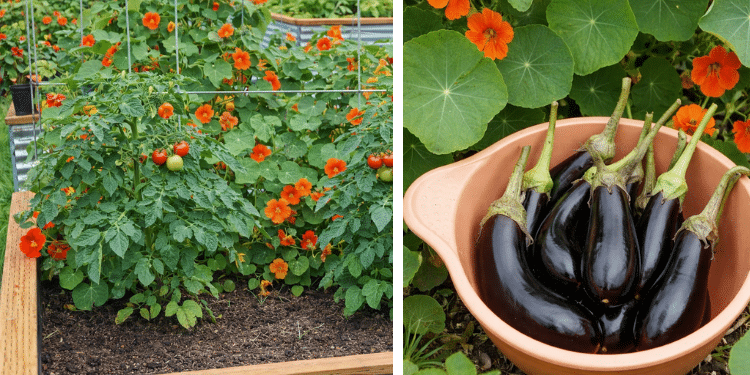
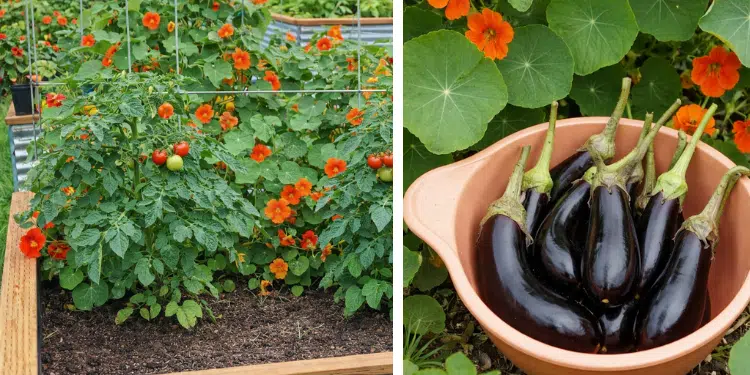
Tomatoes benefit strongly from nasturtiums planted at the base or around the outer root zone.
Nasturtiums attract aphids and whiteflies away from tomato foliage and bring pollinators into the area.
Why this pairing works:
- Aphids prefer nasturtiums
- Improves pollinator visits
- Reduces bare soil around tomato roots
- Adds living mulch layer
Planting tip: Place nasturtiums 12–18 inches from tomato stems and let them spread inward.
2. Cucumbers
Cucumbers are frequent targets of aphids and cucumber beetles. Nasturtiums help by drawing aphids away and increasing beneficial insect presence around vines.
Benefits for cucumbers:
- Trap aphids
- Increase hoverfly predators
- Shade shallow cucumber roots
- Improve soil moisture retention
Best used under trellised cucumbers where nasturtiums can spread below.
3. Kale
Kale attracts aphids and caterpillars. Nasturtiums act as a distraction plant and beneficial insect magnet.
Why kale benefits:
- Aphid diversion
- Predator insect support
- Soil shading
- Pollinator attraction when kale bolts
Plant nasturtiums between every second kale plant.
4. Broccoli
Broccoli suffers from cabbage worms and aphids. Nasturtiums don’t stop pests completely, but they reduce pressure and increase natural predator activity.
Support effects:
- Insect diversity increase
- Pest targeting confusion
- Groundcover between plants
Use as border companions around broccoli rows.
5. Cabbage
Cabbage moths and aphids are major cabbage pests. Nasturtiums help by increasing insect biodiversity and acting as decoy targets.
Best placement: Outer ring around cabbage beds.
Extra benefit: Flowers bring in parasitic wasps that attack caterpillars.
6. Peppers
Peppers are vulnerable to aphids, thrips, and mites. Nasturtiums help buffer pest spread and attract pollinators that improve fruit set.
Benefits for peppers:
- Aphid trap crop
- Pollinator attraction
- Soil shading in hot weather
- Weed suppression
Use trailing nasturtiums between pepper plants in raised beds.
7. Eggplant
Eggplant shares pest pressures with peppers and tomatoes. Nasturtiums serve the same protective companion role here.
Key advantages:
- Aphid diversion
- Increased beneficial insects
- Reduced soil heat stress
- Space-efficient underplanting
Allow nasturtiums to grow on the sunny side to avoid excessive shading.
8. Beans (Bush Types Especially)
Bush beans pair well with nasturtiums because both stay relatively low. Nasturtiums attract pollinators and predator insects while beans enrich soil nitrogen.
Why this works:
- Better insect balance
- Increased bee activity
- Soil coverage
- Compact layering
Avoid aggressive climbing nasturtium varieties with pole beans — use dwarf types instead.
9. Potatoes (Edge Planting Only)
Nasturtiums can help reduce aphid pressure near potato beds – but should be planted at the edges, not directly among potato plants.
Edge benefits:
- Aphid diversion
- Pollinator support
- Border weed suppression
Do not allow dense groundcover directly over potato stems.
How Close Should Nasturtiums Be to Crops?
Distance matters. Too close can cause crowding – too far reduces benefit.
General spacing rule:
- 12–18 inches from main crop stems
- Close enough to overlap scent and insect zones
- Far enough to avoid root competition
Think of nasturtiums as a protective ring, not a stem-hugging plant.
When to Plant Nasturtiums With Crops
Best timing:
- Sow nasturtiums at same time or slightly after main crops
- Direct sow after frost risk passes
- Germinate quickly in warm soil
- Spread rapidly within weeks
They catch up fast – no need to start earlier.
Nasturtium Variety Choice Matters
For companion planting, choose:
Best types:
- Trailing nasturtiums for underplanting
- Dwarf types for tight beds
- Non-climbing varieties for spacing control
Avoid tall climbing types unless using vertical structures.
Common Nasturtium Companion Mistakes
Avoid:
- Planting too densely
- Letting them smother seedlings
- Using only one plant
- Over-pruning spread
- Expecting pest elimination
- Planting directly against stems
They are helpers – not shields.
Nasturtiums are one of the highest-value companion plants you can grow. Tomatoes, cucumbers, kale, broccoli, cabbage, peppers, eggplant, beans, and even potatoes benefit when nasturtiums are planted nearby.
They function as trap crops, pollinator magnets, living mulch, and biodiversity boosters – all at once.