Late winter is one of the most confusing times for gardeners when it comes to pruning.
Some shrubs absolutely need a February trim to stay healthy and productive. Others will punish you by refusing to bloom if you touch them too early.
This is why so many people either prune nothing at all or accidentally cut off an entire season of flowers.
The truth is simple: not all shrubs bloom on the same type of wood. Some form their flower buds on last year’s growth, while others bloom on new growth that hasn’t even appeared yet.
The ones that bloom on new wood can be pruned safely in late winter – and February is actually one of the best times to do it.
Here are 7 shrubs you can confidently prune in February without losing blooms, plus why late-winter pruning actually makes them bloom better.
Why February Pruning Works for Certain Shrubs
Shrubs fall into two major categories:
Old wood bloomers
These set their flower buds the previous year. If you prune them in winter, you remove the buds and lose the blooms. Examples include lilac, forsythia, azalea, and rhododendron.
New wood bloomers
These form flower buds on the current season’s growth. They actually need pruning to push fresh shoots that will carry the blooms.
February pruning works beautifully for shrubs that bloom on new wood because:
- Plants are dormant, so stress is minimal
- Structure is visible without leaves
- Cuts stimulate strong spring growth
- Bloom production increases, not decreases
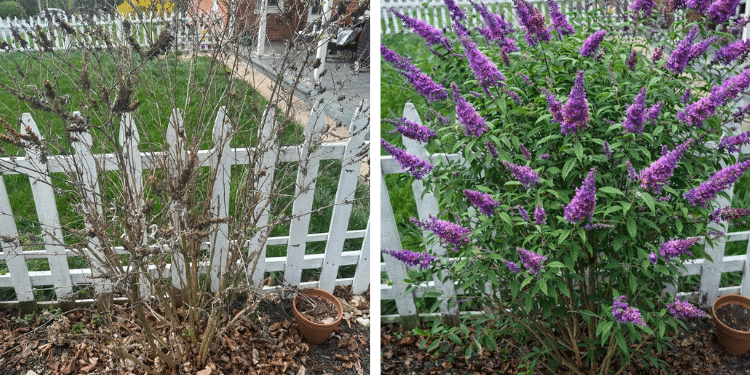
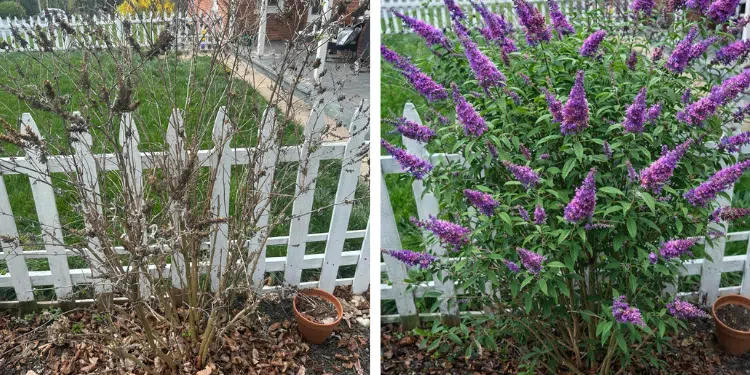
1. Butterfly Bush (Buddleja)
Butterfly bush is one of the most dramatic beneficiaries of February pruning.
It blooms on new growth and produces its flowers on long, fresh stems that emerge in spring. If you don’t prune it hard, it becomes woody, leggy, and less floriferous.
Why February is ideal
Pruning while dormant forces the plant to send energy into fewer, stronger shoots. Those shoots produce larger and more numerous flower spikes.
How to prune it
Cut back to 12–24 inches above the ground. Remove weak, dead, and crossing branches. Don’t be afraid to cut hard – butterfly bush responds aggressively.
2. Panicle Hydrangea (Hydrangea paniculata)
Panicle hydrangeas are completely different from mophead hydrangeas.
They bloom on new wood, meaning February pruning will not remove any flower buds.
Why February is ideal
Pruning now creates stronger stems that hold heavy flower heads upright instead of flopping.
How to prune it
Remove dead wood first. Then reduce last year’s growth by about one-third to one-half. Shape the plant and thin crowded areas.
3. Smooth Hydrangea (Hydrangea arborescens)
Smooth hydrangeas like ‘Annabelle’ are among the safest shrubs to prune in winter.
They bloom entirely on new wood and actually produce better flowers after a hard prune.
Why February is ideal
Cutting back before growth starts creates thicker stems and larger blooms.
How to prune it
Cut back to 12–18 inches tall. For even stronger stems, leave 18–24 inches instead of cutting to the ground.
4. Rose of Sharon (Hibiscus syriacus)
Rose of Sharon is a late summer bloomer that forms flowers on new wood.
Without pruning, it becomes tall, tangled, and produces fewer blooms.
Why February is ideal
Pruning now channels energy into vigorous new shoots that carry the flowers.
How to prune it
Remove dead and crossing branches. Reduce height by up to one-third. Thin crowded interior growth to improve airflow.
5. Crape Myrtle
Crape myrtles bloom on new growth and benefit from structural pruning in late winter.
February is the best time to shape them properly.
Why February is ideal
Pruning while dormant prevents excessive sap bleeding and encourages balanced growth.
How to prune it
Remove suckers, dead wood, and crossing branches. Thin crowded areas. Avoid topping – this weakens the plant and causes ugly growth.
6. Bluebeard (Caryopteris)
Bluebeard is a compact late-summer bloomer that flowers on new wood.
If you don’t prune it, it becomes woody and sparse.
Why February is ideal
Pruning now rejuvenates the plant and stimulates dense flowering growth.
How to prune it
Cut back to 6–12 inches tall. Remove dead and weak stems.
7. Japanese Spirea (Spiraea japonica)
Japanese spirea blooms on new growth and responds extremely well to late-winter pruning.
It becomes fuller, healthier, and more floriferous when cut back annually.
Why February is ideal
Pruning stimulates fresh growth that produces more flowers and better shape.
How to prune it
Cut back by one-third to one-half. Remove dead wood and thin crowded areas.
Why These Shrubs Won’t Lose Blooms
All seven of these shrubs share one critical trait: they bloom on new wood.
This means:
- They haven’t formed their flower buds yet in February
- Pruning won’t remove future blooms
- Cutting actually increases bloom production
- Fresh growth equals more flowers
This is why February pruning helps instead of hurts them.
The Biggest February Pruning Mistake
The most common mistake gardeners make is pruning everything at once.
If you prune shrubs that bloom on old wood – like lilacs, azaleas, rhododendrons, and forsythia – in February, you remove their flower buds and lose an entire season of blooms.
Always identify whether a shrub blooms on old or new wood before pruning.
How Late-Winter Pruning Improves Flowering
February pruning doesn’t just maintain size. It actively improves bloom quality.
It:
- Stimulates stronger shoots
- Improves airflow and light penetration
- Reduces disease risk
- Creates better flower placement
- Increases overall bloom count
This is why experienced gardeners treat late winter as bloom-prep season, not just cleanup time.
Signs a Shrub Is Ready for February Pruning
You can safely prune new-wood bloomers when:
- The plant is dormant
- Buds have not swollen significantly
- No hard freezes are expected immediately after pruning
- Dead wood is visible
If buds are already swelling heavily, wait until early spring instead.
Tools Matter More Than Timing
Clean, sharp tools prevent disease and ensure clean cuts.
Use:
- Sharp bypass pruners
- Loppers for thick branches
- Pruning saws for large limbs
Always disinfect tools between plants.
What Happens If You Skip February Pruning
When new-wood shrubs aren’t pruned:
- Growth becomes weak and leggy
- Flowering decreases
- Plants become tangled
- Disease risk increases
- Blooms appear only at branch tips
February pruning resets the plant for a stronger, healthier growing season.
February pruning doesn’t have to be risky or complicated.
As long as you focus on shrubs that bloom on new wood, late-winter pruning becomes one of the most powerful ways to improve flowering, structure, and long-term health.