Growing vegetables in containers is one of the smartest ways to garden when space is limited. Balconies, patios, decks, rooftops, and small yards can all produce impressive harvests when plants are paired thoughtfully.
But what most people don’t realize is that what you grow together matters just as much as what you grow at all.
Some vegetables naturally support each other. They improve growth, repel pests, share nutrients more efficiently, and make better use of vertical and horizontal space.
Other combinations compete for resources, attract pests, or stunt each other’s growth.
When you pair vegetables correctly in containers, you get healthier plants, higher yields, fewer pests, and far less maintenance.
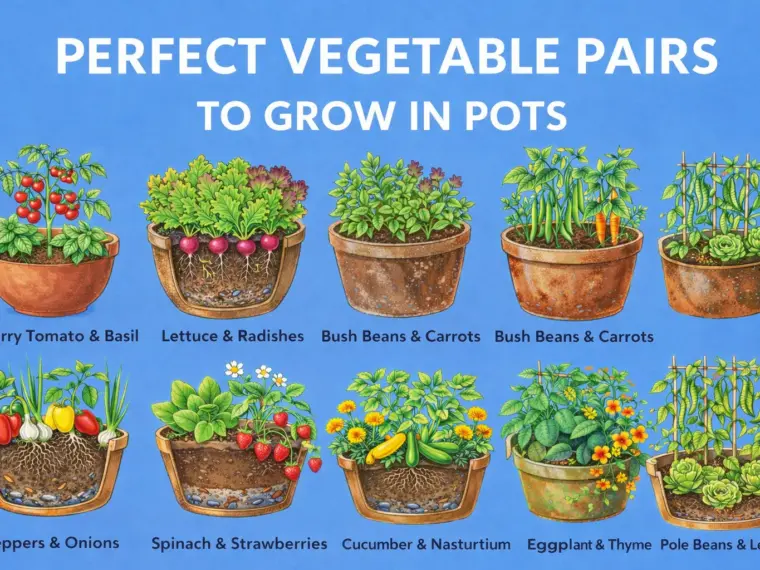
Here are 15 perfect vegetable pairs that thrive together in pots, why each combination works so well, and how to use them for maximum results.
Why Pairing Vegetables in Containers Works So Well
Containers create a controlled growing environment. Plants share a limited amount of soil, water, nutrients, and root space. This makes compatibility far more important than in open ground.
Good container companions:
• Have complementary root systems
• Use nutrients differently
• Repel each other’s pests
• Improve soil health
• Share space efficiently
• Support growth through shade or structure
Poor companions compete for nutrients, crowd each other’s roots, attract the same pests, or block airflow.
Smart pairing turns one container into a miniature ecosystem that supports itself.
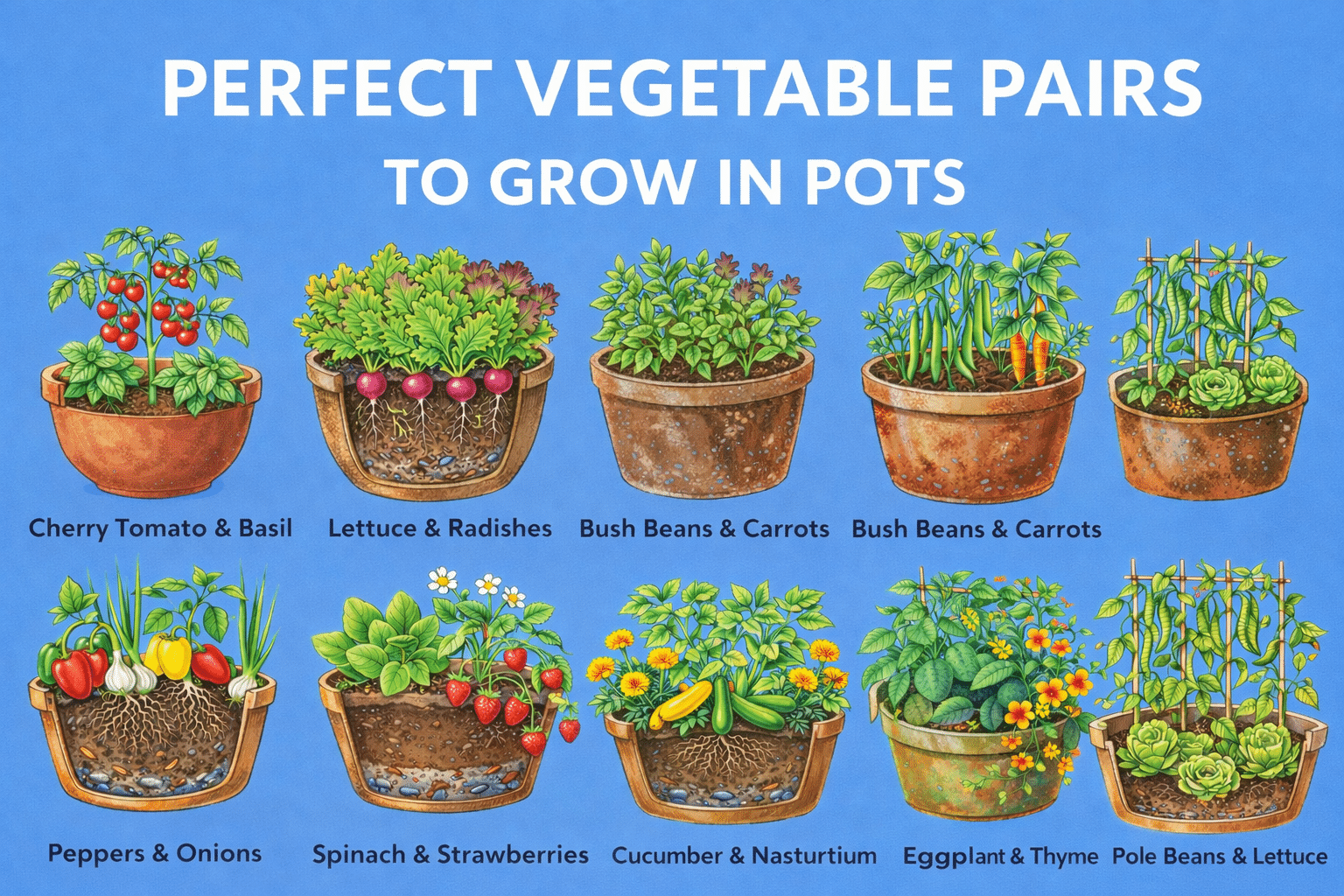
1. Tomatoes and Basil
Tomatoes and basil are one of the most famous companion plant pairs, and the reason goes far beyond tradition.
Basil releases aromatic oils that confuse insect pests such as aphids, whiteflies, and tomato hornworms, making it harder for them to locate tomato plants.
At the same time, tomatoes grow tall and create light, dappled shade that protects basil from harsh midday sun in containers.
Both plants enjoy similar soil conditions, watering schedules, and nutrient needs, which makes them extremely easy to manage together.
Basil fills the lower space in the pot, acting as a living mulch that shades the soil and reduces evaporation. Many gardeners also notice that tomatoes grown alongside basil produce fruit with better aroma and flavor.
2. Carrots and Radishes
Carrots and radishes are a classic root companion pairing, especially for containers with deeper soil. Radishes grow quickly and germinate faster than carrots, which makes them perfect “row markers” in mixed plantings.
While carrots take time to sprout, radishes emerge within days, helping you track where your carrots are planted.
Radishes also help break up compacted soil as they grow, making it easier for carrot roots to develop straight and deep.
Since radishes mature quickly, they can be harvested long before carrots need the extra space.
This pairing maximizes root-zone efficiency and shortens the overall harvest cycle in a single container.
3. Lettuce and Green Onions
Lettuce and green onions thrive together because they use space and nutrients in different ways. Lettuce has shallow roots and spreads outward, while green onions grow vertically with narrow root systems.
This allows both plants to share a container without competing for root space.
Green onions repel aphids and beetles that commonly attack lettuce. Their upright growth also improves air circulation, reducing the risk of fungal disease.
Lettuce, in turn, shades the soil, helping it stay cooler and moist, which both plants appreciate. This pairing is ideal for shallow containers, window boxes, and balcony gardens.
4. Peppers and Basil
Peppers benefit from basil in many of the same ways tomatoes do. Basil repels thrips, aphids, and spider mites that often attack pepper plants. Its strong scent disrupts pest navigation and feeding behavior.
Peppers grow upright and create partial shade that protects basil from excessive heat. Both plants enjoy warm temperatures, consistent watering, and similar nutrient levels.
This makes them an exceptionally low-maintenance pair in containers. Many gardeners also report improved pepper flavor when basil is grown nearby.
5. Cucumbers and Dill
Cucumbers and dill form a powerful pest-control pairing. Dill attracts beneficial insects such as ladybugs, lacewings, and parasitic wasps, all of which feed heavily on aphids, cucumber beetles, and mites.
Dill also releases compounds that repel certain pests directly. Cucumbers grow vertically on a trellis, while dill stays relatively compact, making excellent use of container space.
Together, they create a miniature ecosystem that suppresses pests and improves pollination.
6. Spinach and Strawberries
Spinach and strawberries share space beautifully in wide containers. Spinach grows quickly and forms a dense leaf canopy that shades the soil, keeping it cooler and reducing moisture loss. Strawberries benefit greatly from this cooler root environment.
Spinach also helps suppress weeds and repels certain pests that attack strawberries. Since spinach matures quickly, it can be harvested long before strawberries need the extra space. This pairing creates staggered harvests and a lush, productive container.
7. Beans and Carrots
Beans and carrots work together through nutrient exchange and space efficiency. Beans fix nitrogen in the soil through symbiotic bacteria in their roots. Carrots benefit from this extra nitrogen, which supports strong root growth.
Beans grow upward, while carrots grow downward, allowing both to share a container without competing for light or root space. This pairing improves soil fertility naturally and increases overall productivity in a single pot.
8. Kale and Onions
Onions are powerful pest deterrents for brassica crops like kale. They repel cabbage worms, aphids, and beetles that commonly attack leafy greens.
Kale benefits from this protection and grows stronger and healthier as a result. Both plants tolerate cool weather and partial shade, making them ideal companions for early spring or fall container gardens.
Their different growth heights also prevent crowding and improve airflow.
9. Zucchini and Nasturtiums
Nasturtiums play a unique role as a trap crop. Aphids and beetles prefer nasturtiums over zucchini. When planted together, pests move onto the nasturtiums instead of attacking the zucchini.
Nasturtiums also attract pollinators, which improves zucchini fruit set. Their trailing growth softens the edges of large containers and shades the soil. This pairing reduces pest pressure while improving pollination and aesthetics.
10. Beets and Garlic
Garlic releases sulfur compounds that repel beet pests and suppress fungal diseases. Beets benefit from garlic’s antimicrobial effects and reduced pest pressure.
Both plants grow well in similar soil conditions and have compatible watering needs. Garlic also improves soil health and flavor development in nearby plants. This pairing produces healthier, more resilient beets.
11. Eggplant and Marigolds
Marigolds are famous for pest control, and eggplants benefit enormously from their presence. Marigolds repel nematodes, aphids, and beetles that attack eggplants.
They also attract pollinators and beneficial insects. This pairing reduces pest pressure while improving flowering and fruit production. Marigolds’ compact growth makes them ideal for container edges.
12. Swiss Chard and Radishes
Radishes loosen compacted soil, improving root access for Swiss chard. They also mature quickly and can be harvested early, freeing up space.
Swiss chard benefits from improved soil structure and nutrient availability. This pairing maximizes container productivity and shortens harvest time.
13. Broccoli and Onions
Onions repel cabbage moths and aphids that attack broccoli. Their strong aroma disrupts pest navigation and feeding behavior.
Both plants tolerate cool temperatures and partial shade, making them excellent companions for spring and fall container gardens. This pairing produces stronger brassicas with fewer pest problems.
14. Peas and Spinach
Peas fix nitrogen in the soil, which spinach uses for lush leaf growth. Both plants thrive in cool weather and share similar water needs.
Peas grow vertically, while spinach spreads horizontally, making efficient use of container space. This pairing produces fast, abundant harvests early in the season.
15. Tomatoes and Chives
Chives repel aphids and mites that attack tomatoes. Their sulfur compounds also suppress fungal disease.
Chives improve tomato flavor and attract pollinators. Their upright growth makes them perfect for container edges. This pairing enhances pest resistance, yield, and flavor.
Why These Pairs Work So Well in Containers
These vegetable pairs succeed because they complement each other biologically and physically. They share space efficiently, repel pests, improve soil health, and support each other’s growth.
In containers, where resources are limited, smart pairing makes a dramatic difference. Instead of competing, these plants cooperate.
When you plant the right vegetables together, you don’t just grow two crops – you create a living system that works for you.
These 15 vegetable pairs thrive in containers because they support each other’s roots, nutrients, pest resistance, and space use.