March is one of the most important months in the gardening calendar. As winter loosens its grip and plants begin to wake from dormancy, this short window offers a golden opportunity to shape growth, remove winter damage, and set the stage for vigorous flowering and foliage.
Pruning at the right time – especially in early spring – encourages stronger stems, better airflow, disease prevention, and more abundant blooms.
But timing is everything. Prune too early, and severe frost can damage fresh cuts. Prune too late, and you may remove developing flower buds.
Why March Is Ideal for Pruning
Early spring pruning works because:
- Many plants are still dormant or just beginning to leaf out
- Energy is stored in roots, ready to push new growth
- Cuts heal quickly as sap flow increases
- You can clearly see plant structure before foliage fills in
March pruning promotes controlled, compact, and healthy growth before the active growing season begins.
1. Roses
Roses are one of the most important plants to prune in early spring.
Why prune in March?
Pruning just as buds begin to swell ensures you remove winter damage without cutting off new growth unnecessarily.
How to prune:
- Remove dead or blackened stems
- Cut back weak canes
- Shape plant to an open center
- Cut above outward-facing buds
This encourages better airflow, stronger stems, and more abundant blooms.
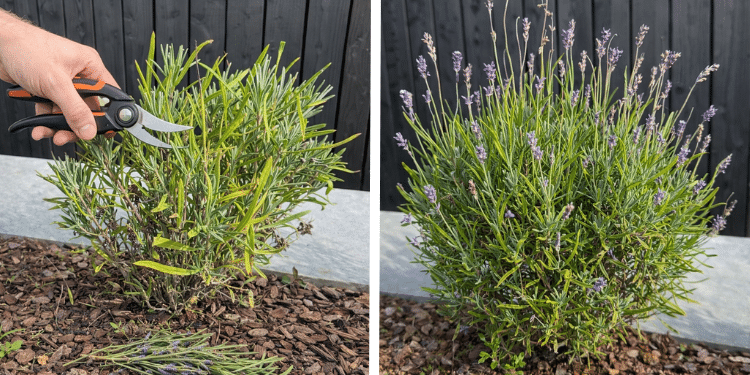
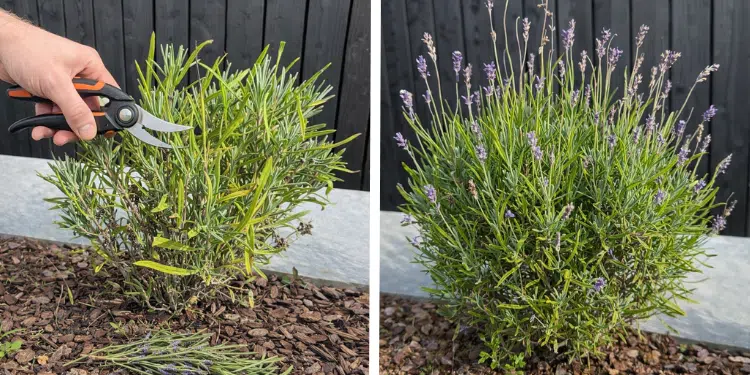
2. Lavender
Lavender benefits from early shaping but must be handled carefully.
Why March?
Prune before new green growth fully emerges.
How to prune:
- Trim lightly into soft growth
- Avoid cutting into old woody stems
- Shape into a compact mound
This prevents legginess and promotes fuller flowering.
3. Hydrangea paniculata (Panicle Hydrangea)
Panicle hydrangeas bloom on new wood.
Why March?
Pruning before active growth encourages larger flower heads.
How to prune:
- Cut back stems by one-third
- Remove weak growth
- Shape evenly
Avoid pruning varieties that bloom on old wood at this time.
4. Butterfly bush
Butterfly bush blooms on new wood.
Why March?
Hard pruning stimulates vigorous new growth.
How to prune:
- Cut back to 12–24 inches from ground
- Remove dead branches
This prevents leggy growth and increases flower production.
5. Salvia (Perennial Types)
Perennial salvias benefit from early spring cleanup.
Why March?
New shoots emerge from the base.
How to prune:
- Cut back old stems to a few inches above soil
- Remove winter-damaged growth
Encourages compact shape and better blooming.
6. Russian sage
Russian sage blooms on new growth.
Why March?
Pruning encourages bushier growth.
How to prune:
- Cut stems back to 6–12 inches
- Remove old woody stems
Results in fuller, more upright growth.
7. Boxwood
Boxwoods respond well to light shaping in early spring.
Why March?
Before active growth begins.
How to prune:
- Trim lightly to shape
- Remove winter damage
Avoid heavy cuts that expose interior wood.
8. Ornamental grasses
Most ornamental grasses should be cut back before new growth appears.
Why March?
Prevents damage to emerging shoots.
How to prune:
- Cut back to 6–12 inches above ground
This clears old growth and promotes fresh foliage.
9. Crape myrtle
Crape myrtle blooms on new wood.
Why March?
Encourages strong flowering.
How to prune:
- Remove crossing branches
- Thin lightly
- Avoid severe topping
Promotes healthy canopy and balanced growth.
10. Bluebeard (Caryopteris)
Bluebeard blooms on new wood.
Why March?
Hard pruning stimulates dense growth.
How to prune:
- Cut back to 6–12 inches
Improves shape and bloom density.
11. Sedum (Tall Varieties)
Tall sedums benefit from early cleanup.
Why March?
Old stems can be removed before new shoots emerge.
How to prune:
- Cut back dead stems at soil level
Promotes compact, fresh growth.
12. Phlox paniculata (Garden Phlox)
Garden phlox benefits from thinning.
Why March?
Improves airflow before dense summer growth.
How to prune:
- Remove weak stems
- Thin crowded centers
Reduces mildew risk.
13. Spirea (Summer-Blooming Types)
Summer-blooming spirea flowers on new wood.
Why March?
Encourages abundant blooms.
How to prune:
- Cut back one-third
- Remove older stems
Improves flowering and structure.
14. Fruit trees (Apples & Pears)
Fruit trees benefit from late-winter to early-spring pruning.
Why March?
Before sap flow increases fully.
How to prune:
- Remove crossing branches
- Open center for airflow
- Eliminate weak growth
Improves fruit production and reduces disease risk.
Pruning Principles to Follow
- Always use sharp, clean tools
- Cut at a 45-degree angle above buds
- Remove dead, damaged, or diseased wood first
- Avoid pruning during active frost
Proper technique prevents disease and promotes faster healing.
Common Pruning Mistakes
- Over-pruning
- Cutting flowering shrubs that bloom on old wood
- Leaving stubs
- Pruning too late
Understanding bloom habits is critical.
Benefits of March Pruning
- Stronger stems
- Better airflow
- Reduced disease
- More flowers
- Balanced plant shape
- Increased longevity
Early action leads to better seasonal performance.
March is not just the beginning of planting season – it’s the foundation of structural garden care.
By pruning these 14 plants at the right time, you set them up for gorgeous growth, stronger blooms, and healthier structure throughout the year.