Caring for trees is an essential part of maintaining a beautiful and healthy landscape. Trees provide shade, improve air quality, and add aesthetic value to any property. However, many homeowners inadvertently make mistakes that can harm these valuable assets. Understanding common tree care errors can help you avoid them and ensure your trees thrive for years to come.
In this article, we’ll explore 13 common tree care mistakes that could be harming your landscape. From mulching practices to watering techniques, each of these points will guide you in fostering a healthier environment for your trees, ultimately leading to a more vibrant and sustainable landscape.
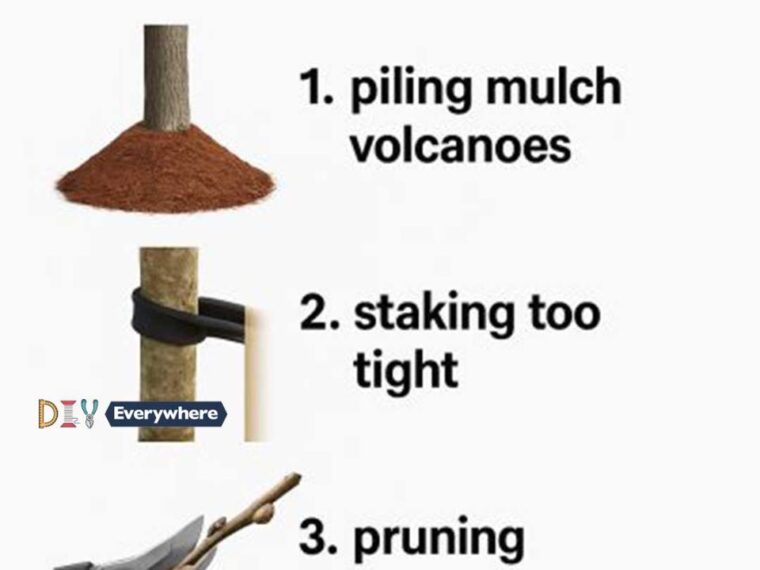
1. Piling Mulch Volcanoes
One of the most common mistakes in tree care is creating ‘mulch volcanoes,’ where mulch is piled up against the trunk of a tree. This practice can lead to several problems, including bark decay and root rot. The excessive moisture retained by the mulch can cause the bark to break down, making the tree susceptible to disease and pests.
To mulch correctly, apply a 2 to 4-inch layer of mulch around the tree, starting a few inches away from the trunk and extending out to the tree’s drip line. This method helps retain moisture without suffocating the base of the tree.
2. Staking Too Tight
Staking is often necessary for young trees to help them establish roots and grow straight. However, staking too tightly can restrict a tree’s natural movement, which is crucial for developing a strong trunk and root system. Tightly bound trees may also suffer from girdling, where the staking material cuts into the bark.
When staking a tree, ensure that the ties are loose enough to allow some movement. Use soft, flexible materials like tree straps and adjust the ties as the tree grows, usually removing stakes after one to two years.
3. Pruning in Fall
Pruning trees in the fall can be detrimental, as this is the time when trees are preparing to go dormant for the winter. Cutting branches during this period can stimulate new growth that is prone to frost damage. Additionally, pruning wounds take longer to heal in the fall, increasing the risk of disease.
For most tree species, the best time to prune is late winter or early spring, just before new growth begins. This timing allows trees to heal quickly and reduces the chances of disease transmission.
4. Ignoring Girdling Roots
Girdling roots are roots that grow around the trunk or other roots, strangling the tree and restricting its growth. Over time, girdling roots can cause significant damage, leading to poor health and even tree death.
Regularly inspect your trees for signs of girdling roots, such as reduced vigor or unusual growth patterns. If you notice girdling roots, consult an arborist for proper removal. Early intervention is key to preventing long-term damage.
5. Overwatering Your Trees
While trees need water to thrive, overwatering can be just as harmful as drought conditions. Excessive water can lead to root rot and oxygen deprivation, weakening the tree’s structure and increasing susceptibility to disease.
Water your trees deeply but infrequently, allowing the soil to dry out between waterings. A general guideline is to provide about one inch of water per week, adjusting for rainfall and soil conditions.
6. Planting Trees Too Deep
Planting trees too deep can suffocate the roots and hinder a tree’s ability to uptake nutrients and water. A tree planted too deeply may exhibit stunted growth and become more vulnerable to disease.
When planting a tree, ensure that the root flare—the point where the trunk meets the roots—is at or slightly above the soil surface. This positioning allows the tree to breathe and establish a healthy root system.
7. Neglecting Regular Inspections
Regular inspections are crucial for early detection of problems like pests, disease, and structural issues. Without routine checks, small problems can quickly escalate, causing irreversible damage to your trees.
Conduct visual inspections of your trees at least twice a year, looking for signs of distress such as dead branches, discolored leaves, or unusual growth patterns. Consult a certified arborist for a professional assessment if you notice anything concerning.
8. Using Dull Pruning Tools
Using dull pruning tools can cause jagged cuts, which take longer to heal and create entry points for disease and pests. Clean, sharp cuts heal more efficiently and minimize the risk of infection.
Regularly sharpen your pruning tools and clean them with rubbing alcohol between uses to prevent the spread of disease. Investing in high-quality pruning tools can also make a significant difference in the health of your trees.
9. Failing to Remove Dead Wood
Dead wood can pose a safety hazard and serve as a breeding ground for pests and disease. Allowing dead branches to remain on a tree can lead to structural issues and increased susceptibility to storm damage.
Regularly inspect your trees for dead or dying branches and remove them promptly. Prune back to healthy wood, ensuring that cuts are clean and made at the branch collar to promote proper healing.
10. Improper Fertilization
Improper fertilization, whether too much or too little, can disrupt a tree’s growth and health. Over-fertilization can lead to excessive growth that weakens the structure, while under-fertilization can result in nutrient deficiencies.
Conduct a soil test to determine the specific nutrient needs of your trees and apply fertilizer according to the recommendations. Avoid fertilizing in late summer or fall, as this can promote new growth vulnerable to frost.
11. Not Protecting from Pests
Pests can cause significant damage to trees, from defoliation to spreading diseases. Ignoring pest problems can lead to severe health issues and even tree death.
Monitor your trees regularly for signs of pest activity, such as chewed leaves or bore holes. Implement integrated pest management practices, such as encouraging natural predators and using organic treatments, to protect your trees from harmful insects.
12. Ignoring Sunlight Requirements
Different tree species have varying sunlight requirements, and planting them in inappropriate locations can stunt their growth or cause them to fail altogether. Trees that need full sun but are planted in shade may not thrive, while shade-tolerant species in full sun can suffer from leaf scorch.
Research the sunlight needs of your tree species and select planting locations that match these requirements. Proper placement ensures that your trees receive the necessary sunlight to grow strong and healthy.
13. Planting Trees Too Close Together
Planting trees too close together can lead to competition for resources like sunlight, water, and nutrients. Overcrowded trees can become weak and more susceptible to disease and pest infestations
When planting trees, consider their mature size and provide adequate spacing to ensure each tree has enough room to grow. A general guideline is to space trees at least 10 to 30 feet apart, depending on the species and expected canopy size.