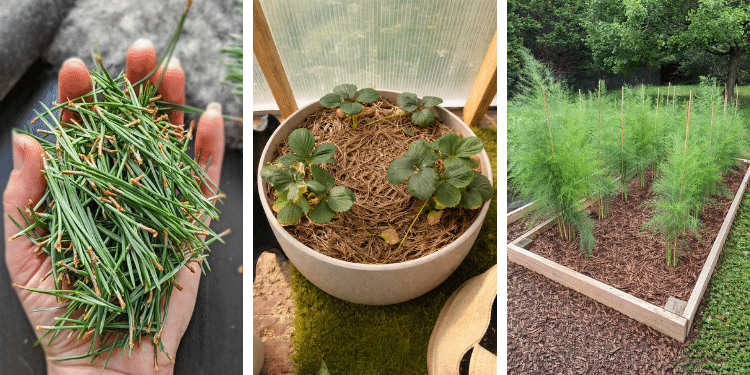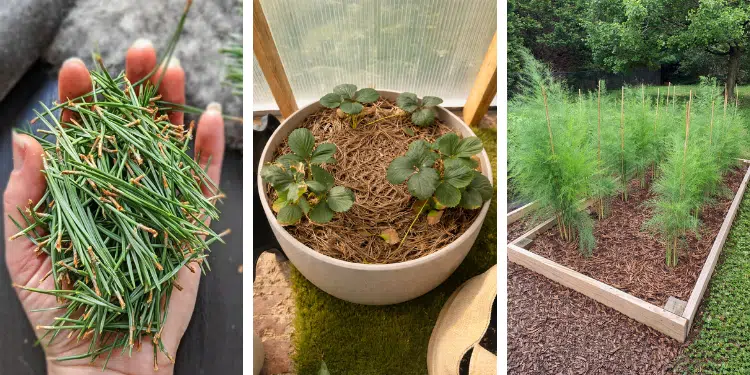
Pine needles are one of the most underused garden resources. In many regions, they’re considered yard waste – raked up and discarded each fall.
But experienced gardeners know that pine needles, often called pine straw, can be one of the most effective natural mulches available.
They are lightweight, long-lasting, attractive, and surprisingly beneficial to certain plants. Contrary to common belief, pine needles do not drastically acidify soil overnight.
Instead, they provide gradual organic matter, moisture regulation, and gentle soil conditioning – especially useful for acid-loving plants.
Do Pine Needles Really Make Soil Acidic?
One of the biggest myths about pine needles is that they dramatically acidify soil. Fresh green needles are mildly acidic, but once brown and fallen, most of the acidity has already leached out.
When used as mulch on top of soil, pine needles:
- Break down slowly
- Have minimal impact on soil pH
- Improve soil structure over time
- Encourage beneficial fungi
- Reduce moisture loss
They are most helpful in already slightly acidic soils – not as a drastic pH changer, but as a soil conditioner.
1. Blueberries – Why Pine Needles Are Almost Ideal for Them
Blueberries evolved in forest-edge environments where soil is naturally acidic, rich in organic matter, and layered with decomposing leaves and pine debris.
Their roots are extremely shallow and fine – they do not tolerate drying out, compaction, or high pH.
Pine needles help blueberries because they:
- Protect shallow feeder roots
- Maintain surface acidity stability
- Improve fungal soil activity (blueberries rely on mycorrhizae)
- Prevent soil temperature spikes in summer
- Reduce moisture loss
The most important benefit is moisture stability. Blueberries suffer quickly from drought stress, which reduces fruit size and sweetness.
Best method: Apply 3 inches deep around the drip line, not directly against the base. Reapply yearly in early spring.
Mistake to avoid: Mixing large amounts into soil. Pine needles are best as surface mulch, not tilled in.
2. Strawberries – Cleaner Fruit, Better Airflow
Strawberries are shallow-rooted and prone to fruit rot when berries sit directly on moist soil. Pine needles create a dry cushion layer that keeps fruit elevated and improves airflow underneath plants.
They also:
- Suppress weeds without smothering
- Improve drainage around crowns
- Reduce splash-back fungal spores
Because pine needles interlock loosely, they allow airflow – which is critical for preventing gray mold.
Best timing: After flowers begin forming, before fruit sets.
Important: Keep mulch slightly away from the crown to prevent crown rot.
3. Azaleas – Root Protection Is the Real Benefit
Azaleas have delicate, fibrous roots that sit very close to the soil surface. They are extremely sensitive to compaction and drying.
Pine needles work well because they:
- Mimic natural forest litter
- Prevent soil crusting
- Protect shallow roots from temperature swings
- Gradually feed soil microbes
The real benefit isn’t “making soil acidic.” It’s recreating the forest-floor ecosystem azaleas evolved in.
Best application: Thick but airy layer in early spring and again in fall.
Avoid: Heavy foot traffic around mulched zone.
4. Rhododendrons – Insulation and Drainage
Rhododendrons prefer cool root zones and excellent drainage. Pine needles insulate soil while still allowing rainwater to pass through easily.
Unlike bark mulch, pine needles don’t compact heavily over time. That’s ideal for rhododendrons, which dislike soggy soil.
They also:
- Reduce root overheating in summer
- Protect roots from freeze-thaw cycles
- Support fungal soil networks
Use annually but monitor depth – too thick can trap excessive moisture in rainy climates.
5. Camellias – Consistent Moisture Matters Most
Camellias prefer evenly moist soil. Drying cycles can cause bud drop.
Pine needles help stabilize soil moisture, reducing stress during dry spells. They also improve soil texture gradually over time.
Camellias benefit especially in:
- Warmer climates
- Sandy soils
- Beds with fluctuating rainfall
Refresh mulch before flowering season to stabilize soil before bud development.
6. Hydrangeas – Moisture Control and Root Health
Hydrangeas need consistent hydration to support large blooms. Pine needles reduce evaporation without sealing the soil.
Unlike plastic mulch, pine needles:
- Allow oxygen exchange
- Prevent waterlogging
- Encourage earthworms
In acidic soil varieties (like bigleaf hydrangeas), pine needles help maintain slight acidity without forcing pH shifts.
They are especially helpful in hot climates where hydrangeas wilt quickly.
7. Garlic – Winter Protection Is Key
Garlic benefits most from pine needles during winter. When planted in fall, garlic cloves need insulation but also drainage.
Pine needles:
- Protect from deep frost
- Prevent soil heaving
- Reduce early weed pressure
- Allow spring shoots to push through easily
Remove or thin mulch in early spring to allow soil to warm.
8. Onions – Soil Aeration and Weed Control
Onions prefer loose, well-drained soil and dislike competition.
Pine needles:
- Reduce weed growth
- Improve surface aeration
- Prevent soil compaction
- Maintain moderate moisture
Apply lightly – onions prefer airflow. Too thick a layer may delay soil warming.
9. Potatoes – Cleaner Harvest, Fewer Weeds
Potatoes benefit from loose surface soil and minimal weed competition.
Pine needles can:
- Act as light hilling material
- Reduce weed growth
- Keep tubers cleaner
- Improve harvest ease
However, in heavy rain areas, avoid thick layering to prevent excess moisture.
10. Roses – Improved Drainage and Surface Balance
Roses prefer slightly acidic to neutral soil. Pine needles don’t drastically acidify, but they do:
- Improve drainage
- Reduce weed competition
- Prevent splash diseases
- Keep roots cooler
They are especially helpful in clay-heavy soils where drainage is slow.
11. Fruit Trees – Root Zone Weed Suppression
Young fruit trees suffer from grass competition more than most gardeners realize.
Pine needles help by:
- Suppressing turf growth
- Stabilizing soil moisture
- Encouraging earthworms
- Reducing temperature stress
Create a wide mulch ring at least 2–3 feet around the tree.
Never pile against trunk – that causes rot.
12. Asparagus – Long-Term Bed Health
Asparagus beds last decades. Weed suppression and soil structure improvement are crucial.
Pine needles:
- Reduce weed pressure
- Protect shallow crowns
- Improve long-term organic matter
- Prevent soil crusting
Apply lightly in early spring before spear emergence.
Plants That Should NOT Get Pine Needle Mulch
Avoid using pine needles heavily around:
- Succulents
- Lavender (if soil is already heavy)
- Rosemary in wet climates
- Plants that prefer alkaline soil (like asparagus in already alkaline areas)
Pine needles are neutral to mildly acidic once decomposed, but soil testing is still wise.
When Pine Needles Work Best
They are most effective in:
- Slightly acidic soil
- Woodland-style gardens
- Fruit beds
- Sloped areas (excellent erosion control)
- Areas prone to weed pressure
Pine needles are far more than yard debris – they’re a practical, attractive, and highly effective mulch for many plants.
Blueberries, strawberries, azaleas, garlic, onions, hydrangeas, and fruit trees all benefit from pine straw’s moisture regulation, weed suppression, and soil improvement.