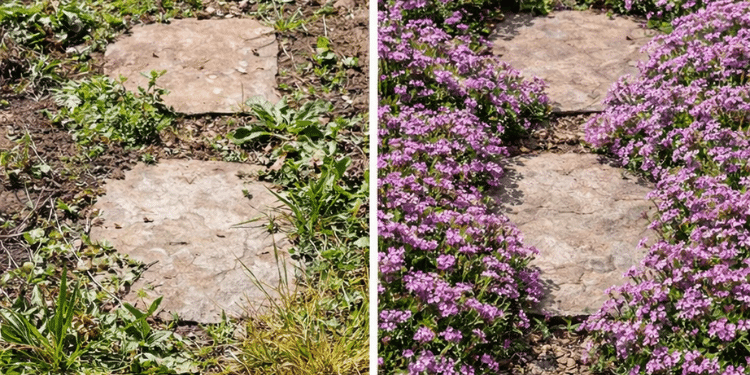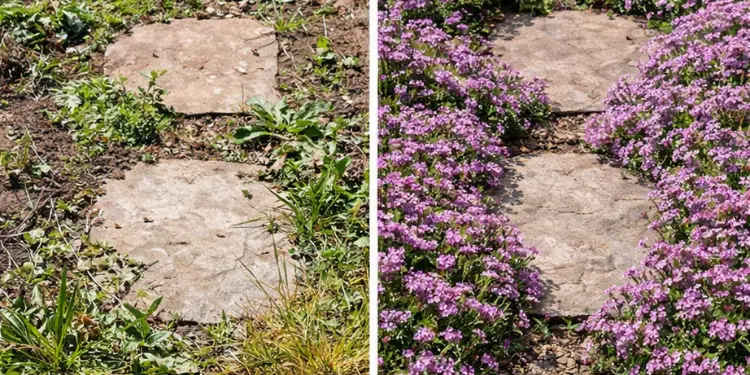
Weeds thrive in empty space. Bare soil is an open invitation for seeds to settle, sprout, and compete with the plants you actually want.
One of the most effective – and lowest-maintenance – ways to stop weeds is not by pulling or spraying, but by outcompeting them.
That’s where aggressive groundcovers come in.
The right groundcover spreads quickly, shades the soil, blocks light from weed seeds, and forms a living mulch that works all year long.
Once established, these plants dramatically reduce weeding while adding beauty, texture, and ecological value to your garden.
Why Groundcovers Beat Weeds Better Than Mulch
Mulch helps, but it breaks down, shifts, and needs constant replenishing. Groundcovers, on the other hand, are alive.
They grow denser every season, adapt to conditions, and repair their own gaps.
Effective weed-suppressing groundcovers share a few traits:
- Fast lateral spreading
- Dense foliage that blocks sunlight
- Shallow but wide root systems
- Long growing seasons or evergreen growth
Once they knit together, weeds struggle to germinate or survive.
1. Creeping Thyme
Creeping thyme is a low, aromatic groundcover that forms a dense, mat-like carpet. Its tiny leaves hug the soil so tightly that very little light reaches weed seeds below.
It thrives in full sun and well-drained soil, even in poor or rocky areas where weeds often dominate. Once established, it spreads steadily and fills gaps between stones, along paths, and across slopes.
In late spring and early summer, creeping thyme explodes with tiny flowers that attract pollinators while continuing to suppress weeds underneath.
2. Ajuga (Bugleweed)
Ajuga is one of the most aggressive shade-tolerant groundcovers available. It spreads via runners, quickly forming a thick, glossy blanket that leaves little room for weeds.
It performs especially well under trees, along fences, and in shaded borders where grass struggles. Its colorful foliage -often deep green, bronze, or purple – adds visual interest even when it’s not in bloom.
Once ajuga settles in, weeds have a hard time breaking through its dense leaf layer.
3. Periwinkle (Vinca Minor)
Periwinkle is a classic evergreen groundcover known for its ability to dominate large areas. It spreads horizontally, rooting as it goes, creating a continuous mat that smothers weeds.
It tolerates shade, partial sun, drought once established, and poor soil. This adaptability makes it especially useful for difficult areas like slopes, under shrubs, or neglected corners of the garden.
Because it stays green year-round, it blocks weeds in every season – not just during summer.
4. Sedum (Low-Growing Varieties)
Low-growing sedums are masters of survival. They thrive in hot, dry, sunny conditions where many weeds struggle, and once they spread, they leave almost no exposed soil.
Sedum forms dense, succulent mats that choke out weeds by denying them light and space. Their shallow roots are efficient at holding soil together, making them excellent for slopes and rock gardens.
They require very little water and maintenance, which makes them ideal for low-effort weed control.
5. Sweet Woodruff
Sweet woodruff excels in shade, where many gardeners fight a constant battle with weeds. It spreads gently but persistently, forming a lush green carpet under trees and shrubs.
In spring, it produces small white flowers, but even without blooms, its whorled leaves quickly cover bare soil. Once established, sweet woodruff crowds out most common shade weeds.
It prefers moist, well-drained soil and performs best in woodland-style gardens.
6. Lamium (Dead Nettle)
Lamium is a fast-spreading groundcover prized for both its weed-blocking ability and its ornamental foliage. Its silver-patterned leaves reflect light in shady areas, brightening spaces where weeds often dominate.
It spreads by trailing stems that root wherever they touch soil. This growth habit allows lamium to fill gaps quickly and form a thick, continuous layer.
Lamium works especially well along borders, under shrubs, and in mixed plantings where weed pressure is high.
7. Creeping Jenny
Creeping Jenny is relentless – in the best way possible. Its bright green or golden leaves race across the soil surface, rooting at every node and sealing off bare ground.
It thrives in moist soil and partial shade but adapts to sun if watered regularly. In damp areas where weeds flourish, creeping Jenny often outpaces them completely.
Because of its vigor, it’s best used where you want full coverage rather than delicate plant combinations.
8. Pachysandra
Pachysandra is a go-to groundcover for deep shade and woodland gardens. It spreads steadily through underground stems, creating a dense, evergreen mat.
Once established, pachysandra forms a near-solid layer that leaves little opportunity for weeds to emerge. It’s especially effective under trees, where roots compete heavily and other plants struggle.
Minimal maintenance and long-term weed suppression make it a favorite for large shaded areas.
9. Ice Plant
Ice plant thrives where weeds often take over – hot, sunny, dry spaces. Its fleshy leaves form thick ground-hugging mats that crowd out unwanted growth.
Once established, ice plant spreads outward aggressively and requires very little water. Its bright flowers add seasonal color, but even without blooms, its dense foliage keeps weeds in check.
It’s particularly effective on slopes, sandy soils, and coastal gardens.
10. Bishop’s Weed (Goutweed)
Bishop’s weed is one of the most aggressive groundcovers available. It spreads rapidly through underground rhizomes and can quickly dominate an area.
This intensity makes it extremely effective at weed suppression – but also means it must be used with care. It’s best planted in contained areas where its spread can be controlled.
In spots where nothing else works and weeds are relentless, bishop’s weed often succeeds.
11. Creeping Phlox
Creeping phlox forms dense, cushion-like mats that smother weeds while providing spectacular spring color. Once the plants knit together, weeds rarely find space to germinate.
It performs best in full sun and well-drained soil. After flowering, its foliage continues to protect the soil surface and suppress weeds throughout the growing season.
Creeping phlox is especially effective along borders, slopes, and sunny beds.
12. Liriope (Lilyturf)
Liriope bridges the gap between ornamental grass and groundcover. It spreads through clumping and short runners, gradually forming thick stands that shade out weeds.
It tolerates sun, shade, drought, and poor soil, making it a versatile choice for difficult areas. Once established, liriope requires little maintenance and provides year-round structure.
Its dense root system also helps stabilize soil, adding another layer of garden benefit.
How These Groundcovers Actually Stop Weeds
Weeds need three things to thrive: light, space, and opportunity. Aggressive groundcovers remove all three.
By covering the soil completely, they block sunlight from reaching weed seeds. Their roots occupy surface soil, limiting space for weeds to establish. Their continuous growth repairs gaps before weeds can take hold.
This is why groundcovers become more effective each year – they improve with time.
Where Groundcovers Work Best
Groundcovers are especially valuable in:
- Slopes where mulching is difficult
- Areas under trees and shrubs
- Borders and edges
- Large spaces that are hard to maintain
- Spots where grass fails
They’re also excellent for reducing erosion and improving soil health over time.
Managing Aggressive Spread
Plants that suppress weeds effectively often spread aggressively. This is a feature, not a flaw – but it requires planning.
To manage spread:
- Use physical borders where needed
- Avoid planting near delicate perennials
- Thin or edge once or twice a year
Choosing the right groundcover for the right space prevents future frustration.
Why Living Groundcovers Are a Long-Term Solution
Unlike short-term weed control methods, groundcovers offer a self-sustaining system. Once established, they reduce labor, minimize soil disturbance, and create healthier garden ecosystems.
They don’t just fight weeds – they replace them.
Weeds thrive on open ground. The most effective way to stop them isn’t constant removal – it’s occupation.
By filling space with fast-spreading, dense groundcovers, you deny weeds the opportunity to grow in the first place.