For many gardeners, February feels like the waiting month – winter still lingers, yet spring feels just around the corner.
But here’s the secret seasoned gardeners know: February is one of the best times to plant early-spring blooming perennials.
When planted at the right moment, these plants establish strong roots while temperatures are cool, allowing them to burst into color as soon as daylight increases.
If you want flowers that bloom before most gardens even wake up, planting the right perennials in February is the key.
Why Plant Early-Spring Perennials in February?
Planting in February offers several powerful advantages:
- Cool soil reduces transplant shock
- Roots establish before active top growth
- Plants bloom earlier and more reliably
- Less competition from weeds
- Lower watering needs
Many early-spring perennials are cold-tolerant and actually prefer being planted while the soil is still cool. In mild and moderate climates, February planting sets them up for long-term success.
Before You Plant: Important February Guidelines
Before planting in February, keep these points in mind:
- Soil must not be frozen solid
- Choose well-draining locations
- Avoid planting during hard frost spells
- Mulch lightly to protect new roots
In colder zones, February planting works best in sheltered areas or raised beds. In milder climates, it’s often ideal.
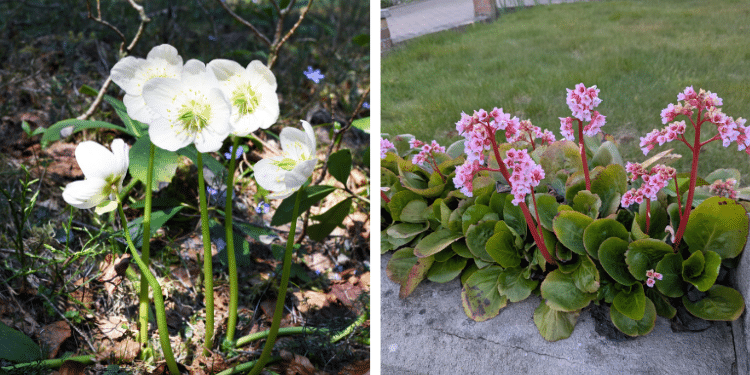
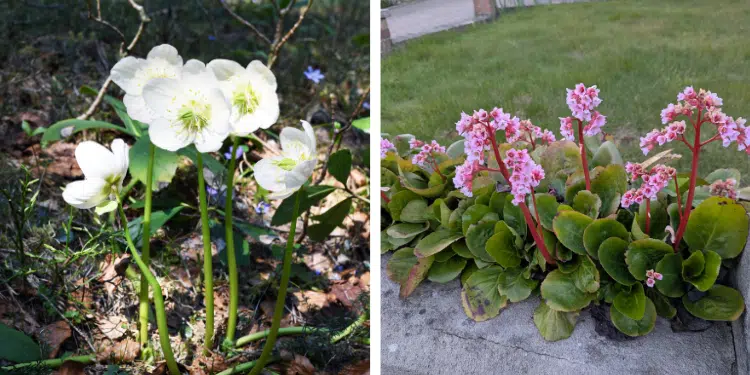
1. Hellebores (Lenten Rose)
Hellebores are among the earliest blooming perennials, often flowering while snow still lingers.
Why plant in February
Hellebores establish best in cool soil and dislike disturbance once mature. February allows roots to settle before blooming.
Bloom time
Late winter to early spring
Growing tips
- Partial to full shade
- Rich, well-drained soil
- Minimal watering once established
Hellebores reward early planting with long-lasting blooms that persist for months.
2. Primroses (Primula)
Primroses bring cheerful color to early-spring gardens when little else is flowering.
Why plant in February
Primroses thrive in cool conditions and establish quickly before spring heat arrives.
Bloom time
Early spring
Growing tips
- Partial shade
- Moist, well-drained soil
- Protect from strong afternoon sun
Primroses are perfect for borders, containers, and woodland gardens.
3. Lungwort (Pulmonaria)
Lungwort is a shade-loving perennial prized for both flowers and foliage.
Why plant in February
Early planting allows lungwort to root before blooming and leaf expansion.
Bloom time
Early spring
Growing tips
- Partial to full shade
- Moist but well-drained soil
- Excellent ground cover
Its spotted leaves remain attractive long after flowering ends.
4. Bergenia
Bergenia is a tough, evergreen perennial with bold leaves and early flowers.
Why plant in February
Cool-season planting prevents stress and encourages strong root development.
Bloom time
Late winter to early spring
Growing tips
- Sun to partial shade
- Well-drained soil
- Very low maintenance
Bergenia flowers often appear before most bulbs emerge.
5. Creeping Phlox (Phlox subulata)
Creeping phlox creates carpets of color early in the season.
Why plant in February
Early planting helps phlox spread and root before blooming begins.
Bloom time
Early to mid-spring
Growing tips
- Full sun
- Well-drained soil
- Excellent for slopes and borders
Once established, creeping phlox is drought tolerant and long-lived.
6. Brunnera (Siberian Bugloss)
Brunnera produces delicate blue flowers similar to forget-me-nots.
Why plant in February
Roots establish best before warm weather causes leaf stress.
Bloom time
Early spring
Growing tips
- Partial shade
- Moist, rich soil
- Avoid hot, dry conditions
Brunnera is valued for both flowers and heart-shaped foliage.
7. Candytuft (Iberis sempervirens)
Candytuft is an evergreen perennial with clusters of white spring blooms.
Why plant in February
Planting early allows roots to anchor before flowering.
Bloom time
Early spring
Growing tips
- Full sun
- Excellent drainage
- Ideal for rock gardens
Candytuft thrives in poor soil and tolerates drought once established.
8. Bleeding Heart (Dicentra)
Bleeding heart is a classic early-spring perennial with romantic blooms.
Why plant in February
Planting before active growth reduces transplant stress.
Bloom time
Mid to late spring
Growing tips
- Partial shade
- Moist, well-drained soil
- Protect from strong sun
Bleeding hearts naturally go dormant in summer, making early planting essential.
9. Pasque Flower (Pulsatilla)
Pasque flower is one of the earliest blooming perennials, often flowering in very early spring.
Why plant in February
Cold soil encourages strong establishment.
Bloom time
Very early spring
Growing tips
- Full sun
- Well-drained, sandy soil
- Drought tolerant once established
Pasque flowers are excellent for alpine and rock gardens.
10. Jacob’s Ladder (Polemonium)
Jacob’s ladder produces airy flowers and fern-like foliage.
Why plant in February
Cool temperatures reduce stress and promote root growth.
Bloom time
Mid-spring
Growing tips
- Partial shade
- Moist, well-drained soil
- Avoid extreme heat
Early planting helps ensure healthy foliage development.
11. Snowdrops (Galanthus)
Snowdrops are iconic early-spring bloomers.
Why plant in February
While bulbs are usually planted in fall, February planting of potted snowdrops still works well.
Bloom time
Late winter to early spring
Growing tips
- Partial shade
- Moist soil
- Naturalize well over time
Snowdrops often bloom before the last frost has passed.
12. Rock Cress (Aubrieta)
Rock cress produces vibrant spring color along borders and walls.
Why plant in February
Roots establish quickly in cool soil, leading to stronger blooms.
Bloom time
Early spring
Growing tips
- Full sun
- Well-drained soil
- Ideal for edging and rock gardens
Rock cress forms dense mats of color that return year after year.
Best Climate Zones for February Planting
February planting works best in:
- Zones 6–9 (ideal conditions)
- Zones 4–5 (with protection)
- Zones 10+ (excellent but avoid heat stress)
In colder zones, mulch lightly and avoid planting during deep freezes.
How to Plant Perennials in February
Step-by-step:
- Choose a frost-free day
- Loosen soil deeply
- Plant at original soil level
- Water lightly but thoroughly
- Mulch sparingly
Avoid heavy fertilizer until spring growth begins.
Common Mistakes to Avoid
- Planting in frozen soil
- Overwatering cold soil
- Heavy mulching against crowns
- Fertilizing too early
February planting is about root establishment, not rapid growth.
Why Early-Spring Perennials Are Worth the Effort
These plants:
- Bloom earlier every year
- Require less maintenance
- Support early pollinators
- Provide reliable color
Once established, early-spring perennials often outperform later plantings.
Planting early-spring blooming perennials in February is one of the smartest moves you can make in the garden.
These plants are built for cool weather, and when given a head start, they reward you with color, resilience, and beauty at a time when most gardens are still waking up.