Cleaning your bathroom doesn’t have to be a dreaded chore. With the right hacks, it can actually become a quick and efficient task. Many common household items can double as cleaning agents, saving you both time and money. These unusual yet effective methods not only make the process easier but also add a fun twist to your cleaning routine.
From using pantry staples to repurposing bathroom essentials, these hacks will transform your cleaning game. Whether you’re dealing with stubborn stains or just trying to maintain a fresh-smelling space, we’ve got you covered. Dive into these 11 freaky bathroom hacks that actually make cleaning easier.
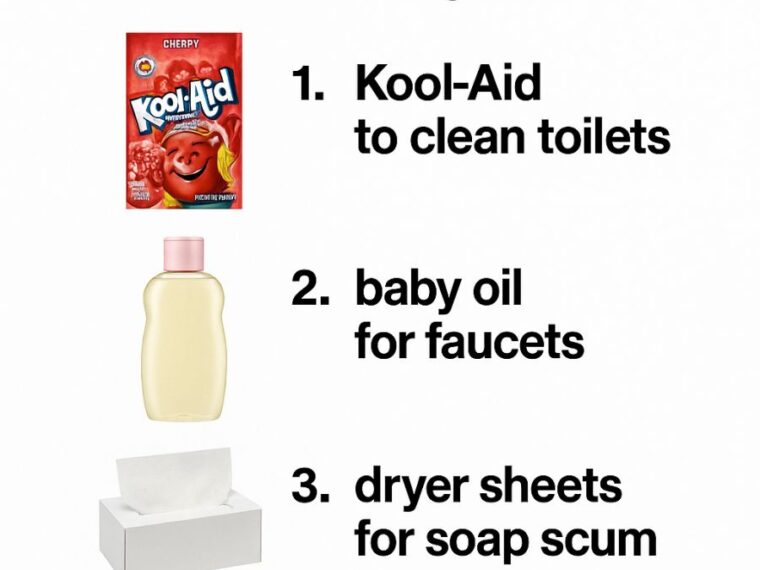
1. Clean Your Toilet with Kool-Aid
Kool-Aid isn’t just for drinking; it can also be a powerful toilet cleaner. The citric acid in the powdered drink mix helps break down stains and mineral deposits. To use, simply sprinkle one packet of unsweetened lemonade Kool-Aid into the toilet bowl. Let it sit for at least an hour or, for best results, overnight.
After the waiting period, scrub the bowl with a toilet brush and flush. You’ll notice a significant reduction in stains, leaving your toilet sparkling clean. Plus, it leaves a fresh scent behind.
2. Shine Faucets with Baby Oil
Faucets can quickly lose their shine due to water spots and soap residue. Baby oil is an excellent solution for restoring their gleam. Apply a small amount—about a teaspoon—of baby oil onto a soft cloth or paper towel.
Gently rub the oil onto the faucet, making sure to cover all surfaces. The oil will dissolve any water spots and create a protective barrier against future buildup. Finally, buff the faucet with a dry cloth to achieve a brilliant shine.
3. Remove Soap Scum with Dryer Sheets
Dryer sheets aren’t just for laundry; they can also tackle soap scum in your bathroom. Their texture and anti-static properties make them ideal for scrubbing away residue on shower doors and tiles. Simply take a used dryer sheet and dampen it slightly with water.
Rub the dryer sheet over the soap scum-covered surfaces, applying a bit of elbow grease to stubborn areas. The soap scum will come off easily, leaving behind a clean and polished surface. Rinse with water after scrubbing to remove any remaining residue.
4. Use Cling Film for a Shiny Sink
Cling film is a surprising tool for achieving a spotless sink. To give your sink a deep clean, apply your favorite cleaning solution or a homemade mix of equal parts vinegar and water. Cover the sink with a sheet of cling film, pressing it down to ensure it sticks.
Leave the film on the sink for about 30 minutes. This creates a mini greenhouse effect, allowing the cleaning solution to penetrate and loosen grime. Remove the cling film and wipe down the sink with a damp cloth to reveal a shiny surface.
5. Unclog Drains with Baking Soda and Vinegar
A clogged drain can be a nuisance, but you can clear it using just baking soda and vinegar. Start by pouring about 1/2 cup of baking soda down the drain, followed by 1 cup of vinegar. This combination will create a fizzing reaction that helps break down the clog.
Cover the drain with a plug or cloth to contain the reaction and let it sit for about 15 minutes. Afterward, flush the drain with hot water to clear out any remaining debris. This eco-friendly method is an effective alternative to harsh chemical cleaners.
6. Freshen Up Your Bathroom with Essential Oils
Essential oils are not only great for aromatherapy but also for freshening up your bathroom. To create a natural air freshener, combine 1 cup of water with 10-15 drops of your favorite essential oil, such as lavender or eucalyptus, in a spray bottle.
Shake the bottle well and spray the mixture around your bathroom. You can also add a few drops of essential oil to a cotton ball and place it in a discreet corner or inside a toilet paper roll for a continuous fragrance boost.
7. Prevent Foggy Mirrors with Shaving Cream
Foggy mirrors can be frustrating, especially after a hot shower. Shaving cream can prevent this by creating a barrier on the glass. Apply a small amount of shaving cream to the mirror and spread it evenly using a clean cloth.
Wipe off the excess with another cloth until the mirror is clear and streak-free. The thin film left by the shaving cream will prevent condensation from forming, keeping your mirror fog-free for days.
8. Use a Pumice Stone for Tough Toilet Stains
For stubborn toilet stains that resist regular cleaning, a pumice stone can be a game-changer. Wet both the stone and the stained area to avoid scratching the porcelain. Gently rub the pumice stone on the stain, applying light pressure.
The abrasive surface of the pumice stone will lift the stains without damaging the toilet bowl. Rinse the area with water and flush to remove any residue. Regular use can keep your toilet looking pristine.
9. Disinfect with Hydrogen Peroxide
Hydrogen peroxide is a potent disinfectant and can be used to sanitize various bathroom surfaces. To disinfect, pour some hydrogen peroxide into a spray bottle. Spray it onto surfaces such as sinks, countertops, and toilet seats, ensuring even coverage.
Leave the hydrogen peroxide to sit for about 10 minutes to allow it to kill germs effectively. Wipe the surfaces with a clean cloth afterward. This non-toxic method is a safe alternative to bleach and other harsh chemicals.
10. Clean Grout with a Toothbrush and Baking Soda
Grout can become dingy and discolored over time, but a simple paste of baking soda and water can restore its brightness. Mix 3 parts baking soda with 1 part water to form a thick paste. Apply the paste to the grout lines using an old toothbrush.
Scrub the grout vigorously to lift dirt and stains. Once finished, rinse the area with water to remove the baking soda residue. For particularly tough stains, let the paste sit on the grout for a few minutes before scrubbing.
11. Use Lemon to Remove Rust Stains
Lemon is a natural bleaching agent and can effectively remove rust stains from bathroom fixtures. Cut a lemon in half and sprinkle some salt onto the cut side. Use the lemon to scrub the rust stains on faucets, shower heads, or other metal surfaces.
The acidity of the lemon combined with the abrasiveness of the salt will help dissolve the rust. Rinse the area with water after scrubbing to wash away any remaining residue. This method not only removes rust but also leaves a fresh citrus scent.