December might seem like a dormant month for gardening, but it’s actually a critical time to prepare for the upcoming growing season. With a few creative tricks, you can keep your plants thriving through the cold months and set the stage for a bountiful spring. Whether you’re an experienced gardener or a curious beginner, these innovative planting tips can help you make the most of this winter month.
As the days grow shorter and temperatures drop, many gardeners store their tools and wait for spring. However, December offers a unique opportunity to get ahead with your planting projects. By employing smart techniques and repurposing common household items, you can protect your plants, encourage growth, and even start new seedlings indoors. Read on to discover 11 December planting tricks you’ve probably never heard of.
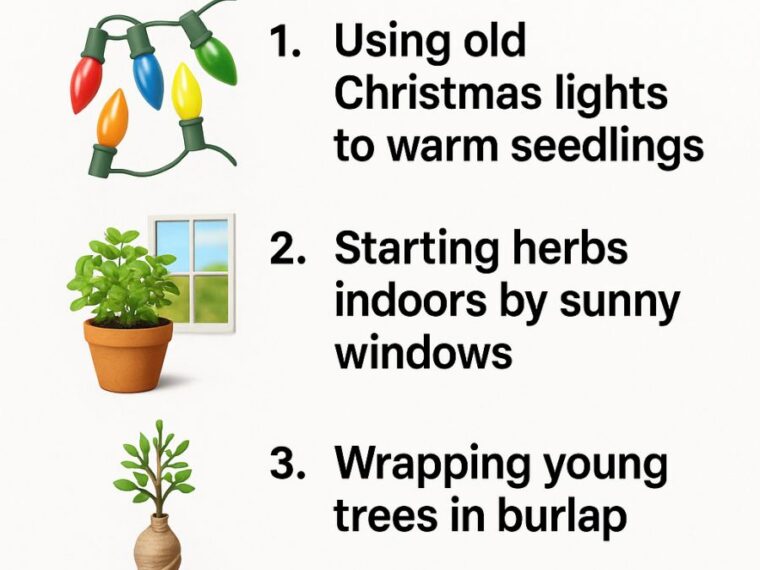
1. Revive Your Seedlings with Old Christmas Lights
If you have old Christmas lights lying around, put them to good use by providing warmth to your seedlings. Wrap the lights around seed trays or place them under shelving units to create a gentle, consistent heat source. This is especially useful in unheated greenhouses or cold basements where seedlings might struggle to stay warm. Be sure to use LED lights, as they are energy-efficient and produce the right amount of heat without the risk of overheating.
2. Start Herbs Indoors by Sunny Windows
Winter is a great time to start growing herbs indoors, especially in a sunny window. Choose a south-facing window that receives at least 6 hours of sunlight daily. Plant herbs like basil, cilantro, and parsley in small pots with good drainage. Water them sparingly, as indoor conditions can dry out soil quickly. Rotate the pots every few days to ensure even growth, and you’ll have fresh herbs to enjoy all winter long.
3. Wrap Young Trees in Burlap for Winter Protection
Young trees are particularly vulnerable to harsh winter conditions. Protect them by wrapping their trunks with burlap, which acts as an insulator against cold winds and frost. Start from the base of the tree and wrap upwards, overlapping by half the width of the burlap. Secure it with twine or zip ties. This not only helps retain moisture but also protects against pests and sunscald.
4. Save and Reuse Poinsettia Soil for Future Plantings
After the holiday season, don’t throw away the soil from your poinsettias. This soil is often rich in nutrients and can be reused for other indoor plants or garden beds. Remove any remaining plant debris and store the soil in a dry, cool place. When spring arrives, mix it with fresh potting soil to give your plants a nutrient boost.
5. Create a Mini Greenhouse Using Plastic Bottles
Plastic bottles can be transformed into mini greenhouses, perfect for protecting young plants from cold weather. Cut the bottom off a large plastic bottle and place it over seedlings in your garden, pressing the edges into the soil to secure it. This creates a humid, protected environment that can help young plants thrive despite winter weather.
6. Use Cinnamon to Prevent Seedling Damping-Off
Damping-off is a common problem for seedlings, caused by fungal pathogens in the soil. Sprinkle ground cinnamon, which has natural antifungal properties, onto the soil surface around your seedlings. This can help prevent the growth of fungi and protect your young plants. Use approximately a teaspoon per square foot of soil for best results.
7. Eggshells: Nature’s Perfect Seed Starters
Eggshells provide an excellent starting environment for seedlings. Simply crack the eggs in half, rinse them, and allow them to dry. Fill each shell with potting mix and plant your seeds. The calcium-rich shells will eventually break down, providing nutrients to the soil. When the seedlings are ready to be transplanted, plant the whole shell directly in the ground.
8. Coffee Grounds to Enrich Your Winter Soil
Coffee grounds are a great way to enrich your garden soil during the winter. They add organic material and can improve soil structure. Sprinkle used coffee grounds around the base of plants or mix them into your compost pile. Be sure to use them sparingly, as too much can increase soil acidity.
9. Use Hydrogen Peroxide to Boost Seed Germination
Hydrogen peroxide can enhance seed germination by breaking down the seed coat and providing extra oxygen. Soak seeds in a 3% hydrogen peroxide solution for 30 minutes before planting. Rinse them thoroughly with water afterward. This method can improve germination rates and promote healthy seedling growth.
10. Repurpose Cardboard Tubes for Deep Root Growth
Cardboard tubes from paper towels or toilet paper make excellent seedling pots, encouraging deep root growth. Cut the tubes to about 4 inches in height and fill them with potting soil. Plant your seeds and, when ready to transplant, place the entire tube in the ground. The cardboard will decompose, allowing roots to expand freely.
11. Create a DIY Drip Irrigation System with Plastic Bottles
A simple way to water your plants efficiently is to make a drip irrigation system with plastic bottles. Poke small holes in the cap and sides of a plastic bottle. Bury it neck down near your plants and fill it with water. The water will slowly seep out, providing consistent moisture directly to the roots. This is especially useful for indoor plants or winter gardens where overwatering can be an issue.