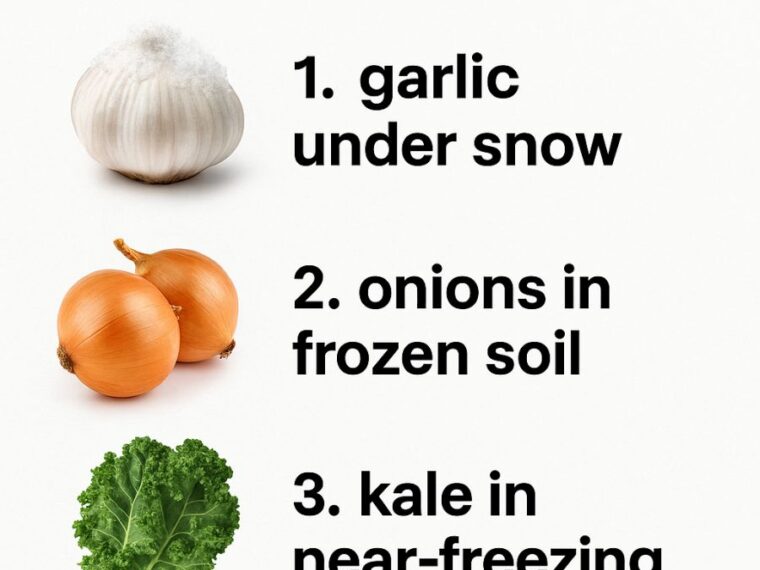
Winter may seem like a time to retreat indoors and let the garden rest, but it can actually be a productive season for planting. With the right choices, you can take advantage of the cold to prepare your garden for a bountiful harvest in the spring. Some crops are surprisingly resilient and can thrive under the snow, while others benefit from the chilly temperatures to develop unique flavors and textures.
Planting during the winter can also help to improve soil health, deter pests and diseases, and ensure an early start to the growing season. By selecting the right crops, you can transform your winter garden into an unexpected source of fresh produce and greenery. Here are ten unexpected things you should consider planting during the colder months.
1. Garlic Under Snow: Nature’s Protective Blanket
Garlic is a champion of winter planting. When planted in the fall or early winter, garlic bulbs develop roots before the ground freezes, ensuring a head start come spring. Snow acts as an insulating blanket, protecting the garlic from extreme cold and fluctuating temperatures. Plant cloves around 2 inches deep and 6 inches apart for optimal growth. By the time snow melts, garlic will be ready to shoot up, leading to a robust harvest by early summer.
2. Onions in Frozen Soil: A Surprising Resilience
Onions, much like garlic, benefit from a winter planting. When planted in late fall, onions can establish roots before the ground freezes solid. This head start means they can withstand cold temperatures and even thrive under a layer of snow. Plant onion sets 1 inch deep and 4 inches apart, ensuring they have enough room to grow. By the time spring arrives, they will be well on their way to producing large, healthy bulbs.
3. Kale in Near-Freezing Temps: The Hardy Green
Kale is one of the hardiest greens available and actually improves in flavor after being exposed to frost. The cold temperatures cause kale to convert starches into sugars, resulting in a sweeter taste. Plant kale seeds about 1/4 inch deep and 12 inches apart in late fall. With a little protection or mulch, kale can continue to produce throughout the winter, providing crisp, nutritious leaves when other greens are scarce.
4. Peas Before First Frost: A Timely Planting Tip
Peas are another crop that can be planted before the winter sets in. By sowing them 1 inch deep and 2 inches apart in late fall, you allow them to establish roots before the ground freezes. Winter conditions help peas build resilience, and they are often ready to start growing rapidly as soon as temperatures rise. Early planting can lead to an earlier harvest, beating the rush of spring planting.
5. Winter Wheat: Sowing for a Spring Harvest
Winter wheat is specifically designed to be planted in the colder months. Plant it in late fall at a rate of about 1.5 to 2 bushels per acre. The seeds will germinate and develop a small root system before winter sets in, entering dormancy until spring. Once warmer temperatures return, winter wheat quickly resumes growth and can be harvested earlier than spring-sown wheat, providing a valuable grain crop.
6. Carrots in Cold Frames: A Sweet Winter Crop
Carrots can be grown in winter using cold frames to protect them from the harshest conditions. Sow carrot seeds 1/4 inch deep and about 2 inches apart in the fall. The cold temperatures slow their growth, which enhances their sweetness as starches convert to sugars. Using a cold frame can help maintain a slightly warmer microclimate, allowing you to harvest sweet, crunchy carrots well into winter.
7. Spinach in Low Temperatures: The Cold-Loving Leaf
Spinach is another leafy green that thrives in cooler temperatures. Sow seeds 1/2 inch deep and 3 inches apart in late fall for a winter crop. Spinach can tolerate frost, and its growth is stimulated by the cool weather. With a little protection, such as row covers or mulch, spinach can provide fresh leaves throughout the winter, even in areas with significant snowfall.
8. Broad Beans in Chilled Earth: Preparing for Early Spring
Plant broad beans in late fall to take advantage of their cold tolerance. Sow seeds 2 inches deep and 6 inches apart. These beans will germinate and grow slowly through the winter, ready to take off as soon as spring arrives. Early planting leads to an earlier harvest, allowing you to enjoy these nutritious beans while other crops are still getting started.
9. Radishes in Winter: Quick and Easy Growth
Radishes are quick-growing crops that can be planted in winter for an early spring harvest. Sow seeds 1/2 inch deep and 1 inch apart in a cold frame or under row covers. Radishes mature rapidly, often in just 3-4 weeks, and can be harvested as soon as they reach the desired size. Winter planting can result in crisp, peppery radishes that add a fresh crunch to salads and dishes.
10. Winter Rye: A Cover Crop with Benefits
Winter rye is an excellent cover crop that improves soil health during the winter months. Sow it at a rate of 1 to 2 pounds per 1,000 square feet in late fall. Rye grows quickly, providing ground cover that prevents erosion and suppresses weeds. It also adds organic matter to the soil when tilled under in spring, enhancing soil fertility and structure for the following growing season.
11. Perennial Herbs: Surprising Survivors of the Cold
Certain perennial herbs, such as thyme and sage, can survive the winter with minimal protection. Plant them in well-drained soil and mulch around the base to insulate their roots. These hardy herbs often remain evergreen, providing fresh flavor to winter dishes. With a little care, perennial herbs can thrive through the cold months, ready to burst into growth with the return of warm weather.