February is the quiet turning point in the gardening year. While the landscape may still look dormant, the soil is slowly warming, daylight is increasing, and plants are preparing to wake up.
What you do now – before March arrives – can determine how smooth and productive your entire growing season will be.
Many gardeners wait until visible growth begins to act, but by then you are reacting instead of preparing. Late winter is the time for structural work, soil improvement, pruning decisions, and strategic planning.
These early steps prevent common spring problems such as overcrowding, pest outbreaks, weak flowering, and poor soil performance.
1. Prune the Right Plants (But Not All of Them)
Late winter pruning works because most deciduous trees and shrubs are fully dormant. Dormancy means sap flow is minimal, energy reserves are stored in the roots, and cuts do not stimulate tender growth too early.
When you prune at this stage, you are shaping structure before the plant commits energy to new shoots. You can clearly see crossing branches, weak stems, and imbalanced growth patterns because leaves are gone.
Why this timing is powerful
- Dormant plants lose less energy from pruning cuts.
- Disease organisms are less active in cold weather.
- Sunlight penetrates the canopy more easily.
- You prevent overcrowding before spring growth explodes.
Plants you can confidently prune now
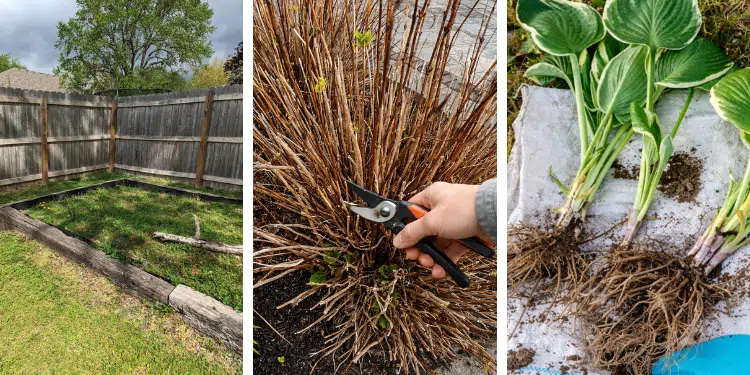
Panicle hydrangeas and smooth hydrangeas bloom on new wood. Cutting them back now actually improves flower size and stem strength.
Fruit trees like apples and pears benefit greatly from open-center shaping before sap flow increases. Removing inward-growing branches improves air circulation and fruit quality later.
Grapevines must be pruned before active sap flow (“bleeding”) begins.
Summer-blooming shrubs such as spirea and butterfly bush can also be cut back in late winter because they bloom on new growth.
Plants you should NOT prune now
Spring bloomers such as lilac, forsythia, and old-wood hydrangeas already formed their flower buds last year. Pruning them now removes those buds.
If unsure, wait until after flowering.
Always use sharp, sanitized pruners and cut just above outward-facing buds to encourage open growth.
2. Clean Up Garden Beds – But Carefully
Late winter cleanup is about balance. You want to reduce disease pressure without eliminating beneficial habitat.
Diseased leaves left from last year can reintroduce fungal spores as temperatures rise. Dead annual stems can host pest eggs. Compacted mulch can trap moisture and suffocate roots.
However, many beneficial insects overwinter in leaf litter and hollow stems. Removing everything too aggressively eliminates natural pest predators.
Smart cleanup approach
- Remove clearly diseased or moldy material.
- Cut down annuals and compost only healthy debris.
- Loosen compacted mulch.
- Leave some leaf litter in non-critical areas.
- Delay cutting hollow perennial stems until consistent warmth.
Airflow is the goal. When spring moisture arrives, well-ventilated beds resist mildew and fungal issues much better.
3. Test and Improve Your Soil
Soil improvement is most effective before plants demand nutrients.
February is ideal because amendments like compost, sulfur, or lime need time to integrate before active growth begins.
Microbial life wakes slowly as soil warms. If compost is added now, microbes begin processing it just as roots become active.
Steps for proper soil prep
First, test pH. Guessing often leads to unnecessary amendments.
If soil is depleted or sandy, add compost across the surface and gently incorporate it.
If pH correction is needed, apply sulfur to lower pH or lime to raise it — but never both and never excessively.
Avoid high-nitrogen fertilizer this early. Forcing premature top growth increases frost damage risk.
Healthy soil in February supports stronger, less stressed plants by April.
4. Divide Overcrowded Perennials
Many perennials become woody, hollow, or weak in the center after several years. Dividing them restores vigor.
Overcrowding reduces bloom size because nutrients and root space become limited. Dividing spreads growth energy and improves air circulation.
Signs division is needed
- Smaller flowers
- Sparse center growth
- Dense outer ring
- Reduced overall bloom performance
Late winter division works because plants are dormant. Roots establish before summer heat.
Dig carefully around the root ball, split with a sharp spade, and replant divisions promptly with compost. Water well to settle soil.
This resets plant health for years.
5. Start Slow-Growing Seeds Indoors
Some crops simply need more time than your climate provides outdoors.
Tomatoes, peppers, eggplant, and lavender require long development windows. Starting seeds indoors in late winter ensures mature transplants by late spring.
Use sterile seed-starting mix rather than garden soil. Provide strong light – ideally grow lights positioned a few inches above seedlings.
Rotate trays daily if using window light to prevent leggy growth.
Strong February seedlings outperform rushed April seedlings every time.
6. Check Irrigation Systems
Spring failures usually happen because irrigation systems were ignored in winter.
Cracked hoses, clogged drip emitters, and leaky connections often go unnoticed until plants are already stressed.
Turn on systems briefly during a mild day. Check pressure consistency. Flush drip lines. Replace worn washers.
Preventative repair now saves emergency watering later.
7. Sharpen and Sanitize Tools
Dull tools crush plant tissue instead of slicing cleanly. Crushed tissue heals slowly and invites infection.
Sharpen pruners and loppers with a file or sharpening stone. Clean blades with alcohol to remove sap buildup.
Sanitizing tools prevents spreading fungal spores between plants. Well-maintained tools reduce plant stress and reduce your physical effort.
8. Plan Your Crop Rotation
Planting the same vegetables in the same bed every year encourages pest buildup and nutrient imbalance.
Tomatoes planted repeatedly in one area attract soil-borne diseases like verticillium and fusarium.
Brassicas deplete similar nutrients and attract consistent pest families. Legumes enrich soil nitrogen and pair well before heavy feeders like corn.
Mapping your beds now prevents rushed decisions later. Smart rotation strengthens soil health long-term.
9. Refresh Mulch and Weed Barriers
Mulch breaks down over winter and loses effectiveness.
Applying fresh mulch before March helps suppress early weeds that germinate as soon as soil warms. Use 2–3 inches of organic mulch such as compost, bark, straw, or pine needles.
Keep mulch a few inches away from plant stems to prevent rot. Proper mulch regulates soil temperature and conserves moisture before heat arrives.
Avoid piling mulch too thickly – roots still need oxygen.
10. Inspect for Overwintering Pests
Many garden pests are present long before visible damage appears.
Scale insects cling to stems through winter. Aphid eggs hide near buds. Borers remain inside stems. Without leaves, detection is easier now than at any other time.
Gently examine branches for bumps, eggs, or chewing marks.
Dormant oil sprays on mild days can suppress eggs and overwintering insects before they hatch. Early intervention reduces pest outbreaks naturally without heavy chemical reliance later.
Common Mistakes to Avoid Before March
- Heavy fertilizing too early
- Pruning spring bloomers
- Digging wet soil (causes compaction)
- Ignoring soil structure
- Waiting until visible growth appears
Preparation is proactive, not reactive.
Regional Considerations
Cold Climates (Zones 4–6)
Wait for soil to thaw before dividing or heavy digging.
Mild Climates (Zones 7–9)
Most tasks can be completed safely in February.
Warm Climates (Zone 10+)
Some plants may already be waking – act quickly but carefully.
Why February Preparation Changes Everything
Garden success rarely starts in April – it starts in late winter.
When you prune properly, enrich soil early, divide crowded plants, repair systems, and plan thoughtfully, you reduce stress on both plants and yourself. The garden enters spring organized and supported instead of chaotic.
The weeks before March are the calm before the growing storm. Use this time wisely. Clean, prune, divide, feed soil, start seeds, and prepare systems.
These ten tasks build the foundation for healthy blooms, productive harvests, and fewer mid-season problems.