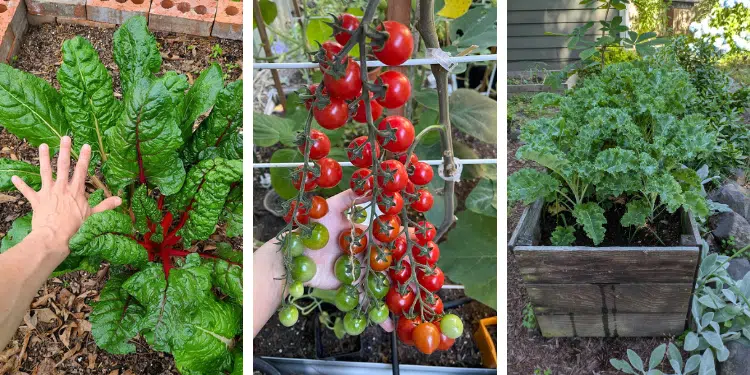
Imagine planting a vegetable once – and harvesting it year after year without replanting. That’s exactly what self-seeding vegetables can offer.
These plants grow, produce, drop mature seeds, and naturally regenerate the following season. With the right conditions, they become reliable “volunteer crops” that return with little effort from the gardener.
Self-seeding vegetables are especially valuable in low-maintenance gardens, permaculture systems, survival gardens, and natural growing spaces.
They reduce seed costs, extend harvest windows, and gradually adapt to your local soil and climate. Instead of starting from scratch each spring, you manage and thin what nature already planted for you.
What Are Self-Seeding Vegetables?
Self-seeding vegetables are annual or biennial food plants that produce viable seed and naturally replant themselves when allowed to fully mature.
Unlike perennials that regrow from roots, these crops return from dropped seed.
They are often called:
- Volunteer vegetables
- Reseeding crops
- Naturalizing edibles
Most self-seeders share three traits:
- Fast seed production
- High germination rates
- Tolerance for cool-season sprouting
Why Grow Self-Seeding Vegetables
Gardeners use self-seeding vegetables to build resilient food systems because they:
- Reduce yearly planting work
- Lower seed costs
- Extend seasonal harvests
- Adapt to local conditions
- Fill gaps naturally
- Improve soil coverage
- Support pollinators when flowering
They are especially helpful in mixed vegetable-flower gardens.
1. Lettuce
Lettuce is one of the most reliable self-seeding vegetables. If you allow a few plants to bolt and flower, they will produce thousands of tiny seeds that scatter easily.
New seedlings often appear in early spring and again in fall when temperatures cool. Volunteer lettuce is often more heat-tolerant over time because it adapts locally.
Loose-leaf types reseed more readily than heading types.
Best conditions: Cool seasons, open soil
Reseeding strength: Very high
Management tip: Let only a few plants go to seed to avoid overcrowding
2. Arugula (Rocket)
Arugula bolts quickly – which is actually an advantage for self-seeding. Once it flowers, seed pods form and drop heavily.
Volunteer arugula often appears in waves after rain and cool weather. The flavor may vary slightly from plant to plant, adding diversity to your greens.
Best conditions: Cool weather, light soil disturbance
Reseeding strength: Very high
Bonus: Pollinators love the flowers
3. Mustard Greens
Mustard greens produce abundant seed and reseed easily if allowed to mature. They are fast growers and often sprout earlier than planted greens.
Volunteer mustard is typically stronger flavored and more pest resistant.
Best conditions: Spring and fall
Reseeding strength: High
Use: Greens + edible seed
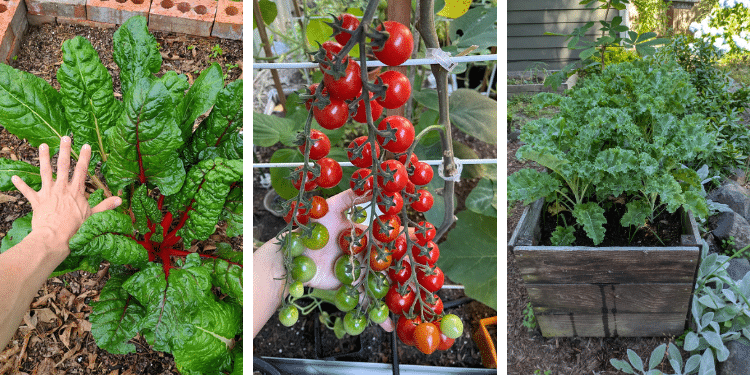
4. Kale
Kale is technically a biennial, meaning it flowers in its second year. If winter survival allows it to bolt, it will produce seed and reseed naturally.
Volunteer kale often shows interesting variation because many garden kales cross-pollinate.
Best conditions: Mild winters or protected plants
Reseeding strength: Moderate to high
Bonus: Extremely early volunteer seedlings
5. Swiss Chard
Swiss chard behaves similarly to kale as a biennial. When overwintered plants flower, they produce heavy seed clusters that drop nearby.
Self-seeded chard is often more cold-tolerant than first-year plants.
Best conditions: Zones with moderate winters
Reseeding strength: Moderate
Note: Seedlings are easy to recognize and transplant
6. Parsley
Parsley is another biennial that reseeds reliably when allowed to flower in year two. Once established, it often becomes a semi-permanent garden resident.
Seeds germinate slowly but persist in soil.
Best conditions: Undisturbed beds
Reseeding strength: Moderate
Bonus: Excellent beneficial insect plant when flowering
7. Cilantro (Coriander)
Cilantro bolts quickly in warm weather and produces round seed (coriander). Those seeds drop and germinate readily when temperatures cool again.
This creates natural fall and spring cilantro crops with no replanting.
Best conditions: Cool weather cycles
Reseeding strength: Very high
Tip: Do not pull all bolting plants – let some seed
8. Dill
Dill is famous for self-seeding. Once planted, it often returns for many years. Seeds drop near the parent plant and germinate easily.
Volunteer dill frequently appears near last year’s location and along bed edges.
Best conditions: Sunny, open soil
Reseeding strength: Very high
Bonus: Host plant for swallowtail butterflies
9. Cherry Tomatoes
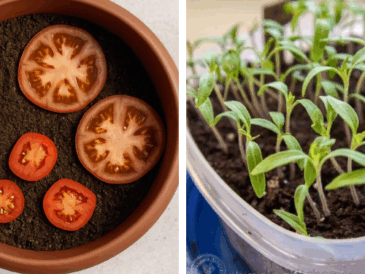
Cherry tomatoes frequently self-seed from fallen fruit. Seeds survive winter in soil and sprout after warming.
Volunteer tomato plants are common in compost areas and last year’s beds. While not always identical to the parent hybrid, they often produce well.
Best conditions: Warm climates or compost-rich soil
Reseeding strength: Moderate
Note: Heirloom types come true more reliably
10. Tomatillos
Tomatillos are among the strongest self-seeding vegetables. One plant can create dozens of volunteers the next year.
They reseed so reliably that many gardeners report them becoming semi-wild in warm regions.
Best conditions: Warm seasons, open soil
Reseeding strength: Extremely high
Tip: Thin early – they can overcrowd
How to Encourage Self-Seeding Success
To build a self-seeding vegetable system:
- Allow some plants to fully mature
- Do not deadhead everything
- Leave seed heads in place
- Avoid thick bark mulch in reseed zones
- Lightly disturb soil in spring
- Reduce heavy fall cleanup
- Mark seed plants so you don’t harvest them early
Nature needs exposed soil contact for germination.
How to Control Volunteer Vegetables
Self-seeding is helpful – but can get messy without management.
Control methods:
- Thin seedlings early
- Transplant extras
- Mulch areas you want seed-free
- Remove seed heads selectively
- Compost unwanted volunteers
Young seedlings are easy to manage.
Where Self-Seeding Vegetables Work Best
They perform best in:
- Cottage gardens
- Permaculture beds
- Raised beds with open soil
- Pollinator gardens
- Mixed herb-vegetable borders
- Low-till systems
They are less suited to strict, formal layouts.
Self-Seeding vs Perennial Vegetables
| Type | Returns From | Example |
|---|---|---|
| Self-seeding | Seed | Lettuce |
| Perennial | Roots | Asparagus |
Self-seeders move around – perennials stay put.
Self-seeding vegetables are one of the simplest ways to reduce garden work while increasing resilience.
Lettuce, arugula, mustard, kale, chard, parsley, cilantro, dill, cherry tomatoes, and tomatillos can all return from seed when allowed to complete their life cycle.