Gardening enthusiasts are always on the lookout for innovative and effective ways to enhance their gardens. One of the key elements in gardening is mulch, which helps retain moisture, suppress weeds, and improve soil health. However, some gardeners have taken mulching to a whole new level with some bizarre yet surprisingly effective tricks. These unconventional methods not only make use of recyclables and household waste but also add a unique twist to traditional gardening practices.
In this article, we delve into 10 bizarre mulch tricks that have captured the fascination of gardeners around the world. From shredded clothing to banana peels, these mulching methods may sound unusual, but they have garnered a loyal following due to their practicality and eco-friendliness. Let’s explore these quirky mulching ideas that are turning heads in the gardening community.
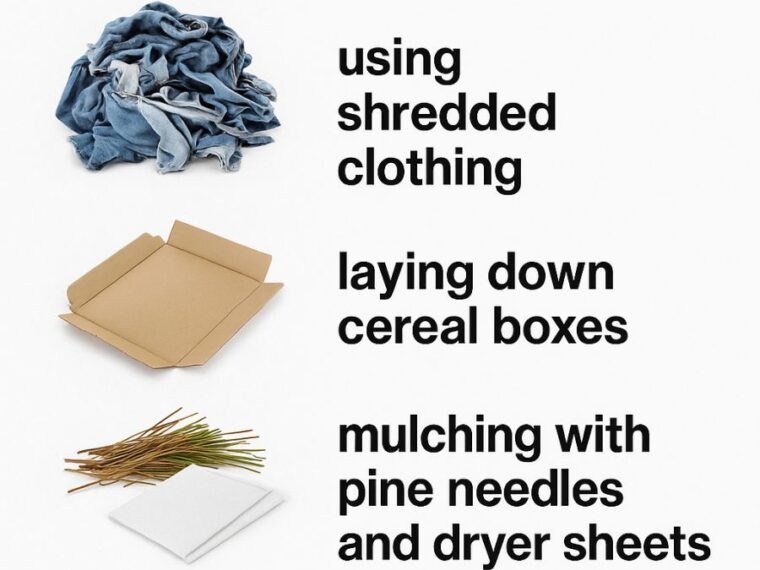
1. Shredded Clothing as Mulch
Old clothing items, especially those made from natural fibers like cotton and wool, can be shredded and used as mulch. This method involves cutting the fabric into small pieces, approximately 1-2 inches in size, and spreading them around plants. Shredded clothing provides excellent weed suppression and helps retain soil moisture, much like traditional mulching materials.
However, it’s important to avoid using synthetic fabrics, as these do not decompose well and can introduce microplastics into the soil. Additionally, dyed fabrics should be used sparingly to prevent potential chemical leaching. This method is a great way to recycle old clothes while benefiting your garden.
2. Cereal Boxes for Weed Control
Cereal boxes can be repurposed as an effective mulch to combat weeds. By flattening the boxes and laying them in garden beds, they act as a barrier that blocks sunlight, preventing weed growth. It’s recommended to remove any plastic or glossy coatings before use.
To maximize their effectiveness, cover the cereal boxes with a layer of organic mulch, such as wood chips or straw, to keep them in place and enhance their appearance. This method is a creative way to recycle cardboard and reduce household waste.
3. The Pine Needle and Dryer Sheet Combo
Pine needles are a popular mulching material, particularly for acid-loving plants like blueberries and azaleas. When combined with used dryer sheets, they create a unique mulching option that also repels pests. The pine needles provide acidity and organic matter, while dryer sheets, when changed regularly, can deter insects.
Layer 2-3 inches of pine needles around the base of plants, and tuck in a few dryer sheets to create a protective barrier. Ensure the dryer sheets are free of any synthetic fragrances to avoid chemical contamination.
4. Torn Paper Plates for Moisture Retention
Disposable paper plates can be torn into pieces and used as an unconventional mulch. This method involves layering the torn pieces around plants to help retain moisture and suppress weeds. Paper plates are biodegradable and will gradually break down, enriching the soil.
It’s important to use plain, uncoated paper plates to avoid introducing plastics into the garden. This method is particularly effective in vegetable gardens, where moisture retention is crucial for healthy plant growth.
5. Coffee Grounds for Acid-Loving Plants
Coffee grounds are a favorite among gardeners for their ability to enrich soil with nitrogen and increase acidity, making them ideal for acid-loving plants. Simply spread a thin layer, about half an inch, around the base of plants like roses, azaleas, and rhododendrons.
Coffee grounds also improve soil texture and attract earthworms, which further enhance soil health. However, it’s important not to overapply, as excess can lead to nitrogen overload and soil compaction.
6. Mulching with Wine Corks
Wine corks, typically made from natural cork material, can be shredded or chopped into small pieces and used as mulch. This method provides excellent aeration and moisture retention, as the cork material is porous and decomposes slowly.
To prepare, wine corks can be cut into small pieces, approximately half an inch in size, and spread around plants in a 1-2 inch layer. This mulch is particularly effective in potted plants and container gardens, where moisture management is crucial.
7. Seashells for Coastal Gardens
Seashells, abundant in coastal areas, can be crushed and used as mulch. They add calcium and other trace minerals to the soil while providing a unique aesthetic appeal. Crushed seashells also help with drainage and deter slugs and snails.
To use seashells as mulch, crush them into small pieces and spread them around plants in a 1-inch layer. This method is especially beneficial in gardens near the coast, where shells are readily available.
8. Hair Clippings as a Nutrient Source
Human or pet hair clippings can be used as mulch to provide a slow-release source of nitrogen. Hair decomposes slowly, gradually releasing nutrients into the soil. Spread a thin layer, about half an inch, around the base of plants.
Hair clippings also help with moisture retention and can deter some pests due to their texture. However, it’s important to use untreated hair and avoid applying in thick layers to prevent matting.
9. Using Newspaper Layers
Newspapers can be layered in garden beds as an effective weed suppressant. By laying down several sheets, about 5-10 pages thick, they block sunlight and prevent weed growth while allowing water to penetrate.
Cover the newspaper with a layer of organic mulch to keep it in place and enhance its appearance. This method is a great way to recycle newspapers and improve soil health as they decompose.
10. Banana Peels for Fertilization
Banana peels are rich in potassium, making them an excellent natural fertilizer when used as mulch. Simply chop the peels into small pieces and spread them around the base of plants.
The peels decompose quickly, releasing nutrients that help improve plant health and vigor. This method is particularly beneficial for flowering plants and fruit trees, which require higher potassium levels.
11. Mulch Made from Corn Cobs
Corn cobs, a byproduct of corn consumption, can be dried and used as mulch. They provide excellent aeration and help retain soil moisture. Crush the cobs into small pieces and spread them around plants in a 1-2 inch layer.
This method is eco-friendly and makes use of agricultural waste, contributing to a sustainable gardening practice. Corn cob mulch is particularly effective in larger garden beds and vegetable plots.